The future is now.


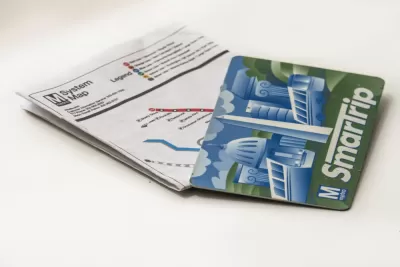
"[D.C.] Metro announced [Tuesday] that iPhone users will now be able to migrate existing SmarTrip cards — and add new ones — to Apple Wallet. Instead of a plastic card that’s prone to getting lost, riders will be able to tap their iPhones to enter and exit at fare gates and to get on the bus," reports Margaret Barthel.
"The agency also rolled out an app that enables riders to add passes and value to SmarTrip cards — performing much the same job as rail station fare machines and other retail locations where riders currently perform Metro transactions," adds Barthel.
SmarTrip cards are available for use on both Metrobus and Metrorail routes, according to the article, and will offer particular convenience to bus riders, who no longer need to go to a station, online, or to a store to reload transit fare. The benefit to Metro is expected to come in reduced costs and, potentially, new riders.
New research documenting the benefits of mobile app fare systems was published by the Transport Research journal in July 2020. An article by Ali Winston from March 2020 documents some of the drawbacks of electronic fare payments, like concerns about data privacy and equity.
FULL STORY: It’s Official: Your iPhone Can Now Act As Your Metro Card

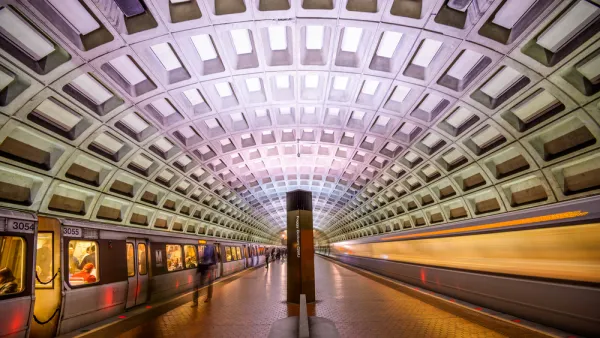
Showdown Over Late Night Hours on D.C. Metro
The general manager of D.C. Metro wants to extend limited late night rail service, in place for two years, into 2019 and beyond. Metro board members have had enough.
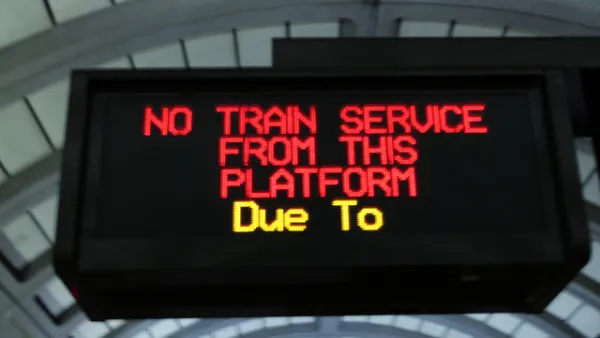
D.C. Metro to Consider Reduced Rail Service Hours After SafeTrack Concludes
What was thought to be a temporary end to late night weekend service could become a permanent reality on the tracks of Metrorail.
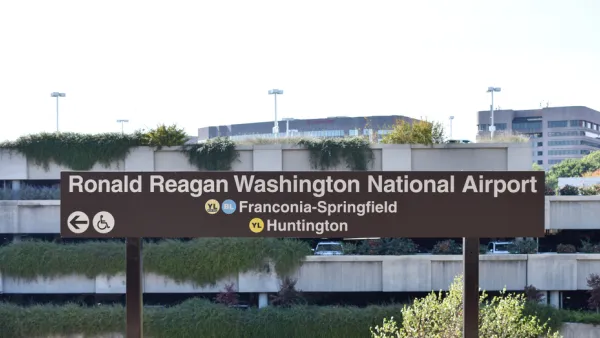
60 Percent of D.C. Metrorail Fleet Pulled From Service After Last Week's Derailment
The disruptions caused by an October 12 train derailment on D.C. Metrorail's Blue Line are spreading to the entire system.

Planetizen Federal Action Tracker
A weekly monitor of how Trump’s orders and actions are impacting planners and planning in America.

The state-sanctioned urbicide of Austin
People don’t kill cities. Freeways do.

US to reduce Colorado River water deliveries to Mexico
A new Colorado Treaty amendment reduces Mexico’s Colorado River water allocation by 250,000 acre feet.

Mamdani overhauls NYC's Vision Zero plan with 100 new policy goals
The overhaul aims to reduce traffic deaths and make streets safer for pedestrians, cyclists and drivers through lower speed limits, new safety infrastructure and more.

Amtrak not solely to blame for New Jersey commuter rail's unreliability, report finds
A new study from the Garden State Initiative found that NJ Transit’s budget grew 20% across a 4 year period, but reliability declined significantly over the same period.

EPA erases limits on planet-warming pollution from power plants
Under Monday’s plan, power plants would still have some limits on how much mercury, arsenic and other contaminants they can emit.

FREE Course: Walkable City 1: Why Walkability?
After describing his path towards focusing on walkability as the essence of good planning, Jeff Speck marches through his five principal reasons for making more walkable places.
Reinventing Malls: Planning Alchemy—Turning Gray Fields Into Gold
The course focuses on the opportunities and imperatives that shape reinvention of mall sites.

Eagle County Government
Harvard University Graduate School of Design
Nashville Planning Department
The Architects Foundation
University of Cincinnati Online
The Pocatello Development Authority
The Urban Renewal Agency of the City of Pocatello
Journal of the American Planning Association