Policymakers and venture capital firms love the idea of Mobility-as-a-Service. The public hasn't proven as receptive, despite the willingness to download apps by the millions.



David Zipper writes on the stalled progress of Mobility-as-a-Service companies in capturing the hearts and minds of the world's commuters and movers.
Zipper defines Mobility as a Service (MaaS) as an online platform, usually an app, that allows users to choose from all available transportation modes.
Count Uber among the companies championing the idea of MaaS, and the market has been flooded with apps hoping to deliver on the concept: "MaaS’s most prominent champions have been a group of popular startups offering slick apps like Citymapper, Transit and MaaS Global (the company behind Whim)." Zipper also notes that cities as geographically disparate as Berlin and Louisville have gotten into the MaaS game.
The public has responded with interest from these efforts by the private and public sectors: "Millions of users across Europe, North America, and Asia have downloaded these apps, and venture capital firms endorsing their vision of a multimodal urban future have invested tens of millions of dollars."
But that interest is proving tentative and potentially temporary. "MaaS’s momentum ('MaaSmentum'?) is at risk of stalling," according to Zipper. "To date, MaaS companies have found limited traction among urban residents, even in favorable markets," according to Zipper."
The article includes a lot more detail about the challenges in building consumer preference and commercial traction for MaaS platforms.
FULL STORY: The Problem With ‘Mobility as a Service’

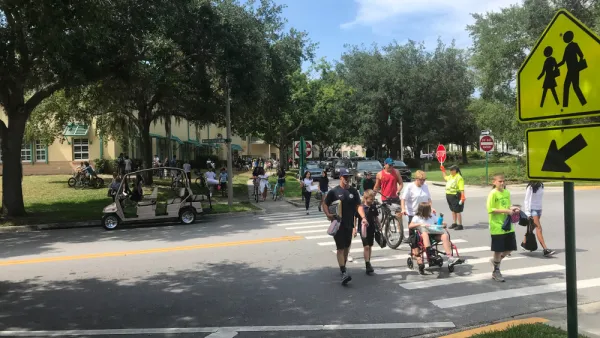
Earn Rewards for Traveling for by Foot, Bike, Bus, or Train
The city of Orlando is partnering with the Miles app.
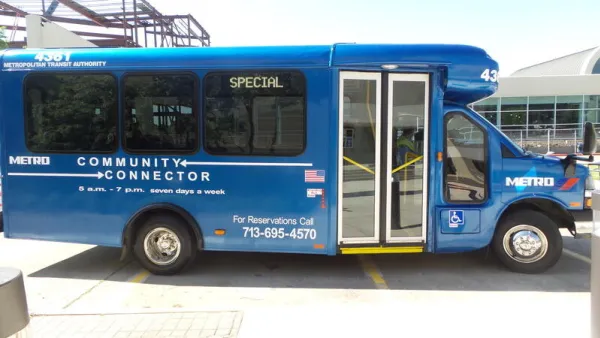
On-Demand Transit in Houston: There's an App for That
The city of Houston this week launched an app for its Community Connector shuttle service as part of a ten-month pilot project.
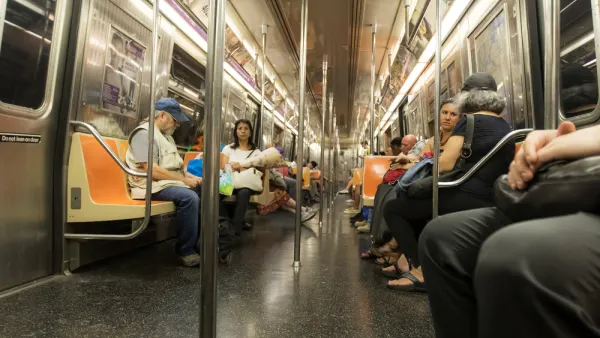
Miss the Subway? There's an App for That
The NYC Subway Sounds app is a great tool for dealing with nostalgia for the old ways of life.

Planetizen Federal Action Tracker
A weekly monitor of how Trump’s orders and actions are impacting planners and planning in America.

The state-sanctioned urbicide of Austin
People don’t kill cities. Freeways do.

US to reduce Colorado River water deliveries to Mexico
A new Colorado Treaty amendment reduces Mexico’s Colorado River water allocation by 250,000 acre feet.

5 New England states march closer to 800 megawatt wind energy project
Securing federal approval for the project may be complicated under the Trump administration, which has historically been hostile towards domestic wind power.

Baltimore to break ground on $50 million Transit Priority Project
The project will bring faster bus trips, safer streets and better bike connections to Baltimore.

Airbnb launches $250 million 'last-dollar financing' housing accelerator, makes first investment in Austin
The company will put $6.4 million towards affordable housing development in Texas’ capital.

FREE Course: Walkable City 1: Why Walkability?
After describing his path towards focusing on walkability as the essence of good planning, Jeff Speck marches through his five principal reasons for making more walkable places.
Reinventing Malls: Planning Alchemy—Turning Gray Fields Into Gold
The course focuses on the opportunities and imperatives that shape reinvention of mall sites.

Eagle County Government
Harvard University Graduate School of Design
Nashville Planning Department
The Architects Foundation
University of Cincinnati Online
The Pocatello Development Authority
The Urban Renewal Agency of the City of Pocatello
Journal of the American Planning Association