Cities can and should look to make changes to the zoning code to support local businesses through this particularly challenging time.


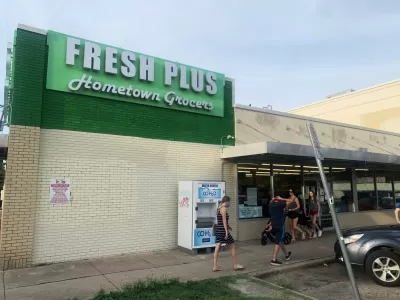
Code Studio has published the second in a series of articles on the ways that cities can use zoning code reform to help businesses begin to thrive post-COVID.
Part two of the series offer four more zoning recommendations, in addition to four recommendations in part one, based on trends and issues identified by the Code Studio team during the pandemic, with more details included in the source article.
- Bring back the neighborhood store.
- Allow for expanded home-based businesses.
- Expand the ability to grow food and raise small animals.
- Require more open space – public and private.
The Code Studio team promises a part three and encourages comments for more ideas on how communities can leverage zoning codes for economic benefits in these times of economic and public health uncertainty.
Read the full story: ZONING IN A POST-COVID WORLD: PART II

Zoning Code Reform for the Realities of COVID-19
Local governments have more tools than money to relieve some of the economic experience experienced by residents and businesses as the economic effects of the novel coronavirus linger just as long as the public health crisis it causes.

A Historic Texas Beach Town Faces Existential Growth Questions
Galveston, Texas is growing — and so are questions about its land use strategy.
Madison Advances Data Center Moratorium
The mayor and city leaders could pause new zoning certificates for data centers for a year while it codifies them into its zoning regulations.

Planetizen Federal Action Tracker
A weekly monitor of how Trump’s orders and actions are impacting planners and planning in America.

California plans to bury El Niño’s downpour
If the state plays its cards right, it may be able to store a billion acre-feet of El Niño’s water in aquifers.

Desperate measures: Advocates weigh draining Lake Powell to fill Colorado River
Draining the reservoir could reduce evaporation losses by a couple hundred thousand acre-feet.

Mamdani’s pied-à-terre tax survives legal challenge
A panel of judges found that the plaintiffs failed to demonstrate injury as a result of New York City's implementation of the tax.

Eastern Nebraska is running out of electricity
Data centers and electrification are straining eastern Nebraska’s grid, throttling economic development.

Seattle passes record-breaking transit services expansion
Proposition 1 will double the city’s transit tax to add 95,000 more bus trips and preserve 180,000 bus trips annually.

FREE Course: Walkable City 1: Why Walkability?
After describing his path towards focusing on walkability as the essence of good planning, Jeff Speck marches through his five principal reasons for making more walkable places.
Reinventing Malls: Planning Alchemy—Turning Gray Fields Into Gold
The course focuses on the opportunities and imperatives that shape reinvention of mall sites.

City of Rosemead
Rutgers University, Edward J. Bloustein School of Planning and Public Policy
One Hundred Miles
University of Michigan School for Environment and Sustainability (SEAS)
Hunter College, City University of New York (CUNY)
The Architects Foundation
City of Cambridge
Montrose County
The Pocatello Development Authority