Climate justice and social justice are closely linked. Black climate expert Ayana Johnson explains why racial justice strides are required to make leeway for climate change issues.


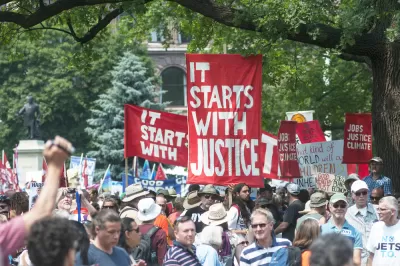
Ayana Johnson is a Black marine biologist and a self-proclaimed policy nerd with a call to action for white colleagues: step up and understand the connection between climate justice and racial justice.
Not only does climate change disproportionately affect people of color, but people of color are more likely to be willing to engage in climate activism than white people. A recent Climate Change in the American Mind survey found that 69% of Latinos and 57% of African Americans are concerned by climate change compared to only 49% alarm raised by whites.
The pressing need to address structural racism limit black folks' time and energy to work on other projects, Johnson points out:
How can we expect black Americans to focus on climate when we are so at risk on our streets, in our communities, and even within our own homes? How can people of color effectively lead their communities on climate solutions when faced with pervasive and life-shortening racism?
The hours lost fighting systemic oppression can't be taken back. Johnson calls on white people to adopt a framework of anti-racism (distinguished from non-racism as an active fight against racism) and to "understand that our racial inequality crisis is intertwined with our climate crisis."
Read the full story: I’m a black climate expert. Racism derails our efforts to save the planet.
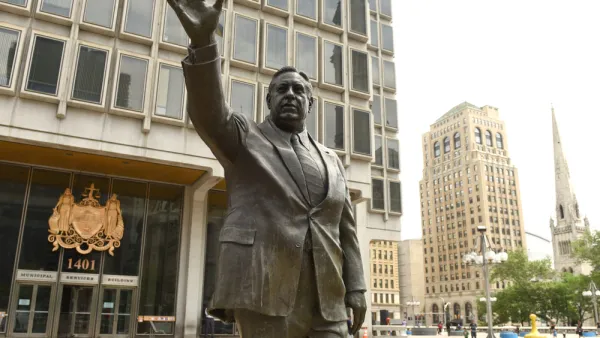
Designing for Life
A Black architect calls on designers to recommit their training and expertise to account for the health and safety of all, especially those who have been most harmed by the status quo of the built environment.
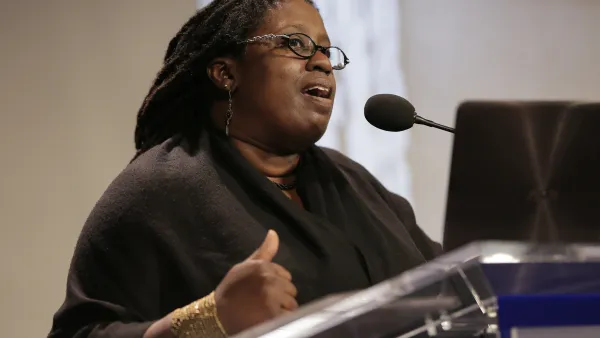
Climate Justice Advocate Named One of TIME's Women of the Year
Jacqueline Patterson has dedicated her career to intersectional approaches to systems change and social and environmental justice.
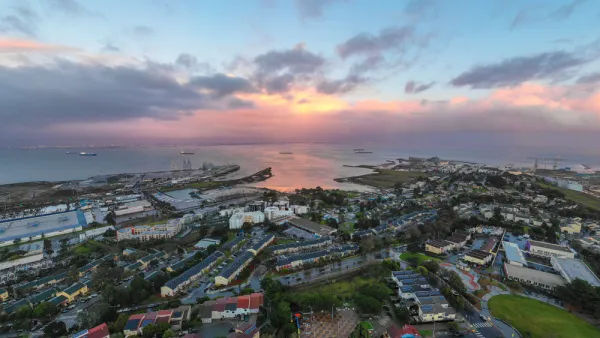
Can Planners Advance Environmental Justice When Rebuilding Existing Locally Unwanted Land Uses?
Miriam Solis, of the University of Texas at Austin, writes about a recent article she authored in the Journal of Planning Education and Research.

Desperate measures: Advocates weigh draining Lake Powell to fill Colorado River
Draining the reservoir could reduce evaporation losses by a couple hundred thousand acre-feet.

Eastern Nebraska is running out of electricity
Data centers and electrification are straining eastern Nebraska’s grid, throttling economic development.

Move over, LA: St. Louis gears up for Olympics, invests millions in downtown redevelopment
The Missouri city will host the 2028 Olympic soccer group stage and knockout matches.

Mass. votes against statewide minimum lot size for single-family homes
Over 2 million residents voted on Question 7; it was decided by just over 30,000 votes.

Maryland’s $15 billion bridge project gains key approval
The Maryland Transit Authority said the project will create over 60,000 jobs and add $23 billion to the local economy.

‘No clear next steps’ for Chicago's permanent festival grounds
Eleventh Ward Ald. Nicole Lee has suggested Soldier Field as a possible location for the permanent event space.

FREE Course: Walkable City 1: Why Walkability?
After describing his path towards focusing on walkability as the essence of good planning, Jeff Speck marches through his five principal reasons for making more walkable places.
Reinventing Malls: Planning Alchemy—Turning Gray Fields Into Gold
The course focuses on the opportunities and imperatives that shape reinvention of mall sites.

City of Rosemead
Rutgers University, Edward J. Bloustein School of Planning and Public Policy
One Hundred Miles
University of Michigan School for Environment and Sustainability (SEAS)
Hunter College, City University of New York (CUNY)
The Architects Foundation
City of Cambridge
Montrose County
The Pocatello Development Authority