New survey data from Massachusetts finds massive housing market stress as more and more renters falling behind on payments.



"Nearly one-third of Massachusetts residents have missed a rent or mortgage payment since the coronavirus crisis began, with younger and nonwhite renters most likely to have fallen behind," reports Tim Logan.
Logan is sharing news of new data released by MassINC Polling Group, which polled 1,5000 residents around the state at the end of May.
Logan also adds that the bad news delivered by the survey data could get worse: "If the economic crisis sparked by the outbreak drags on another six months, the report says, only 40 percent of people expect to be able to keep up with their housing payments."
The data also revealed key demographic differences in the coronavirus housing crisis, as well differences between market sectors, according to Logan:
Indeed, the survey revealed sharp splits between the ability of homeowners and renters, and older and younger residents, to keep up with housing payments these last few months. While 29 percent of renters have been tardy on at least some portion of a monthly payment, only 13 percent of homeowners have been. Also, people 18 to 29 were more than four times as likely to have missed a payment as those ages 45 to 59.
The survey data from Massachusetts echoes other recent studies raising alarms about the challenges facing many renters and homeowners during the economic downturn caused by the pandemic. The initial fears about mass evictions and foreclosures seem to have been avoided so far in the pandemic, but like so many other unknowns about this crisis, the worst could still be yet to come.
Read the full story: Behind on the rent or mortgage? You’ve got company

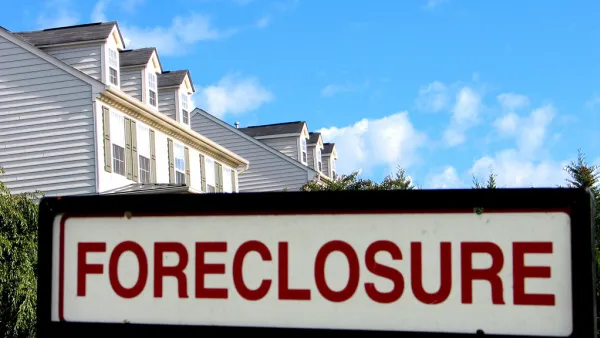
Real Estate Defaults Are Coming. Don’t Waste Them.
Here’s what the federal government should do to grab the opportunity to create affordable housing.
U.S. Mortgage Delinquencies Spike
The popularity of the mortgage forbearance program enabled by the CARES Act is one reason not to fear a housing crash like the Great Recession, yet.
Federal Eviction and Foreclosure Moratorium Extended Until the End of August
Breaking news: a federal moratorium on evictions and foreclosures of single-family mortgages backed by Fannie Mae and Freddie Mac will be extended until at least the end of August. The moratorium had been set to expire at the end of June.

Planetizen Federal Action Tracker
A weekly monitor of how Trump’s orders and actions are impacting planners and planning in America.

The state-sanctioned urbicide of Austin
People don’t kill cities. Freeways do.

US to reduce Colorado River water deliveries to Mexico
A new Colorado Treaty amendment reduces Mexico’s Colorado River water allocation by 250,000 acre feet.

Brightline West’s future may rely on $6 billion federal loan
The company has until Nov. 2 to make a $400 million equity investment into its proposed high-speed rail line.

LA Metro’s ultimatum: no extra buses for LA28 if federal funding isn’t imminently secured
If Metro does not provide additional buses, LA28 organizers will have to find a new way to manage Olympic traffic. LA28’s budget does not include a line item for transit.

Colorado’s Largest Data Center Could Rise Next to Homes — Without a Public Hearing
The proposed campus would consume 11 times the power of Denver International Airport; as it has across the country, opposition mounts.

FREE Course: Walkable City 1: Why Walkability?
After describing his path towards focusing on walkability as the essence of good planning, Jeff Speck marches through his five principal reasons for making more walkable places.
Reinventing Malls: Planning Alchemy—Turning Gray Fields Into Gold
The course focuses on the opportunities and imperatives that shape reinvention of mall sites.

Eagle County Government
Harvard University Graduate School of Design
Nashville Planning Department
The Architects Foundation
University of Cincinnati Online
The Pocatello Development Authority
The Urban Renewal Agency of the City of Pocatello
Journal of the American Planning Association