The economic and health effects of coronavirus have spread unevenly across racial lines in the United States, as further revealed by new research from the Pew Research Center.


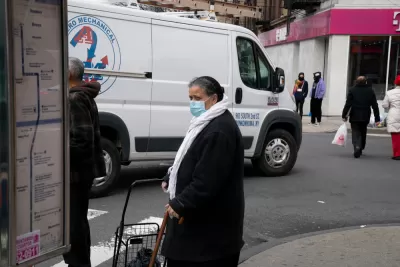
Mark Hugo Lopez, Lee Rainie, and Abby Budiman present new data and analysis on the disparate public health and economic effects of the coronavirus for Black and Hispanic Americans.
The financial shocks of the outbreak have hit Hispanic and black Americans especially hard. When it comes to public health, black Americans appear to account for a larger share of COVID-19 hospitalizations nationally than their share of the population. And in New York City, death rates per 100,000 people are highest among blacks and Hispanics.
In addition to the previous reports cited in that paragraph, new data from Pew Research Center surveys show additional disparities along racial lines in terms of public health and economic experiences in the first few months of the coronavirus pandemic. The article presents five key findings, with more details included in the source article:
- Job and wage losses due to COVID-19 have hit Hispanic adults the hardest.
- Most black and Hispanic Americans do not have financial reserves to cover expenses in case of an emergency.
- The COVID-19 economic downturn has made it harder for some Americans to pay their monthly bills.
- There are sharp racial and ethnic differences in personal experiences with COVID-19 and in concerns about spreading or catching the virus.
- Hispanic and black Americans are more likely than white adults to say cellphone tracking is acceptable in efforts to fight the virus.
For a few ideas about how to respond to the pre-existing conditions that have rendered these racial disparities obvious during the pandemic, see a Planetizen feature by Joan Alexander, with examples from Oakland and Austin.
FULL STORY: Financial and health impacts of COVID-19 vary widely by race and ethnicity

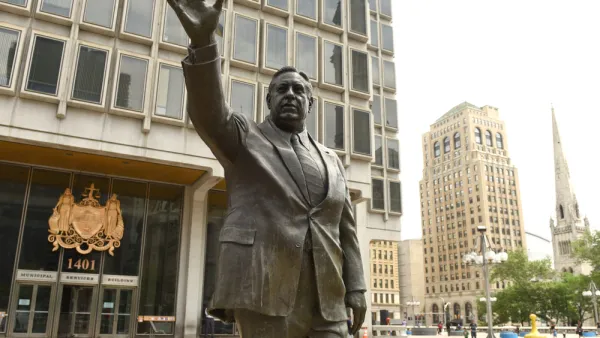
Designing for Life
A Black architect calls on designers to recommit their training and expertise to account for the health and safety of all, especially those who have been most harmed by the status quo of the built environment.
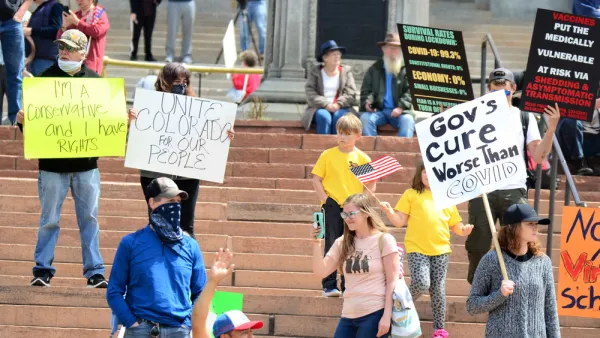
The Legacy of Redlining Made Clear by the Coronavirus
Covid-19 deaths track closely to the discriminatory boundaries set by housing lenders, sponsored by the government, in the 20th century.
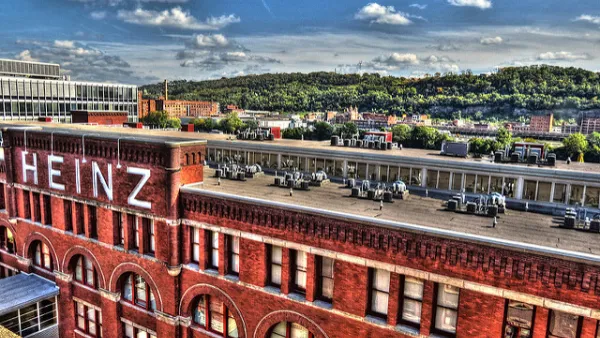
Task Force Would Ensure Social Justice in COVID-19 Response in Pittsburgh
If approved by the Pittsbugh City Council, the proposed Greater Pittsburgh Covid-19 Racial Equity Task Force would work toward more equitable distribution of economic and public health resources, during the coronavirus pandemic and after.

The state-sanctioned urbicide of Austin
People don’t kill cities. Freeways do.

US to reduce Colorado River water deliveries to Mexico
A new Colorado Treaty amendment reduces Mexico’s Colorado River water allocation by 250,000 acre feet.

New Jersey’s second-largest city bans standalone data centers
Jersey City will continue to allow co-location facilities, such as those meant for research institutions that store their own data.

Amtrak not solely to blame for New Jersey commuter rail's unreliability, report finds
A new study from the Garden State Initiative found that NJ Transit’s budget grew 20% across a 4 year period, but reliability declined significantly over the same period.

EPA erases limits on planet-warming pollution from power plants
Under Monday’s plan, power plants would still have some limits on how much mercury, arsenic and other contaminants they can emit.

Phoenix announces new on-demand transit service, more frequent RAPID buses
Both new services will launch in October, and are part of Phoenix's Project Effective Access Solutions for Easing Congestion.

FREE Course: Walkable City 1: Why Walkability?
After describing his path towards focusing on walkability as the essence of good planning, Jeff Speck marches through his five principal reasons for making more walkable places.
Reinventing Malls: Planning Alchemy—Turning Gray Fields Into Gold
The course focuses on the opportunities and imperatives that shape reinvention of mall sites.

Eagle County Government
Harvard University Graduate School of Design
Nashville Planning Department
The Architects Foundation
University of Cincinnati Online
The Pocatello Development Authority
The Urban Renewal Agency of the City of Pocatello
Journal of the American Planning Association