New data from the Louisiana Department of Health provide the most detailed look at the disparate impacts of the coronavirus across racial lines.


"Predominantly black communities in the New Orleans metropolitan area have infection rates for the coronavirus that are often far above those in nearby white communities," reports Jeff Adelson, sharing data published this week by the Louisiana Department of Health.
Adelson explains in more detail what the new data reveal about the racial disparities in public health outcomes during the COVID-19 pandemic in the United States:
Previously released data had shown the coronavirus was taking a far greater toll on black Louisiana residents than other races. As of Monday, about 59.3% of the victims who ultimately succumbed to the coronavirus in Louisiana were black, a rate about 1.8 times as high as the African-American share of the state’s population.
The new data divides known infections by U.S. census tract. It provides a stark look at the high rates of infections in predominantly African-American areas and its relatively lower prevalence in nearby white neighborhoods.
Louisiana is one of only a few states to provide data at such a granular level, making this reporting possible, including a lot more insight about what the data reveal about life in Louisiana. New Orleans Mayor LaToya Cantrell, "announced efforts to do more thorough testing of the city's hardest-hit areas on Monday," according to Adelson.
FULL STORY: 'Glaring' racial disparities found in coronavirus infection rates in these New Orleans neighborhoods


Pandemic Data for Planners
The right data will be critical in crafting effective responses to the threats posed by the coronavirus.
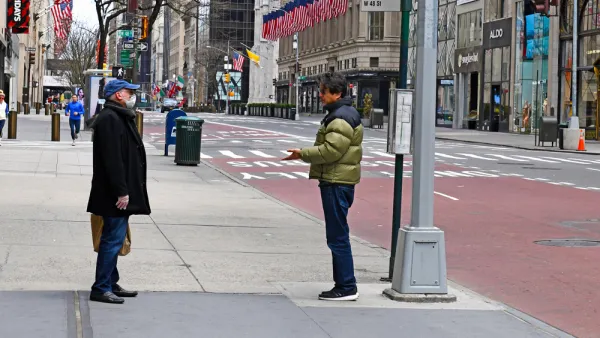
Friday Eye Candy: Covid-19, Then and Now
The New York Times compared images from readers portraying similar scenes in 2020 and 2022.
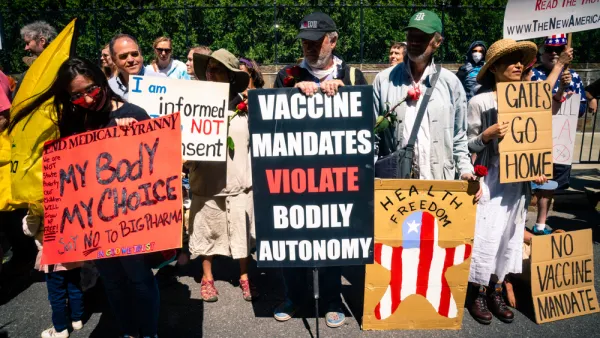
The Shifting Demographics of Covid-19
For most of the Covid-19 pandemic, Black Americans died at much higher rates than White Americans. That trend has reversed at times during the past year.

Planetizen Federal Action Tracker
A weekly monitor of how Trump’s orders and actions are impacting planners and planning in America.

The state-sanctioned urbicide of Austin
People don’t kill cities. Freeways do.

US to reduce Colorado River water deliveries to Mexico
A new Colorado Treaty amendment reduces Mexico’s Colorado River water allocation by 250,000 acre feet.

5 New England states march closer to 800 megawatt wind energy project
Securing federal approval for the project may be complicated under the Trump administration, which has historically been hostile towards domestic wind power.

Baltimore to break ground on $50 million Transit Priority Project
The project will bring faster bus trips, safer streets and better bike connections to Baltimore.

Airbnb launches $250 million 'last-dollar financing' housing accelerator, makes first investment in Austin
The company will put $6.4 million towards affordable housing development in Texas’ capital.

FREE Course: Walkable City 1: Why Walkability?
After describing his path towards focusing on walkability as the essence of good planning, Jeff Speck marches through his five principal reasons for making more walkable places.
Reinventing Malls: Planning Alchemy—Turning Gray Fields Into Gold
The course focuses on the opportunities and imperatives that shape reinvention of mall sites.

Eagle County Government
Harvard University Graduate School of Design
Nashville Planning Department
The Architects Foundation
University of Cincinnati Online
The Pocatello Development Authority
The Urban Renewal Agency of the City of Pocatello
Journal of the American Planning Association