The extension to downtown is a complex and ambitious project facing many challenges and questions about feasibility.


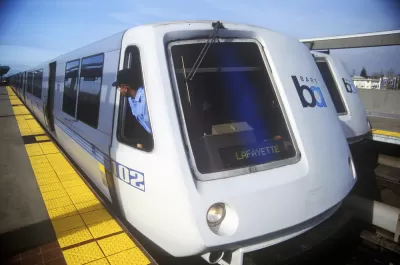
Nico Savidge reports on cost increases and schedule delays for the Bay Area Rapid Transit’s downtown San Jose extension project.
"Last year, [Santa Clara Valley Transportation Authority] officials increased the extension’s estimated cost by $900 million and pushed back their timeline for completing it by as much as four years — from a $4.7 billion project finished in 2026 to a $5.6 billion one that could open in 2029 or 2030," says Savidge.
One issue is the single-bore design that will require a very wide tunnel to accommodate two trains. In addition, three underground stations will be 10 stories belowground and high-speed elevators are planned at two stations to transport riders to and from the platforms.
"Perhaps the biggest question, though, is whether BART and VTA will work together effectively, or if the extension’s extra layer of complexity — having one public transit agency build an extension that another will use — will further bog down the complex downtown project," notes Savidge.
Read the full story: BART’s San Jose extension is woefully delayed, and the hardest part is still to come


South Bay BART Extension Gets $5.1 Billion in Federal Funding
The grant brings the project closer to reality, but delays and cost overruns are putting a completion date more than a decade away.
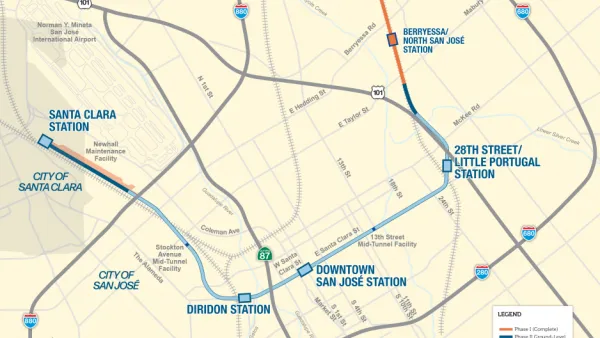
BART’s Phase II Extension Into San Jose Ready to Go
A long-awaited extension of the Bay Area’s regional rail transit system is finally coming into view, with an expected completion date of 2030.
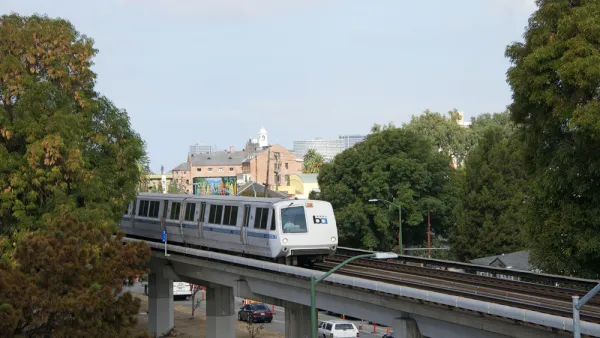
Change of Plans: Transit Funding Priorities Shift in the Silicon Valley
Santa Clara County cities rebel against the agency's proposed plan to spend most of the Measure B funds on a Silicon Valley BART extension.

Planetizen Federal Action Tracker
A weekly monitor of how Trump’s orders and actions are impacting planners and planning in America.

California plans to bury El Niño’s downpour
If the state plays its cards right, it may be able to store a billion acre-feet of El Niño’s water in aquifers.

Chicago breaks ground on $3 billion megadevelopment
The new neighborhood, titled Foundry Park, will one day host 3,700 residences.

Satanic Place Names
From streams and lakes to valleys and canyons, I mapped more than 1,000 places named after the Devil.

California High-Speed Rail Authority CEO resigns after $600,000 scandal
Under Ian Choudri, the authority used taxpayer dollars to fund first class flights and trips to nightclubs.

Want to study the Missouri River? Soon, you may need unanimous approval from 10 states
Legislation would require 10 governors’ permission to study or build projects moving water outside the basin.

FREE Course: Walkable City 1: Why Walkability?
After describing his path towards focusing on walkability as the essence of good planning, Jeff Speck marches through his five principal reasons for making more walkable places.
Reinventing Malls: Planning Alchemy—Turning Gray Fields Into Gold
The course focuses on the opportunities and imperatives that shape reinvention of mall sites.

City of Rosemead
Rutgers University, Edward J. Bloustein School of Planning and Public Policy
One Hundred Miles
Hunter College, City University of New York (CUNY)
The Architects Foundation
University of Cincinnati Online
City of Cambridge
Montrose County
The Pocatello Development Authority