A former housing and urban development secretary and a professor of sociology oppose the Trump administration's proposed changes to the Affirmatively Furthering Fair Housing rule.


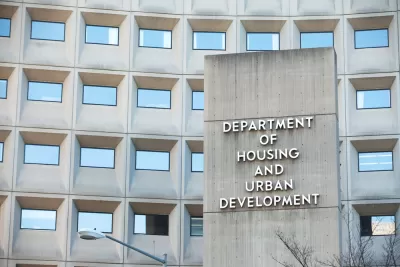
Shaun Donovan, former secretary of the U.S. Department of Housing and Urban Developer, writes an opinion piece for the New York Times to opposed proposed changes to the Affirmatively Furthering fair Housing rule, announced the Trump administration in January 2020.
Donovan explains the key terms in the contemporary debate over fair housing—disparate impact and affirmatively furthering fair housing—and the progress made under the Obama administration to implement policies to address both:
At HUD, I codified and strengthened these principles. In 2013, the agency issued a formal disparate impact regulation based on decades of unanimous judicial consensus. And in the most important civil rights decision involving housing in a generation, the Supreme Court upheld the disparate impact principle in 2015, recognizing it as consistent with the “central purpose” of the Fair Housing Act. I also began improving HUD’s approach to affirmatively furthering fair housing and my successor, Julián Castro, completed it with a regulation in 2015.
Donovan's purpose in writing the opinion piece is to oppose changes proposed by the Trump administration to "gut" disparate impact standards and "fundamentally undermine" affirmatively furthering standards.
Donovan's opposition to the Trump administration's proposed changes is echoed in an opinion piece written by Gregory D. Squires, professor of Sociology and Public Policy and Public Administration at George Washington University, and published by American Banker, which calls the proposed actions "yet another significant step backward."
"As for its new proposal, HUD should simply scrap it. That would advance the agency’s efforts to fulfill its mandate to make fair housing a reality and lead to the balanced living patterns envisioned when the Fair Housing Act was passed," concludes the editorial.
Read the full story: The Trump Administration Is Clearing the Way for Housing Discrimination

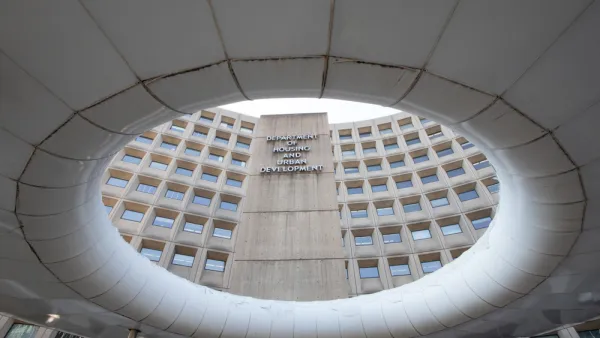
Biden Administration to Reinstate Affirmatively Furthering Fair Housing, Disparate Impact Rules
The pendulum swings on federal fair housing law.
Trump Administration Proposal Would Eliminate Fair Housing Protections
The Trump administration last week published its latest attempt to undermine a fair housing rule adopted during the Obama administration.

Sources: Trump Administration Considering an Attack on Disparate Impact
The Supreme Court upheld the disparate impact doctrine at the heart of fair housing rules, along with many other anti-discrimination policies, in 2015. Still, the Trump administration is looking for ways to undermine disparate impact.

Planetizen Federal Action Tracker
A weekly monitor of how Trump’s orders and actions are impacting planners and planning in America.

California plans to bury El Niño’s downpour
If the state plays its cards right, it may be able to store a billion acre-feet of El Niño’s water in aquifers.

Desperate measures: Advocates weigh draining Lake Powell to fill Colorado River
Draining the reservoir could reduce evaporation losses by a couple hundred thousand acre-feet.

Chicago Avenue bridge construction delays enrages city leaders
The bridge has been closed since 2025. The city originally aimed to re-open it in December, and now expects to finish construction in 2027.

NYC bus network redesign speeds up Queens buses
Rush routes have seen a 4.6% speed increase after the redesign.

California High-Speed Rail Authority picks trainset manufacturer
The California High-Speed Rail Authority aims to start servicing passengers by 2033.

FREE Course: Walkable City 1: Why Walkability?
After describing his path towards focusing on walkability as the essence of good planning, Jeff Speck marches through his five principal reasons for making more walkable places.
Reinventing Malls: Planning Alchemy—Turning Gray Fields Into Gold
The course focuses on the opportunities and imperatives that shape reinvention of mall sites.

City of Rosemead
Rutgers University, Edward J. Bloustein School of Planning and Public Policy
One Hundred Miles
Hunter College, City University of New York (CUNY)
The Architects Foundation
University of Cincinnati Online
City of Cambridge
Montrose County
The Pocatello Development Authority