The pendulum swings on federal fair housing law.


Kriston Capps reports:
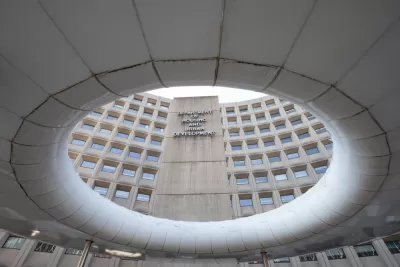
[T]he U.S. Department of Housing and Urban Development submitted two fair housing rules for review. One is the Affirmatively Furthering Fair Housing rule, which requires local governments that accept federal housing dollars to review their policies and actively work toward reversing segregation. The other is the discriminatory effects standard, better known as the disparate impact rule, which bars seemingly neutral policies in lending, renting and selling that result in discrimination.
As noted by Capps, the Biden administration is following through on a promise to restore rules scrapped by the Trump administration in a high-profile move motivated by his failed bid for reelection.
According to Capps, the AFFH rule proposed this month by the Biden administration is an interim rule, paving the way for a fuller AFFH measure. An update of the AFFH rule could provide an opportunity to improve on some of the limitations and weaknesses of the AFFH rule adopted by the Obama administration in 2015.
"The new disparate impact regulation, meanwhile, is a proposed rule, which gives the public the opportunity to weigh in before it takes effect," reports Capps.
FULL STORY: Trump Scrapped Two Fair Housing Rules; Biden Is Bringing Them Back

Lessons in Affirmatively Furthering Fair Housing
With HUD seeking comments on a revamped version of the Affirmatively Furthering fair Housing Rule, now is a good time to seek lessons from the one state to attempt to implement the federal rule at the state level.
Opinion Writers Oppose Trump's Proposed Changes to Fair Housing Laws
A former housing and urban development secretary and a professor of sociology oppose the Trump administration's proposed changes to the Affirmatively Furthering Fair Housing rule.
Trump Administration Proposal Would Eliminate Fair Housing Protections
The Trump administration last week published its latest attempt to undermine a fair housing rule adopted during the Obama administration.

The state-sanctioned urbicide of Austin
People don’t kill cities. Freeways do.

US to reduce Colorado River water deliveries to Mexico
A new Colorado Treaty amendment reduces Mexico’s Colorado River water allocation by 250,000 acre feet.

New Jersey’s second-largest city bans standalone data centers
Jersey City will continue to allow co-location facilities, such as those meant for research institutions that store their own data.

Amtrak not solely to blame for New Jersey commuter rail's unreliability, report finds
A new study from the Garden State Initiative found that NJ Transit’s budget grew 20% across a 4 year period, but reliability declined significantly over the same period.

EPA erases limits on planet-warming pollution from power plants
Under Monday’s plan, power plants would still have some limits on how much mercury, arsenic and other contaminants they can emit.

Phoenix announces new on-demand transit service, more frequent RAPID buses
Both new services will launch in October, and are part of Phoenix's Project Effective Access Solutions for Easing Congestion.

FREE Course: Walkable City 1: Why Walkability?
After describing his path towards focusing on walkability as the essence of good planning, Jeff Speck marches through his five principal reasons for making more walkable places.
Reinventing Malls: Planning Alchemy—Turning Gray Fields Into Gold
The course focuses on the opportunities and imperatives that shape reinvention of mall sites.

Eagle County Government
Harvard University Graduate School of Design
Nashville Planning Department
The Architects Foundation
University of Cincinnati Online
The Pocatello Development Authority
The Urban Renewal Agency of the City of Pocatello
Journal of the American Planning Association