The $6 billion redevelopment project at the Concord Naval Weapons Station has stalled over labor issues.


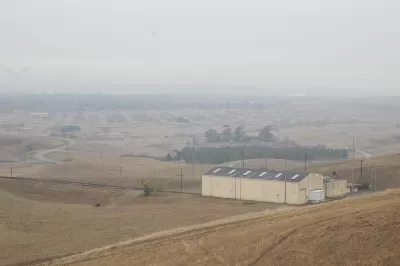
"A high-stakes dispute between unions and the developer of the Concord Naval Weapons Station is threatening to derail the [San Francisco] Bay Area’s biggest housing project, a 13,000-unit redevelopment of the former military base in Contra Costa County," reports J.K. Dineen.
Building trades unions want all of the project’s construction work done by union members. "The developers said that agreeing to an all-union job site would make the project infeasible, raising construction costs by $542 million and cutting profits from 17% to a loss," reports Dineen.
The planned labor agreement issue was not resolved during public hearings earlier this month, and the Concord City Council ordered the two sides to return to the negotiating table.
"At the heart of the debate was whether the developers had promised a comprehensive agreement in 2016 when they were picked for the development. Labor representatives said that [Kofi] Bonner [of FivePoint] seemed to agree to an all-union project at that time," notes Dineen.
Read the full story: Bay Area’s largest planned housing project could die due to union fight


'Heartening Promise' Found in a Massive East Bay Area Redevelopment Project
The city of Concord, home to 130,000 but often neglected in the public consciousness of the San Francisco Bay Area, could set new standards for master planning practices.
$6 Billion Master Planned Development Moving Forward in the East Bay
Concord, California is considering a trio of massive redevelopment proposals for the site of a former Navy weapons depot that could bring 12,000 homes and 6 million square feet of commercial development to the fringe of the East Bay Area.

St. Paul Approves Master Plan for Thousands of New Jobs and Homes
A new neighborhood dubbed “The Heights” is planned for the East Side of St. Paul, Minnesota.

Planetizen Federal Action Tracker
A weekly monitor of how Trump’s orders and actions are impacting planners and planning in America.

California plans to bury El Niño’s downpour
If the state plays its cards right, it may be able to store a billion acre-feet of El Niño’s water in aquifers.

Desperate measures: Advocates weigh draining Lake Powell to fill Colorado River
Draining the reservoir could reduce evaporation losses by a couple hundred thousand acre-feet.

California city breaks ground on transit connector
The project includes three mobility hubs and a pedestrian bridge.

After public outcry, Massachusetts city releases housing development tracker
Cambridge’s tracker currently shows 250 housing projects in various stages of development.

40 years after approval, Chicago breaks ground on new park
The park honors Jean Baptiste Point du Sable, the city’s first permanent non-native settler.

FREE Course: Walkable City 1: Why Walkability?
After describing his path towards focusing on walkability as the essence of good planning, Jeff Speck marches through his five principal reasons for making more walkable places.
Reinventing Malls: Planning Alchemy—Turning Gray Fields Into Gold
The course focuses on the opportunities and imperatives that shape reinvention of mall sites.

City of Rosemead
Rutgers University, Edward J. Bloustein School of Planning and Public Policy
One Hundred Miles
Hunter College, City University of New York (CUNY)
The Architects Foundation
University of Cincinnati Online
City of Cambridge
Montrose County
The Pocatello Development Authority