A proposal to charge riders who pay fare in cash an extra 25 cents faces criticism.


Ron Thompson writes:
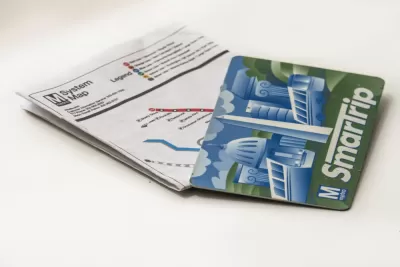
In an effort to speed up bus trips, WMATA has proposed a $0.25 fee for actions which slow down boarding, including paying with cash and reloading SmarTrip cards onboard. While speeding up bus service would be a boon for all riders, this proposal shifts the responsibility for dealing with a systemic issue onto individual clients—the poorest ones.
As implied by the end of that passage, Thompson suggests that the transit agency has many responsibilities in reducing dwell time, as do external factors like single-occupancy drivers. "Yet rather than focusing on the root causes of the issue, the agency is passing the buck to its most vulnerable—and most faithful—riders," according to Thompson.
Research noted in the article finds that many low-income people are also underbanked, and a penalty for cash payment would reinforce the perception that some riders matter more than others, according to Thompson.
Read the full story: If WMATA makes buses more expensive for cash users, low-income riders could lose

Smartphone Fare Cards Now Available for D.C. Metro
The future is now.
Backlash for Bus Service Cuts Proposed by D.C. Metro
A debate about how to more efficiently operate the Washington Metropolitan Area Transit Authority's bus service is underway.
Report Lays Out a New Path for Bus Service in the D.C. Region
Ridership on the WMATA bus system, down an estimated 13 percent between 2012 and 2017, will need drastic innovations to reverse, according to a new report by the Bus Transformation project.

Planetizen Federal Action Tracker
A weekly monitor of how Trump’s orders and actions are impacting planners and planning in America.

The state-sanctioned urbicide of Austin
People don’t kill cities. Freeways do.

Colorado’s Largest Data Center Could Rise Next to Homes — Without a Public Hearing
The proposed campus would consume 11 times the power of Denver International Airport; as it has across the country, opposition mounts.

Nation's most wind-powered state turns to coal as data centers increase energy demand
For the first time in decades, Iowa has increased its generation of coal power.

NYC cools commuters with city's first rain garden above a bus stop
New York City officials say the plants in the rain garden can absorb 16 gallons of rainwater during heavy storms.

Brightline West’s future may rely on $6 billion federal loan
The company has until Nov. 2 to make a $400 million equity investment into its proposed high-speed rail line.

FREE Course: Walkable City 1: Why Walkability?
After describing his path towards focusing on walkability as the essence of good planning, Jeff Speck marches through his five principal reasons for making more walkable places.
Reinventing Malls: Planning Alchemy—Turning Gray Fields Into Gold
The course focuses on the opportunities and imperatives that shape reinvention of mall sites.

Greater Baltimore Committee
Eagle County Government
Harvard University Graduate School of Design
The Architects Foundation
University of Cincinnati Online
The Pocatello Development Authority
The Urban Renewal Agency of the City of Pocatello
Journal of the American Planning Association