Philadelphia planners hope to achieve benefits to traffic safety and transit performance by restricting automobile use of lanes along Roosevelt Boulevard.


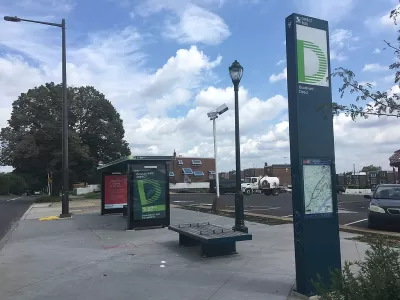
Philadelphia is launching a new BAT (business access and transit) lane scheme for a bus route along Roosevelt Boulevard, reports Darryl C. Murphy.
BAT, which stands for business access and transit, is a new-to-Philly breed of lane that prioritizes buses, and lets cars flow into only to make right turns at intersections or businesses. Never before tried on a major road in Philadelphia, the city is now advancing a plan to test BAT lanes on the Boulevard, the most dangerous road in the city and one of the deadliest in the region.
The pilot BAT lane is intended to both speed up bus service along the street but also improve safety. The project is funded by the city's "Routes for Change" project.
As noted by Murphy, the BAT lane idea is a watered down version of bus priority projects implemented recently in New York City and approved recently by San Francisco.
Read the full story: Philly to test a bus-forward traffic hack on deadly Roosevelt Boulevard

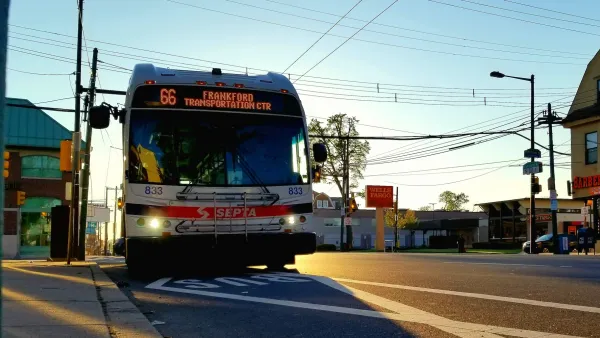
SEPTA's bus-mounted lane enforcement cameras cut travel times by up to 6%
The AI-assisted cameras have issued nearly 200,000 citations to drivers blocking bus lanes.
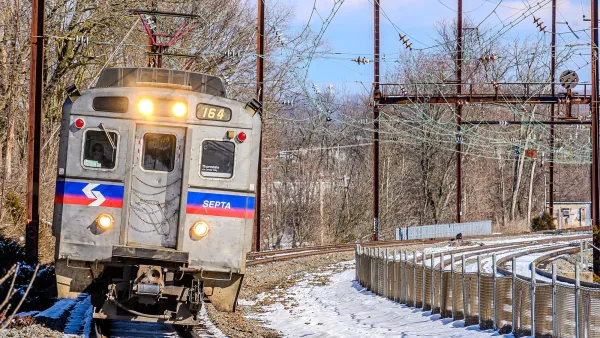
SEPTA Borrows Maryland's Rail Cars to Replace Fleet That Kept Catching Fire
The agency’s efforts to repair its Silverliner fleet is being hampered by supply chain delays.
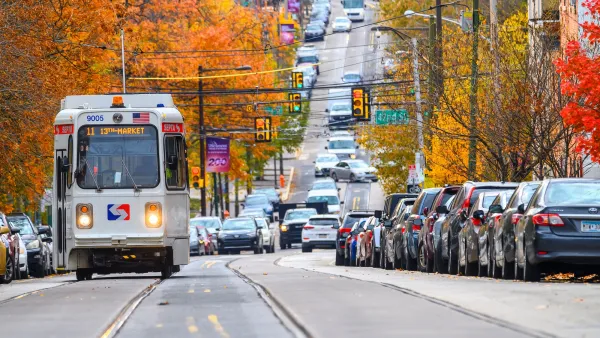
SEPTA Narrowly Avoids Strike, Walkout Still Possible
Negotiations continue this week between SEPTA officials and union leaders.

Planetizen Federal Action Tracker
A weekly monitor of how Trump’s orders and actions are impacting planners and planning in America.

‘Going backwards:’ Baltimore mayor, students rally against state's transit funding plan
Maryland's proposed six-year plan provides no funding for Baltimore’s BMORE bus program and reduces its road maintenance funding.
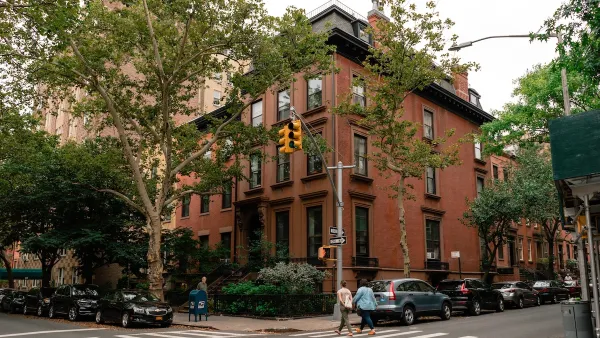
Mamdani sent nearly 6,000 pied-à-terre tax warnings to homes that didn’t qualify
A judge has ordered the administration to cancel thousands of pied-à-terre tax notices after it sent 35% of them erroneously.

Mamdani sent nearly 6,000 pied-à-terre tax warnings to homes that didn’t qualify
A judge has ordered the administration to cancel thousands of pied-à-terre tax notices after it sent 35% of them erroneously.

Detroit to transform waterfront with $2.2 billion investment
Developers will convert about 18 acres of unused parking lot space into civic spaces.

‘Going backwards:’ Baltimore mayor, students rally against state's transit funding plan
Maryland's proposed six-year plan provides no funding for Baltimore’s BMORE bus program and reduces its road maintenance funding.

FREE Course: Walkable City 1: Why Walkability?
After describing his path towards focusing on walkability as the essence of good planning, Jeff Speck marches through his five principal reasons for making more walkable places.
Reinventing Malls: Planning Alchemy—Turning Gray Fields Into Gold
The course focuses on the opportunities and imperatives that shape reinvention of mall sites.


City of Thousand Oaks
City of Wisconsin Rapids
Harvard University Graduate School of Design
The Architects Foundation
University of Cincinnati Online
Northern Illinois Transit Authority (NITA)
The Pocatello Development Authority
The Urban Renewal Agency of the City of Pocatello