Despite efforts by federal regulators to curtail painted crosswalks, Cincinnati is moving forward with a unique program to paint murals on streets to slow traffic.


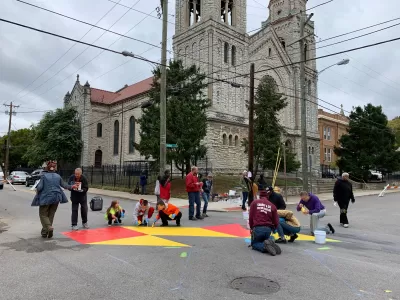
"Cincinnati launched a program last week, Paint the Streets, which allows citizen groups to paint neighborhood street murals intended to calm traffic," reports Katie Pyzyk.
The Paint the Streets program is intended to improve pedestrian safety as part of the city's Vision Zero efforts, but it features an important distinction from other programs, according to Pyzyk. "Cincinnati's program is a bit different from those in some other cities because it keeps the pavement art out of crosswalks, an area where many other cities have focused their efforts."
As noted by Pyzyk, the Paint the Streets program emerges at a controversial time for projects that add colorful treatments to streets in the name of traffic safety, after the Federal Highway Administration's (FHWA)recent efforts to curtail rainbow crosswalks in cities like Ames, Iowa.
Cincinnati isn't waiting to hear what the FHWA has to say about its programs, and painted its first mural in October.
Read the full story: Cincinnati wants to calm traffic with street mural program

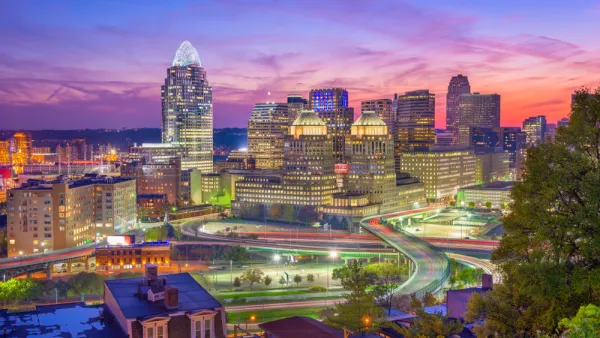
Cincinnati Gets Serious About Pedestrian Safety
A new in-house team dedicated to pedestrian safety at Cincinnati City Hall and a new complete streets ordinance are some of the changes underway in Cincinnati.
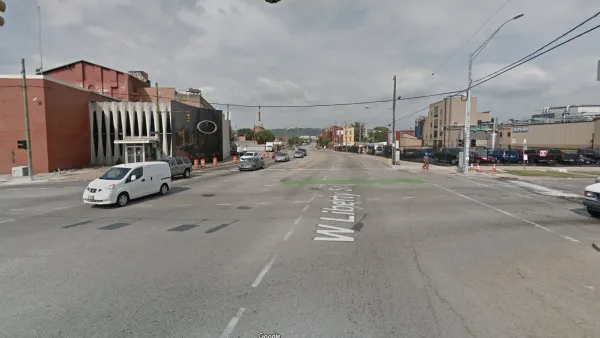
Cincinnati To Consider $1 Million Traffic Calming Program
A proposal before Cincinnati's city council would boost traffic calming initiatives and use innovative technology to slow traffic on some of the city's most dangerous streets.
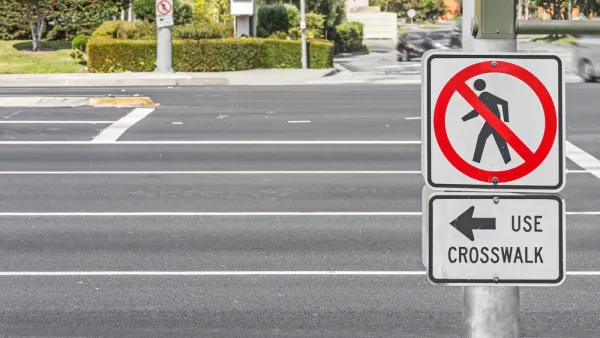
Where Pedestrians Feel Invisible to Drivers
A call for more advocacy by citizens and more action cities in the name of cautious driving and pedestrian safety.

Planetizen Federal Action Tracker
A weekly monitor of how Trump’s orders and actions are impacting planners and planning in America.

California plans to bury El Niño’s downpour
If the state plays its cards right, it may be able to store a billion acre-feet of El Niño’s water in aquifers.

Desperate measures: Advocates weigh draining Lake Powell to fill Colorado River
Draining the reservoir could reduce evaporation losses by a couple hundred thousand acre-feet.

California city breaks ground on transit connector
The project includes three mobility hubs and a pedestrian bridge.

After public outcry, Massachusetts city releases housing development tracker
Cambridge’s tracker currently shows 250 housing projects in various stages of development.

40 years after approval, Chicago breaks ground on new park
The park honors Jean Baptiste Point du Sable, the city’s first permanent non-native settler.

FREE Course: Walkable City 1: Why Walkability?
After describing his path towards focusing on walkability as the essence of good planning, Jeff Speck marches through his five principal reasons for making more walkable places.
Reinventing Malls: Planning Alchemy—Turning Gray Fields Into Gold
The course focuses on the opportunities and imperatives that shape reinvention of mall sites.

City of Rosemead
Rutgers University, Edward J. Bloustein School of Planning and Public Policy
One Hundred Miles
Hunter College, City University of New York (CUNY)
The Architects Foundation
University of Cincinnati Online
City of Cambridge
Montrose County
The Pocatello Development Authority