New research out of the University of Virginia makes the case for walkable neighborhoods as incubators of economic mobility.


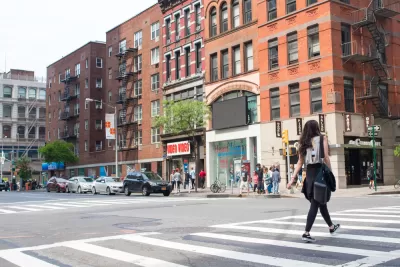
"New research from the University of Virginia finds children who are raised in walkable cities are more likely to climb the economic ladder, earning more than their parents did at similar points in their lives," reports Jane Kelly.
The study, "The Socioecological Psychology of Upward Mobility," was published in the journal American Psychologist.
According to the study, feelings of connectedness are a predictor of upward mobility. Nicholas Buttrick, one of the authors of the study, is quoted in the article: "We also find that if you live in a walkable city, you feel like you belong," Buttrick said. "You feel like you have a community, and that feeling also predicts whether or not you’re going to be moving up the economic ladder."
The researchers are planning to shift their focus next to the upward mobility enabled by public transit—some evidence of that outcome is already available.
FULL STORY: LIVING IN WALKABLE CITIES PREDICTS SUCCESS OF ‘AMERICAN DREAM’

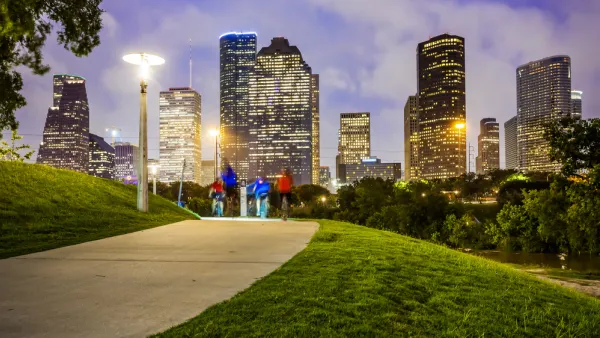
Slideshow: Walkable Houston
The Houston Chronicle shares the views in the most walkable sections of the city of Houston.
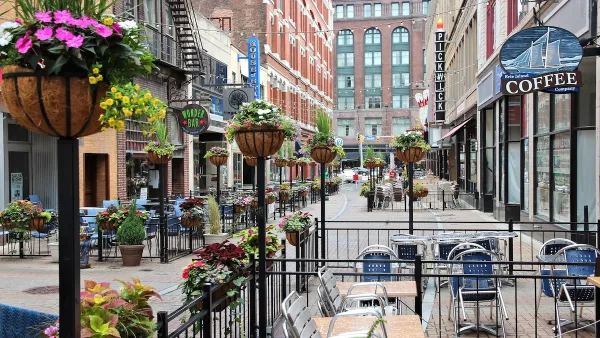
Walkability Report Ranks NYC #1; Others May Surprise You
More surprising entries on the list include Houston and Los Angeles.

Walkable Neighborhoods Connected to Healthier Pregnancies, Births
More evidence of the public health benefits of walkable neighborhoods.

Planetizen Federal Action Tracker
A weekly monitor of how Trump’s orders and actions are impacting planners and planning in America.

The state-sanctioned urbicide of Austin
People don’t kill cities. Freeways do.

US to reduce Colorado River water deliveries to Mexico
A new Colorado Treaty amendment reduces Mexico’s Colorado River water allocation by 250,000 acre feet.

Colorado’s Largest Data Center Could Rise Next to Homes — Without a Public Hearing
The proposed campus would consume 11 times the power of Denver International Airport; as it has across the country, opposition mounts.

5 New England states march closer to 800 megawatt wind energy project
Securing federal approval for the project may be complicated under the Trump administration, which has historically been hostile towards domestic wind power.

Baltimore to break ground on $50 million Transit Priority Project
The project will bring faster bus trips, safer streets and better bike connections to Baltimore.

FREE Course: Walkable City 1: Why Walkability?
After describing his path towards focusing on walkability as the essence of good planning, Jeff Speck marches through his five principal reasons for making more walkable places.
Reinventing Malls: Planning Alchemy—Turning Gray Fields Into Gold
The course focuses on the opportunities and imperatives that shape reinvention of mall sites.

Eagle County Government
Harvard University Graduate School of Design
Nashville Planning Department
The Architects Foundation
University of Cincinnati Online
The Pocatello Development Authority
The Urban Renewal Agency of the City of Pocatello
Journal of the American Planning Association