The Ohio Power Siting Board through a wrench in plans for a solar project in southern Ohio, raising questions about the viability of renewable energy in the state.


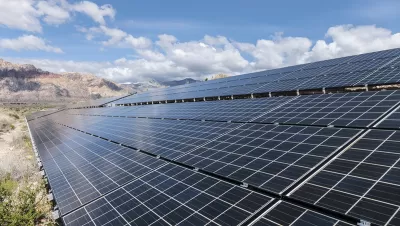
"The Ohio Power Siting Board [in October] voted to pull the final approval for a solar project planned for southern Ohio," reports Mark Williams.
The project in question, Nestlewood Solar Farm, was an 80-megawatt solar project proposed for Brown and Clermont counties in southwestern Ohio. "The energy generated by the project would deliver power to a single point of interconnection (POI) into Duke Energy Ohio Kentucky’s existing South Bethel-Brown 69-kV transmission line," according to an article written in February 2019 by Corina Rivera-Linares.
The decision to kill the project caught environmentalists and renewable energy advocates by surprise, according to Williams, and now there's "fear the move will further discourage development of solar and other projects in the state."
Sam Randazzo, who serves as the board’s chairman by virtue of his job as chairman of the Public Utilities Commission from Ohio, pushed for the sudden demise of the project. According to Williams, Randazzo cited environmental reasons—like endangered species, glare off the solar panels, and agricultural and stormwater impacts—as reasons to suddenly kill the project.
One quote from the article sums up the concerns of renewable energy advocates in response to the news:
“Yesterday’s surprise regulatory delays at the Ohio Power Siting Board could introduce tremendous new uncertainty to the permitting process — in a state that has already presented renewable energy developers and consumers with policy challenges,” Bruce Burcat, executive director of the Mid-Atlantic Renewable Energy Coalition, said in a statement. “We continue to be concerned Ohio is going backwards.”
Read the full story: Environmentalists, others worry as state board pulls plans for solar project

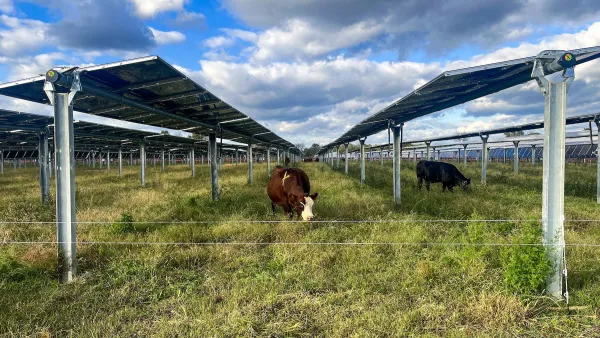
Cows at Tennessee's 'Silicon Ranch' graze under solar panels
The project aims to prove that agriculture and solar energy production can work in tandem.
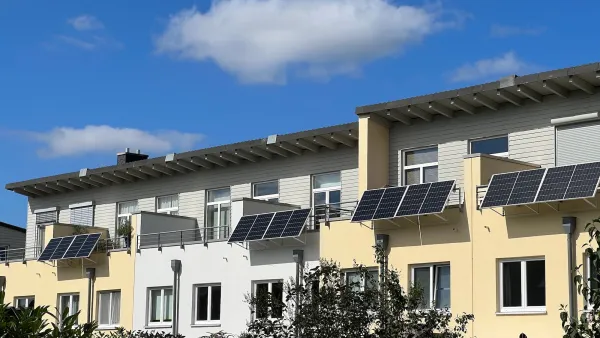
28 States and DC Could Legalize ‘Balcony Solar’
Plug-in solar panels, which are becoming popular across Europe, live in a regulatory gray area in the United States.
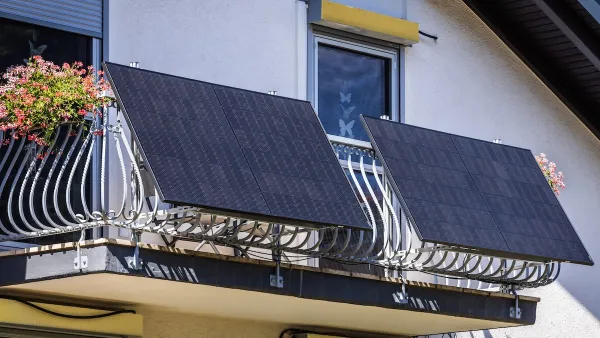
Bay Area Embraces ‘Balcony Solar’
Popular in Germany, wall- or balcony-mounted solar panels come at a lower cost and face fewer regulatory hurdles than rooftop solar, but their legal status in California is murky.

Planetizen Federal Action Tracker
A weekly monitor of how Trump’s orders and actions are impacting planners and planning in America.

The state-sanctioned urbicide of Austin
People don’t kill cities. Freeways do.
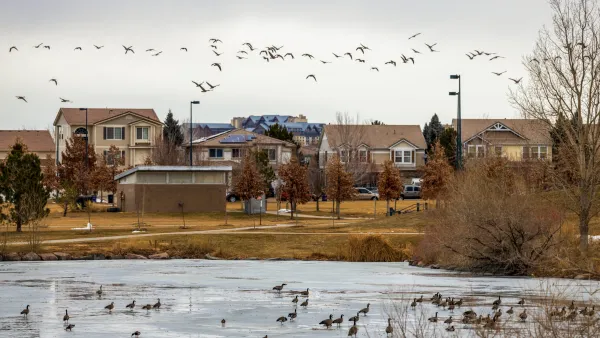
Colorado’s Largest Data Center Could Rise Next to Homes — Without a Public Hearing
The proposed campus would consume 11 times the power of Denver International Airport; as it has across the country, opposition mounts.
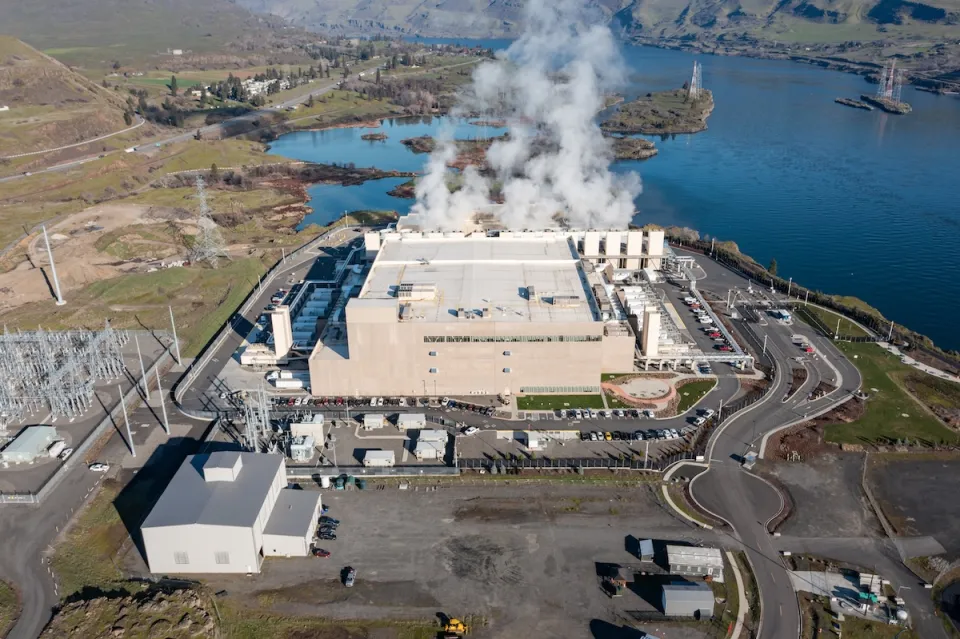
Data centers are consuming nearly 25% of Oregon’s power
The state has 111 data centers, with 32 more either planned or under construction.

A third of Texas cities must update their zoning codes to comply with new housing law
Texas municipalities are now required to allow manufactured housing in at least one residential zoning district.

Nation's most wind-powered state turns to coal as data centers increase energy demand
For the first time in decades, Iowa has increased its generation of coal power.

FREE Course: Walkable City 1: Why Walkability?
After describing his path towards focusing on walkability as the essence of good planning, Jeff Speck marches through his five principal reasons for making more walkable places.
Reinventing Malls: Planning Alchemy—Turning Gray Fields Into Gold
The course focuses on the opportunities and imperatives that shape reinvention of mall sites.

Greater Baltimore Committee
Eagle County Government
Harvard University Graduate School of Design
The Architects Foundation
University of Cincinnati Online
The Pocatello Development Authority
The Urban Renewal Agency of the City of Pocatello
Journal of the American Planning Association