Planning for the future should involve people who are going to live the future.



Ray Hartmann, founder of The Riverfront Times, writes a column to discuss a notably lack from political processes in St. Louis:
We need more young people at the table of movers and shakers. Based upon nothing more than a gut feel, I'm thinking that in growing places such as Austin, Orlando, Las Vegas, Nashville and the like, a group of people assembled to plan the future would not average nearly 56 years in age.
The context for the discussion of getting youth more involved in planning for the future is a non-planning process: the recent convening of a Board of Freeholders that will consider structural changes to the governance of the city and county. The lessons clearly apply to more planning focused processes, however:
But let's be clear about this much, regardless of age or any other demographic factors: St. Louis city and county really need to be open to change. The structural status quo is not working in either the city nor the county, and even if we're somehow able to take the baby step of ending the psychological barrier between city and county that literally can be traced back almost a century and a half ago, the freeholder process would be a significant landmark.
FULL STORY: Planning St. Louis' Future Needs to Include People who Will Live It

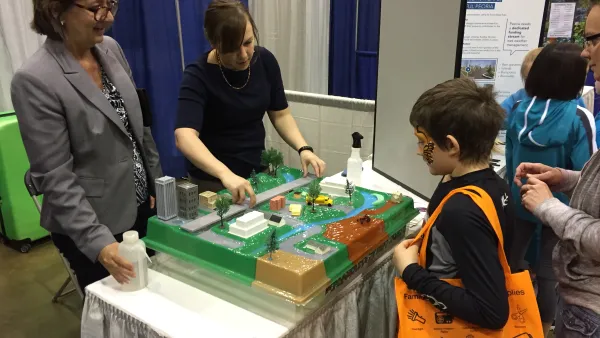
An Urban Planner Dedicated to Winning the Funding Necessary to Do the Work
An interview with Katy Shackelford, AICP, PTP, an urban planner and a funding specialist, to discuss the unique paths a planning career can take, and how unexpected career choices can deliver big benefits.
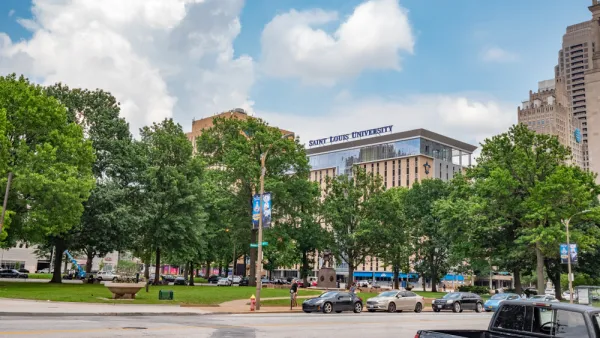
University Redevelopment Plan Includes For-Sale Housing
St. Louis University is helping stabilize the neighborhood located near its medical campus—instead of expanding the campus into property it owns around the campus, it is building houses to sell.
UrbanPlan Program Aims to Inspire a More Diverse Generation of Planners
An Urban Land Institute program brings students into the discussion and gives them the tools to make a difference in the planning processes that define their communities.

Planetizen Federal Action Tracker
A weekly monitor of how Trump’s orders and actions are impacting planners and planning in America.

The state-sanctioned urbicide of Austin
People don’t kill cities. Freeways do.

US to reduce Colorado River water deliveries to Mexico
A new Colorado Treaty amendment reduces Mexico’s Colorado River water allocation by 250,000 acre feet.

5 New England states march closer to 800 megawatt wind energy project
Securing federal approval for the project may be complicated under the Trump administration, which has historically been hostile towards domestic wind power.

Baltimore to break ground on $50 million Transit Priority Project
The project will bring faster bus trips, safer streets and better bike connections to Baltimore.

Airbnb launches $250 million 'last-dollar financing' housing accelerator, makes first investment in Austin
The company will put $6.4 million towards affordable housing development in Texas’ capital.

FREE Course: Walkable City 1: Why Walkability?
After describing his path towards focusing on walkability as the essence of good planning, Jeff Speck marches through his five principal reasons for making more walkable places.
Reinventing Malls: Planning Alchemy—Turning Gray Fields Into Gold
The course focuses on the opportunities and imperatives that shape reinvention of mall sites.

Eagle County Government
Harvard University Graduate School of Design
Nashville Planning Department
The Architects Foundation
University of Cincinnati Online
The Pocatello Development Authority
The Urban Renewal Agency of the City of Pocatello
Journal of the American Planning Association