The Boston Globe reports on reasons to suspect more conflicts of interest than there appears on the Boston Zoning Board of Appeal.


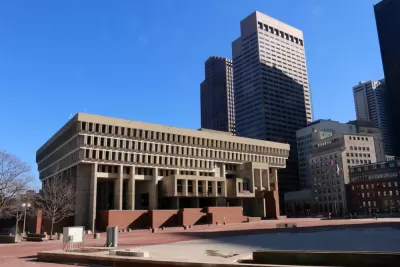
Milton J. Valencia and Tim Logan report on potential conflicts of interest on the Boston Zoning Board of Appeal.
A recent approval of a six-unit condo development on a small lot in the Dorchester neighborhood "illustrates the incestuous mechanics of a permitting system that is now enmeshed in an influence-peddling scandal, and highlights how the zoning board seems almost destined for potential conflicts of interest by the very way it is organized," according to Valencia and Logan.
"The composition of the Boston panel — under state law more than half of the board’s seats are held by people from the real estate and building industries — is unusual among US cities," according to the article. "And their twin allegiances come in conflict enough that recusals by board members are a regular occurrence."
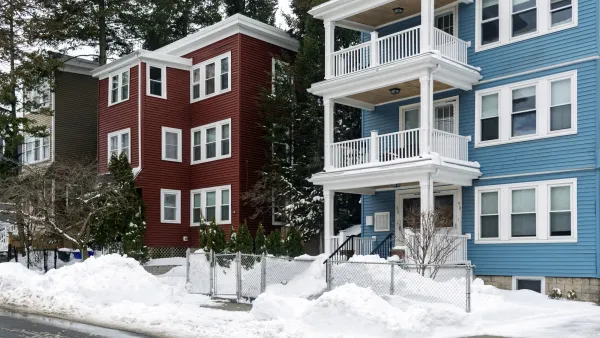
So the six-unit condo development failed its first time at the board, but a consultant for the project was subsequently appointed to a seat on the board before the project was approved despite neighborhood opposition. The consultant, Craig Galvin, recused himself from the vote. "When the units hit the market, Galvin’s firm, Galvin Group, was the listing agent; the house sold in December for $750,000, according to deed records, and the two condos are each listed at $759,000."
The implication of conflicts of interest comes at time when the board is under scrutiny for the aforementioned influence-peddling scandal. "The board is under investigation by federal prosecutors, who have secured a guilty plea from a City Hall employee for accepting a bribe to influence a zoning vote on a project. A top aide to the mayor who ran the agency that reviewed permits has taken an unpaid leave, and the Walsh administration has launched an internal review of the board’s procedures."
In a related article published the same day, Logan reports on the effort by one city councilmember to reform the board's requirements for representation from the real estate and development industry.
FULL STORY: Boston’s zoning board is rife with conflicts

Boston's 'sliver lots' could yield over 1,500 affordable homes
The city has identified over 500 vacant parcels suitable for infill housing.

Boston Approves 700 ft Tall Buildings Downtown
A new rezoning plan raises height limits in some areas for buildings that are mostly residential.

Boston Upzoning Proposal Moves Forward
The Boston Planning Department approved a proposal that would raise allowable building heights in downtown and streamline permitting for small businesses.

Planetizen Federal Action Tracker
A weekly monitor of how Trump’s orders and actions are impacting planners and planning in America.

The state-sanctioned urbicide of Austin
People don’t kill cities. Freeways do.

US to reduce Colorado River water deliveries to Mexico
A new Colorado Treaty amendment reduces Mexico’s Colorado River water allocation by 250,000 acre feet.

LA Metro’s ultimatum: no extra buses for LA28 if federal funding isn’t imminently secured
If Metro does not provide additional buses, LA28 organizers will have to find a new way to manage Olympic traffic. LA28’s budget does not include a line item for transit.

Colorado’s Largest Data Center Could Rise Next to Homes — Without a Public Hearing
The proposed campus would consume 11 times the power of Denver International Airport; as it has across the country, opposition mounts.

5 New England states march closer to 800 megawatt wind energy project
Securing federal approval for the project may be complicated under the Trump administration, which has historically been hostile towards domestic wind power.

FREE Course: Walkable City 1: Why Walkability?
After describing his path towards focusing on walkability as the essence of good planning, Jeff Speck marches through his five principal reasons for making more walkable places.
Reinventing Malls: Planning Alchemy—Turning Gray Fields Into Gold
The course focuses on the opportunities and imperatives that shape reinvention of mall sites.

Eagle County Government
Harvard University Graduate School of Design
Nashville Planning Department
The Architects Foundation
University of Cincinnati Online
The Pocatello Development Authority
The Urban Renewal Agency of the City of Pocatello
Journal of the American Planning Association