Discretionary Review

What Is Discretionary Approval?
Discretionary approval requires an appointed or elected body of officials to decide whether or not to proceed with a development. Discretionary approval is usually reserved for development proposals that don't conform to zoning or building codes, but other regulatory triggers can also create the need for a discretionary approval process.

Reforms Would Ease Approvals Process for Downtown Developments in Santa Monica
The city of Santa Monica will consider approvals process changes that will make it easier to entitle the largest projects allowed under zoning for the city's downtown.
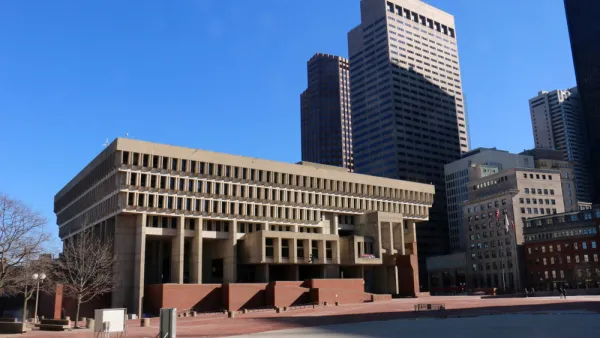
Boston's Zoning Board Called Out for Conflicts of Interest
The Boston Globe reports on reasons to suspect more conflicts of interest than there appears on the Boston Zoning Board of Appeal.

ADU Construction Still Difficult in California
Accessory dwelling units should be easier to build in California, but the process is still slow and complicated in many cities, say housing advocates.

San Francisco’s Housing Woes: How the Past Informs the Present
A zoning history dating back to the 19th century still has significant impacts on the city’s housing in the present day.

Four Interest Groups Contributed to the California Transit-Housing Bill's Defeat
Two journalists discuss what led to the defeat of the SB 827, the controversial bill which garnered national attention and lots of in-state opposition from groups that one would think would support the effort to address the state's housing crisis.

California's New 'By-Right' Housing Law: Will it Make a Difference?
A new law could enable affordable housing projects, if they meet the specified criteria, to bypass the public process that so often blocks their approval.

Portland Planners Asked to Say 'No' More Often
The head of Portland's Bureau of Development Services is asking that planners raise standards for discretionary review of development proposals. Among the points made to planners in a recent memo: customer service is not the same as getting to "yes."

FREE Course: Walkable City 1: Why Walkability?
After describing his path towards focusing on walkability as the essence of good planning, Jeff Speck marches through his five principal reasons for making more walkable places.
Reinventing Malls: Planning Alchemy—Turning Gray Fields Into Gold
The course focuses on the opportunities and imperatives that shape reinvention of mall sites.

City of Charlotte
City of Rosemead
Rutgers University, Edward J. Bloustein School of Planning and Public Policy
University of Michigan School for Environment and Sustainability (SEAS)
Hunter College, City University of New York (CUNY)
The Architects Foundation
City of Cambridge
The Pocatello Development Authority
The Urban Renewal Agency of the City of Pocatello









