California has made a practice of resisting changes to environmental regulations pursued by the Trump administration, but the latest legislative effort to protect the state's waterways was a bridge too far for the governor.


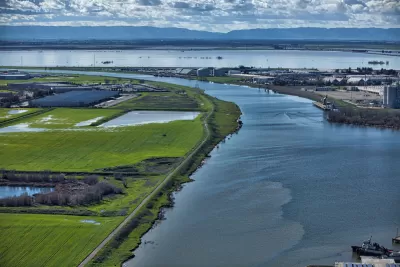
Dale Kasler and Kate Irby report on a schism in the Democratic party in California over the fate of a state bill that would have bolstered environmental protections for waterways and fish in the face of pressure from the Trump administration.
California Governor Gavin Newsom has promised to veto Senate Bill 1, according to the article.
Newsom, who has sparred repeatedly with President Donald Trump and generally sided with environmental interests since taking office in January, said he’ll veto the legislation even though he supports its general principles of keeping California’s air, water and endangered species safe. The bill would have essentially negated every environmental rule proposed by Trump, turning the regulatory clock back to Jan. 19, 2017, the day before he took office.
Meanwhile, the Trump administration is preparing additional steps to relax the state's environmental protections:
In a matter of days, the federal government is scheduled to release controversial new rules governing the movement of water through the Sacramento-San Joaquin Delta; the rules are expected to favor the delivery of additional water supplies to farmers in the San Joaquin Valley.
More on the reasoning behind Gov. Newsom's veto decision, the political fallout among other Democrats in the state, and the potential environmental consequences of the Trump administration's rule changes are included in the article.
Read the full story: A fight with Trump that Gavin Newsom doesn’t want: Why he’s vetoing environmental bill

Undoing Biden's EV Rule
The partisan divide over how government should reduce greenhouse gas emissions was on full display after the Biden administration finalized its emissions standards rule for light and medium duty vehicles on March 20.

The Beginning of the End of the Internal Combustion Engine Vehicle?
The California Air Resources Board voted unanimously on August 25 to begin a phased ban on the sale of passenger vehicles powered by gasoline or diesel beginning in 2026 when over a third of new vehicles sold in California must be zero-emissions.
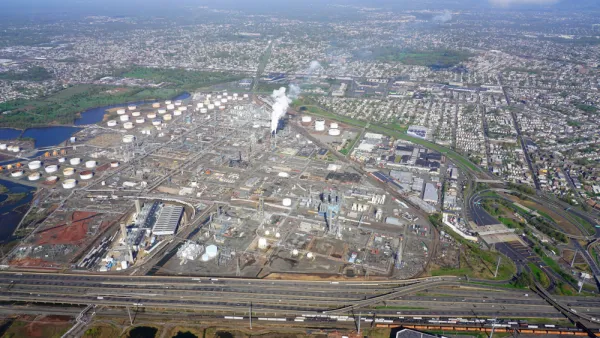
Supreme Court Guts the U.S. EPA’s Ability to Limit Carbon Emissions
The consequences of this ruling have long been foretold. With the U.S. Environmental Protection Agency now officially barred from the fight against climate change, Congress will have to act to reduce carbon emissions.

Desperate measures: Advocates weigh draining Lake Powell to fill Colorado River
Draining the reservoir could reduce evaporation losses by a couple hundred thousand acre-feet.

Eastern Nebraska is running out of electricity
Data centers and electrification are straining eastern Nebraska’s grid, throttling economic development.

Move over, LA: St. Louis gears up for Olympics, invests millions in downtown redevelopment
The Missouri city will host the 2028 Olympic soccer group stage and knockout matches.

Mass. votes against statewide minimum lot size for single-family homes
Over 2 million residents voted on Question 7; it was decided by just over 30,000 votes.

Maryland’s $15 billion bridge project gains key approval
The Maryland Transit Authority said the project will create over 60,000 jobs and add $23 billion to the local economy.

‘No clear next steps’ for Chicago's permanent festival grounds
Eleventh Ward Ald. Nicole Lee has suggested Soldier Field as a possible location for the permanent event space.

FREE Course: Walkable City 1: Why Walkability?
After describing his path towards focusing on walkability as the essence of good planning, Jeff Speck marches through his five principal reasons for making more walkable places.
Reinventing Malls: Planning Alchemy—Turning Gray Fields Into Gold
The course focuses on the opportunities and imperatives that shape reinvention of mall sites.

City of Rosemead
Rutgers University, Edward J. Bloustein School of Planning and Public Policy
One Hundred Miles
University of Michigan School for Environment and Sustainability (SEAS)
Hunter College, City University of New York (CUNY)
The Architects Foundation
City of Cambridge
Montrose County
The Pocatello Development Authority