New agreements and the first cutbacks in water usage signal the start of concerted efforts keep the river and reservoirs from dropping to dangerous levels.


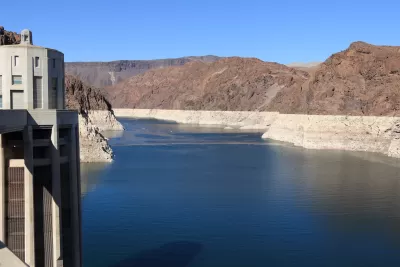
Ian James reports that water deliveries from the Colorado River will be reduced for Arizona, Nevada, and Mexico next year. Projections show that the water level of Lake Mead, which is now 39 percent full, will drop to below threshold levels at the start of the year. California and Mexico have also agreed to contribute water to the reservoir if levels continue to drop.
"The Colorado River’s reservoirs have dropped dramatically since 2000 during one of the most extreme droughts in centuries. Farms and cities across the Southwest have long been taking more from the river than what flows into it, and climate change is adding to the strains by pushing up temperatures," notes James.
This is the first time such restrictions have gone into place. Even with a winter of heavy snows that increased runoff into Lake Mead, reduced stream flow and more evaporation in past years from rising temperatures were pointing to future shortages.
"[Jennifer Pitt] said having the drought agreement in place now gives water managers several years to study scenarios of extremes, and come up with new rules to 'create the resilience that we need in the Colorado River basin to respond to whatever conditions are coming our way,'" notes James.
FULL STORY: First-ever mandatory water cutbacks will kick in next year along the Colorado River

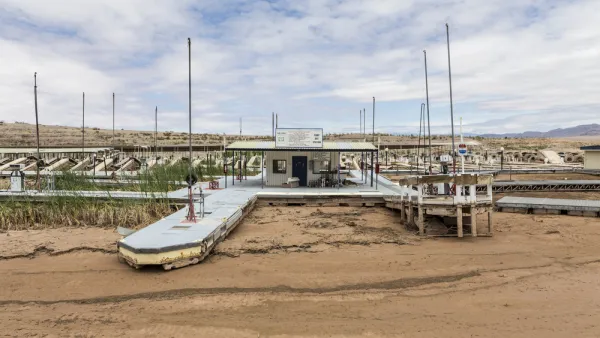
Report Sounds the Alarm for Western Reservoirs
Without more immediate, long-term reductions in water demand, Lake Mead and Lake Powell, the West’s most important reservoirs, face imminent collapse.
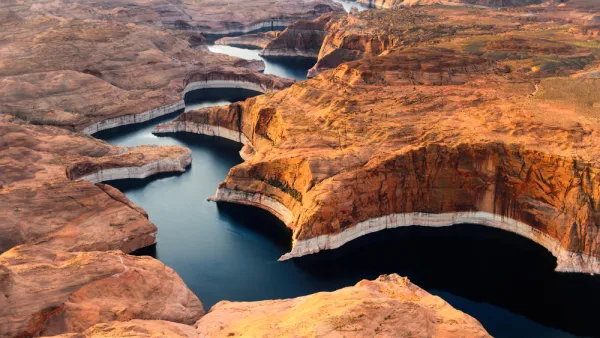
States Agree to Drastic Water Cuts From Colorado River
In the throes of a historic megadrought, three Southwestern states will make deep reductions in their water usage to preserve diminishing resources.
Colorado River Cutback Plan to Start in January
States in the Lower Basin of the Colorado River will contribute more water in order to keep reservoirs from reaching critically low levels.

Planetizen Federal Action Tracker
A weekly monitor of how Trump’s orders and actions are impacting planners and planning in America.

The state-sanctioned urbicide of Austin
People don’t kill cities. Freeways do.

US to reduce Colorado River water deliveries to Mexico
A new Colorado Treaty amendment reduces Mexico’s Colorado River water allocation by 250,000 acre feet.

Mamdani overhauls NYC's Vision Zero plan with 100 new policy goals
The overhaul aims to reduce traffic deaths and make streets safer for pedestrians, cyclists and drivers through lower speed limits, new safety infrastructure and more.

Amtrak not solely to blame for New Jersey commuter rail's unreliability, report finds
A new study from the Garden State Initiative found that NJ Transit’s budget grew 20% across a 4 year period, but reliability declined significantly over the same period.

EPA erases limits on planet-warming pollution from power plants
Under Monday’s plan, power plants would still have some limits on how much mercury, arsenic and other contaminants they can emit.

FREE Course: Walkable City 1: Why Walkability?
After describing his path towards focusing on walkability as the essence of good planning, Jeff Speck marches through his five principal reasons for making more walkable places.
Reinventing Malls: Planning Alchemy—Turning Gray Fields Into Gold
The course focuses on the opportunities and imperatives that shape reinvention of mall sites.

Eagle County Government
Harvard University Graduate School of Design
Nashville Planning Department
The Architects Foundation
University of Cincinnati Online
The Pocatello Development Authority
The Urban Renewal Agency of the City of Pocatello
Journal of the American Planning Association