New data from Fehr & Peers shows services like Uber and Lyft account for a larger share of the total traffic than previously thought, especially in city centers.


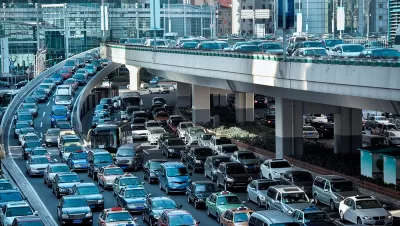
In Boston’s Suffolk County about 1 in every 13 miles driven is driven for Uber or Lyft.
That’s just one of a slew of interesting pieces of information released by Fehr & Peers on how many miles ride-hailing cars travel. Vehicle miles traveled, or VMT, have been climbing in the United States since the economic recession of 2008. Many things have changed since then in the world of transportation, including the arrival and growth of ride-hailing services. This upward trend in miles traveled has meant an upward trend in vehicle emissions, including those that contribute to climate change. Initially there was some hope that ride hailing might actually curb VMT (a hope ride sharing companies were eager to promote), but this study (among others) shows that that has not happened.
The study shows the percent of VMT from ride-hailing companies for cities like Boston (8.5%), San Francisco (13.4%), and Washington D.C. (7.2%). "These numbers suggest that ride-hailing is hitting traffic harder in many cities than previously understood," Laura Bliss writes for CityLab.
Data also shows that the traffic is most concentrated in regions that are well served by public transit. In some cases, a Lyft or Uber ride may entail more VMT than would a private vehicle—as much of the distance these vehicles travel is without a passenger. "On average, between the six cities, just 54 to 62 percent of the vehicle miles traveled by Lyfts and Ubers were with a rider in tow," Bliss reports.
FULL STORY: How Much Traffic Do Uber and Lyft Cause?


Report: Ride-Hailing Drastically Increases Vehicle Miles Traveled
New research published in Transport Policy finds that ride-hailing companies increase vehicle miles traveled of users by 97 percent in Chicago, 114 percent in New York City, and 118 percent in San Francisco.
Uber and Lyft Reveal Seattle-Area Trip Data
After a court battle, the two big transportation network companies finally released trip data, revealing rapid growth and a concentration of rides in the city's most congested areas.

Chicago Could Be Next to Cap Number of Ride-Hailing Vehicles
After New York City approved a similar law earlier in Agust, two Chicago alderman have proposed a law that would limit the number of vehicles operating for transportation network companies like Uber and Lyft.

The state-sanctioned urbicide of Austin
People don’t kill cities. Freeways do.

US to reduce Colorado River water deliveries to Mexico
A new Colorado Treaty amendment reduces Mexico’s Colorado River water allocation by 250,000 acre feet.

New Jersey’s second-largest city bans standalone data centers
Jersey City will continue to allow co-location facilities, such as those meant for research institutions that store their own data.

Amtrak not solely to blame for New Jersey commuter rail's unreliability, report finds
A new study from the Garden State Initiative found that NJ Transit’s budget grew 20% across a 4 year period, but reliability declined significantly over the same period.

EPA erases limits on planet-warming pollution from power plants
Under Monday’s plan, power plants would still have some limits on how much mercury, arsenic and other contaminants they can emit.

Phoenix announces new on-demand transit service, more frequent RAPID buses
Both new services will launch in October, and are part of Phoenix's Project Effective Access Solutions for Easing Congestion.

FREE Course: Walkable City 1: Why Walkability?
After describing his path towards focusing on walkability as the essence of good planning, Jeff Speck marches through his five principal reasons for making more walkable places.
Reinventing Malls: Planning Alchemy—Turning Gray Fields Into Gold
The course focuses on the opportunities and imperatives that shape reinvention of mall sites.

Eagle County Government
Harvard University Graduate School of Design
Nashville Planning Department
The Architects Foundation
University of Cincinnati Online
The Pocatello Development Authority
The Urban Renewal Agency of the City of Pocatello
Journal of the American Planning Association