Five self-driving car companies are currently operating in Pittsburgh, without much critical rigor in asking about the consequences of the technology to the city.


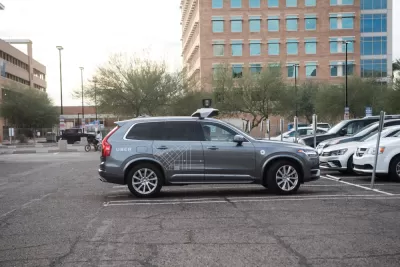
"The public has been exposed to risks associated with being guinea pigs in an AV lab, yet not a single public meeting has been held to address public concerns," writes Angie Schmitt, to introduce the premise of a new report from Pittsburghers for Public Transit (PPT) intended to raise awareness about the potential negative consequences of handing over the public realm to technological experiments.
More specifically, according to Schmitt, the report "argues that public concerns about equity, the environment and job security aren’t playing a larger role in the conversation about autonomous vehicle deployment."
Then there are questions about safety risks presented by self-driving cars to pedestrians and people on bikes. In addition to the risks exemplified by the first pedestrian killed by a self-driving car operated by Uber in Tempe, "pedestrians and cyclists risk losing funding for essential infrastructure like sidewalks and crosswalks to special street treatments for AVs," according to Schmitt's summary of the report.
"The city of Pittsburgh, for example, allocated $23 million from its 'Department of Mobility and Infrastructure' for testing and deployment of an 'autonomous micro transit shuttle,' which [Laura] Weins, the PPT director, called 'not really mass transit.'"
FULL STORY: Pittsburgh Reveals the Downside of Self-Driving Cars

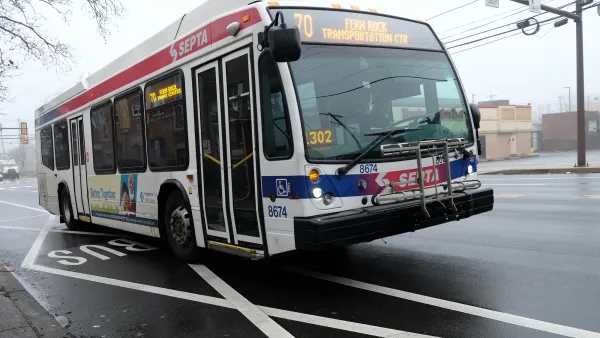
Pennsylvania lawmaker wants to ban fully self-driving buses
State Rep. Ben Waxman's proposed bill would require autonomous buses to have a licensed driver on board.
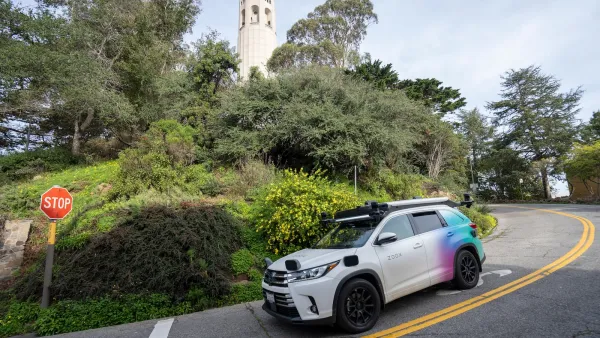
Feds want to make brake pedals optional in AVs
A proposed rule change would no longer require carmakers to include manual brake pedals or steering wheels in fully self-driving cars.
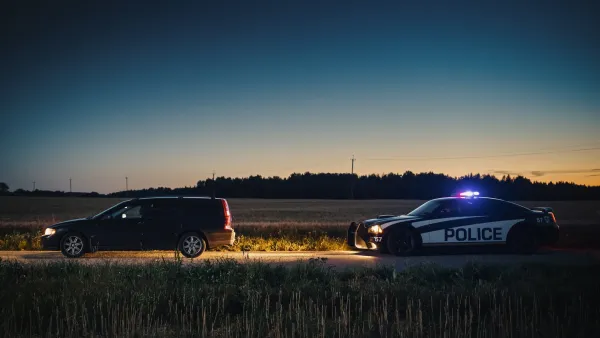
Yes, another thing that car dependency makes worse: DUIs
In the land of the free (and the cars), design incites drinking and driving.

Planetizen Federal Action Tracker
A weekly monitor of how Trump’s orders and actions are impacting planners and planning in America.

The state-sanctioned urbicide of Austin
People don’t kill cities. Freeways do.

US to reduce Colorado River water deliveries to Mexico
A new Colorado Treaty amendment reduces Mexico’s Colorado River water allocation by 250,000 acre feet.

Mamdani overhauls NYC's Vision Zero plan with 100 new policy goals
The overhaul aims to reduce traffic deaths and make streets safer for pedestrians, cyclists and drivers through lower speed limits, new safety infrastructure and more.

Amtrak not solely to blame for New Jersey commuter rail's unreliability, report finds
A new study from the Garden State Initiative found that NJ Transit’s budget grew 20% across a 4 year period, but reliability declined significantly over the same period.

EPA erases limits on planet-warming pollution from power plants
Under Monday’s plan, power plants would still have some limits on how much mercury, arsenic and other contaminants they can emit.

FREE Course: Walkable City 1: Why Walkability?
After describing his path towards focusing on walkability as the essence of good planning, Jeff Speck marches through his five principal reasons for making more walkable places.
Reinventing Malls: Planning Alchemy—Turning Gray Fields Into Gold
The course focuses on the opportunities and imperatives that shape reinvention of mall sites.

Eagle County Government
Harvard University Graduate School of Design
Nashville Planning Department
The Architects Foundation
University of Cincinnati Online
The Pocatello Development Authority
The Urban Renewal Agency of the City of Pocatello
Journal of the American Planning Association