Local municipalities are offering housing incentives to draw employees and help them live closer to their jobs.


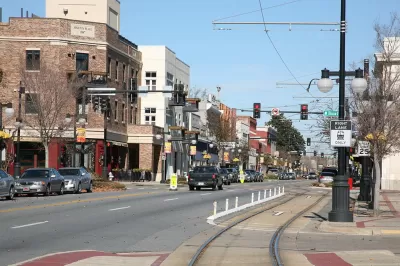
"Cities, counties and school districts are starting to offer housing incentives to attract -- rather than force -- their employees to live where they work. These new benefits are particularly prevalent in expensive areas where lower- and middle-income employees are being priced out of the housing market," report Katherine Barrett and Richard Greene.
Fairfax County in Virginia, for example, provides housing in a 270-unit apartment building near county offices to employees. San Antonio is using a different strategy by offering zero-interest loans to workers who want to purchase homes downtown and in the city.
"Although these housing incentives draw more public employees to live where they work, the gains are limited by what the municipalities can afford," note Barrett and Greene. In addition, the demand has far exceeded the supply, they say.
FULL STORY: WANTED: Public Employees Who Live Where They Work

In San Antonio, Planning Ahead for Affordable Housing
The city anticipates significant population growth in the coming decades, and it has put a funding plan into action to ensure affordable housing doesn’t fall by the wayside.
Public Housing at a Crossroads
Housing authorities in cities like San Antonio are turning to public-private partnerships and mixed-income development, but do these projects exclude the households who need housing assistance most?
Commentary: San Antonio Needs ‘Thoughtful Reforms’ to Improve Affordability
The growing Texas city needs a new approach to meet its residents’ housing and mobility needs.

Planetizen Federal Action Tracker
A weekly monitor of how Trump’s orders and actions are impacting planners and planning in America.

The state-sanctioned urbicide of Austin
People don’t kill cities. Freeways do.

US to reduce Colorado River water deliveries to Mexico
A new Colorado Treaty amendment reduces Mexico’s Colorado River water allocation by 250,000 acre feet.

Mamdani overhauls NYC's Vision Zero plan with 100 new policy goals
The overhaul aims to reduce traffic deaths and make streets safer for pedestrians, cyclists and drivers through lower speed limits, new safety infrastructure and more.

Amtrak not solely to blame for New Jersey commuter rail's unreliability, report finds
A new study from the Garden State Initiative found that NJ Transit’s budget grew 20% across a 4 year period, but reliability declined significantly over the same period.

EPA erases limits on planet-warming pollution from power plants
Under Monday’s plan, power plants would still have some limits on how much mercury, arsenic and other contaminants they can emit.

FREE Course: Walkable City 1: Why Walkability?
After describing his path towards focusing on walkability as the essence of good planning, Jeff Speck marches through his five principal reasons for making more walkable places.
Reinventing Malls: Planning Alchemy—Turning Gray Fields Into Gold
The course focuses on the opportunities and imperatives that shape reinvention of mall sites.


Eagle County Government
Harvard University Graduate School of Design
Nashville Planning Department
The Architects Foundation
University of Cincinnati Online
The Pocatello Development Authority
The Urban Renewal Agency of the City of Pocatello
Journal of the American Planning Association