Fargo-Moorhead, the metropolitan statistical area straddling North Dakota and Minnesota, has seen the quickest growth in land value in the Upper Midwest for the span of years between 2012 and 2017.


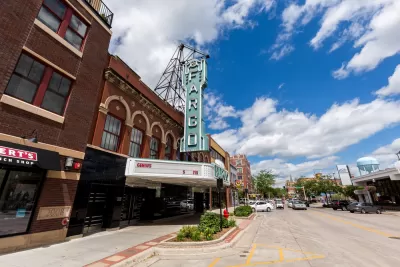
"Land values in Fargo-Moorhead rose 74 percent from 2012 to 2017, from $138,000 per acre to $241,000 per acre, outpacing rates of increase in the Twin Cities (42 percent) and other Midwestern cities — as well as Santa Barbara, California (67 percent), Austin, Texas (68 percent) and Denver, Colorado (62 percent)," reports Greta Kaul.
Kaul is sharing data found in the new "The State of the Nation's Housing" report published by the Joint Center for Housing Studies of Harvard University. The Fargo-Moorhead area is exceedingly conspicuous on this interactive map of residential land value increases created for the report.
When tracing the causes of the boom in residential land value, Kaul credits more jobs, thanks to the region's universities, the tech industry ("Unbeknownst to many outsiders, Fargo is also home to one of Microsoft’s biggest corporate campuses outside suburban Seattle"), and agriculture. Those jobs have attracted more people, and residential land values have responded.
Read the full story: What’s behind Fargo-Moorhead’s boom?

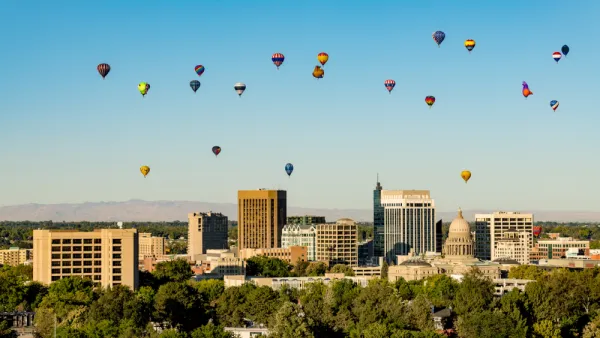
The 'Mountain Lion' Cities Rising in the U.S. West
An economist identifies the growth in nine U.S. cities—scattered from Utah to Texas, Arizona, Washington, and Idaho—as similar to the economic power generated in parts of Asia.
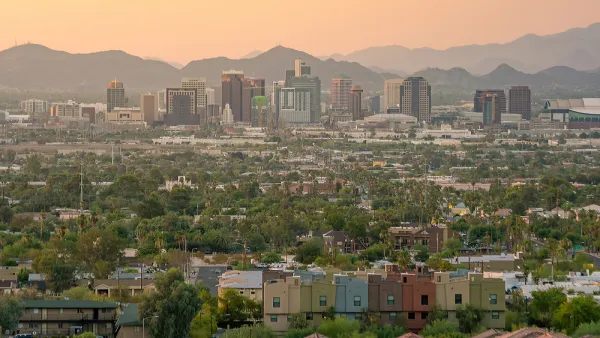
Major U.S. Metro Areas in a Transition Period, According to Census Analysis
The nation's growth slowed from 2010 and 2020, according to 2020 Census data, and demographers are still trying to figure out what population trends mean for the future of country's major metropolitan areas.

Census: Big Cities Lost Population During the Pandemic
For the first time in at least three decades, major metropolitan areas in the U.S. showed negative population growth during the peak of the COVID-19 pandemic.

Planetizen Federal Action Tracker
A weekly monitor of how Trump’s orders and actions are impacting planners and planning in America.

California plans to bury El Niño’s downpour
If the state plays its cards right, it may be able to store a billion acre-feet of El Niño’s water in aquifers.

Chicago breaks ground on $3 billion megadevelopment
The new neighborhood, titled Foundry Park, will one day host 3,700 residences.

Satanic Place Names
From streams and lakes to valleys and canyons, I mapped more than 1,000 places named after the Devil.

California High-Speed Rail Authority CEO resigns after $600,000 scandal
Under Ian Choudri, the authority used taxpayer dollars to fund first class flights and trips to nightclubs.

Want to study the Missouri River? Soon, you may need unanimous approval from 10 states
Legislation would require 10 governors’ permission to study or build projects moving water outside the basin.

FREE Course: Walkable City 1: Why Walkability?
After describing his path towards focusing on walkability as the essence of good planning, Jeff Speck marches through his five principal reasons for making more walkable places.
Reinventing Malls: Planning Alchemy—Turning Gray Fields Into Gold
The course focuses on the opportunities and imperatives that shape reinvention of mall sites.

City of Rosemead
Rutgers University, Edward J. Bloustein School of Planning and Public Policy
One Hundred Miles
Hunter College, City University of New York (CUNY)
The Architects Foundation
University of Cincinnati Online
City of Cambridge
Montrose County
The Pocatello Development Authority