Structures initially intended to temporarily house disaster victims are serving a new purpose in Tacoma, Washington—sheltering homeless people and getting them on the path to more permanent housing.


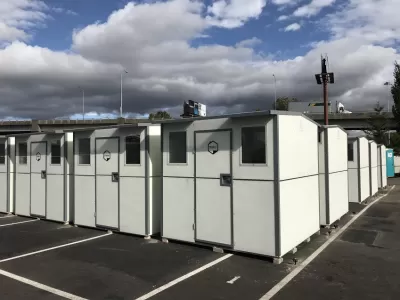
Tacoma, Washington, wanted to provide temporary shelter to homeless people that would be step up from the tent housing the city had offered as part of an effort to address the area’s homelessness crisis. The city started using tiny houses that originally were designed as emergency shelter for disaster victims, reports Hallie Golden:
Created by Pallet, based in nearby Everett, Washington, the small, white rectangular structures are covered from floor to ceiling with a fiberglass material and aluminum framing, and—depending on whether you pick the 64- or 100-square-foot model—can be set up with little to no tools in under an hour. They come with a fold-up bed, windows, a ventilation system, and a front door that locks. In other words, they are an "Ikea approach to shelter," says Amy King, the company’s owner and founder.
The shelters are now used as part of the process in transitioning people off the streets and eventually into more long-term housing. Other cities struggling with similar homelessness crises have expressed interest in using the Pallet structures because they are less expensive and easier and faster to erect than permanent structures.
"[Seattle Council’s Teresa Mosqueda] said she would like to see funding in this year’s budget go to these structures, as long as it’s coupled with supportive services, such as case managers, and funding for more long-term housing," notes Golden.
FULL STORY: These easy-to-build shelters are helping cities quickly provide cover to the homeless

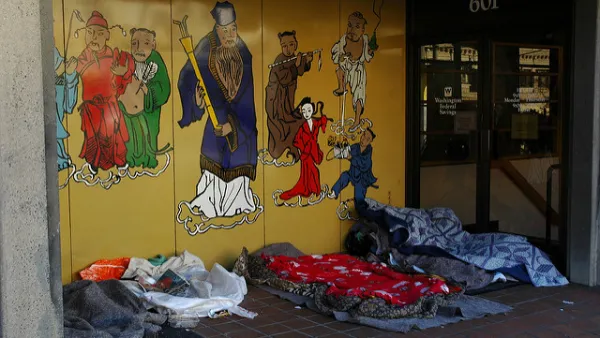
Seattle Tiny-Home Villages Facing Host of Challenges
The villages offer much-needed housing for homeless people, but controversy is brewing over their operations.
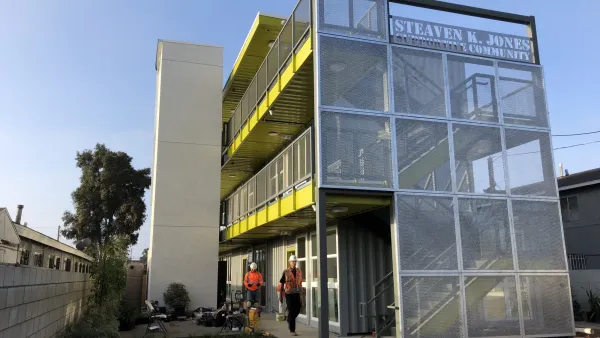
To Reach Goals, L.A. Looks to New Ways to Build Homeless Housing
Los Angeles is grappling with the rising costs of building housing for homeless people. Rethinking the standard process is a way to save time and money.
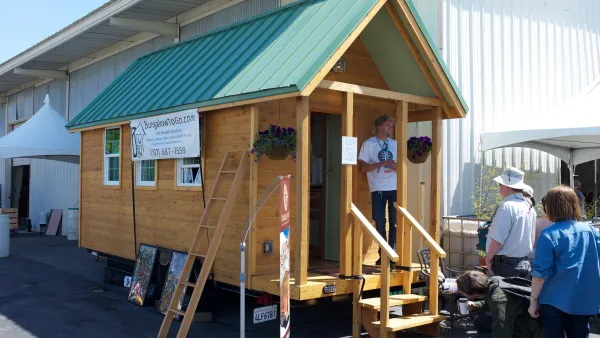
Closure of Tiny House Village in Seattle Prompts Concern
Meant to serve chronically homeless people, the Licton Springs tiny house village has been controversial from the start. It's uncertain whether enough permanent housing exists to resettle all residents.

The state-sanctioned urbicide of Austin
People don’t kill cities. Freeways do.

US to reduce Colorado River water deliveries to Mexico
A new Colorado Treaty amendment reduces Mexico’s Colorado River water allocation by 250,000 acre feet.

New Jersey’s second-largest city bans standalone data centers
Jersey City will continue to allow co-location facilities, such as those meant for research institutions that store their own data.

Amtrak not solely to blame for New Jersey commuter rail's unreliability, report finds
A new study from the Garden State Initiative found that NJ Transit’s budget grew 20% across a 4 year period, but reliability declined significantly over the same period.

EPA erases limits on planet-warming pollution from power plants
Under Monday’s plan, power plants would still have some limits on how much mercury, arsenic and other contaminants they can emit.

Phoenix announces new on-demand transit service, more frequent RAPID buses
Both new services will launch in October, and are part of Phoenix's Project Effective Access Solutions for Easing Congestion.

FREE Course: Walkable City 1: Why Walkability?
After describing his path towards focusing on walkability as the essence of good planning, Jeff Speck marches through his five principal reasons for making more walkable places.
Reinventing Malls: Planning Alchemy—Turning Gray Fields Into Gold
The course focuses on the opportunities and imperatives that shape reinvention of mall sites.

Eagle County Government
Harvard University Graduate School of Design
Nashville Planning Department
The Architects Foundation
University of Cincinnati Online
The Pocatello Development Authority
The Urban Renewal Agency of the City of Pocatello
Journal of the American Planning Association