The villages offer much-needed housing for homeless people, but controversy is brewing over their operations.


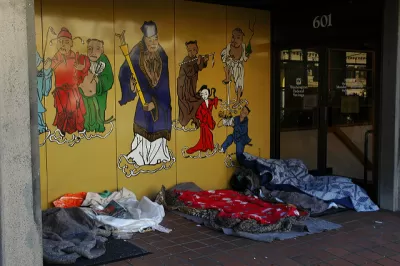
Scott Greenstone reports on the latest issues related to the siting of tiny-home communities in Seattle providing housing to homeless people. The villages offer an alternative to shelters, which lack the same level of privacy and community.
"But a continuing issue for the city has been the fact that tiny house villages [under city code] cannot remain open in one spot for more than two years, and most of the city-sponsored villages are already months and months past their respective deadlines," says Greenstone.
Recently proposed legislation would ease these requirements and let the housing facilities stay in place longer. But the organization operating the villages is also considering faith-community sponsors in an arrangement that could let the villages stay open without restrictions.
Conflicts between homeless advocacy groups and a lack of consensus among village residents about using church sponsorship to circumvent city code are complicating the situation, notes Greenstone. "[Eliana Scott-Thoennes'] concerns are that faith sponsorship allow the city to get around listening to community and resident input, and the city wouldn’t be required to keep an advisory council of neighborhood stakeholders like the one she chairs."


Disaster Shelters Housing the Homeless in Washington
Structures initially intended to temporarily house disaster victims are serving a new purpose in Tacoma, Washington—sheltering homeless people and getting them on the path to more permanent housing.
Tiny Houses for the Homeless Planned for San Jose
The Bay Area's most populated city is taking a small step to house its homeless population.

The Cost of Solving Homelessness in Seattle: $400 Million
It’s "dramatically higher" than any number under discussion, and not even close to what the city will raise with its new tax on large businesses.

The state-sanctioned urbicide of Austin
People don’t kill cities. Freeways do.

US to reduce Colorado River water deliveries to Mexico
A new Colorado Treaty amendment reduces Mexico’s Colorado River water allocation by 250,000 acre feet.

New Jersey’s second-largest city bans standalone data centers
Jersey City will continue to allow co-location facilities, such as those meant for research institutions that store their own data.

Amtrak not solely to blame for New Jersey commuter rail's unreliability, report finds
A new study from the Garden State Initiative found that NJ Transit’s budget grew 20% across a 4 year period, but reliability declined significantly over the same period.

EPA erases limits on planet-warming pollution from power plants
Under Monday’s plan, power plants would still have some limits on how much mercury, arsenic and other contaminants they can emit.

Phoenix announces new on-demand transit service, more frequent RAPID buses
Both new services will launch in October, and are part of Phoenix's Project Effective Access Solutions for Easing Congestion.

FREE Course: Walkable City 1: Why Walkability?
After describing his path towards focusing on walkability as the essence of good planning, Jeff Speck marches through his five principal reasons for making more walkable places.
Reinventing Malls: Planning Alchemy—Turning Gray Fields Into Gold
The course focuses on the opportunities and imperatives that shape reinvention of mall sites.

Eagle County Government
Harvard University Graduate School of Design
Nashville Planning Department
The Architects Foundation
University of Cincinnati Online
The Pocatello Development Authority
The Urban Renewal Agency of the City of Pocatello
Journal of the American Planning Association