The Oregon Department of Transportation anticipates spending about a million dollars to bring boulders to road embankments so that they are less hospitable to the homeless.


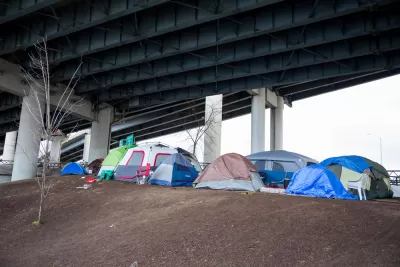
To disrupt illegal camp sites set up by homeless in Portland, the Oregon Department of Transportation (ODOT) is moving boulders onto the roadsides. The project will eventually cost about a million dollars, but ODOT argues this cost is less than the cost of dealing with existing campsites.
Many have pointed out that this policy does nothing to address the underlying problem or help the people in the camp, but only forces them to move somewhere else.
Still, some neighbors support the move, including Tiffany Hammer, who spoke with reporter Lindsay Nadrich. "Personal safety is something Hammer and other neighbors said they have not had in years," Nadrich writes for NBC affiliate KGW. There had previously been reports of fires breaking out in the camp and of people defacing rose bushes. The bushes at least will no longer be an issue.
Read the full story: Neighbors pleased as ODOT replaces roses with boulders to deter homeless


SROs Are Getting People Off the Streets in Portland
Single-room-occupancy hotels are providing much-needed affordable housing for the city’s most vulnerable residents.
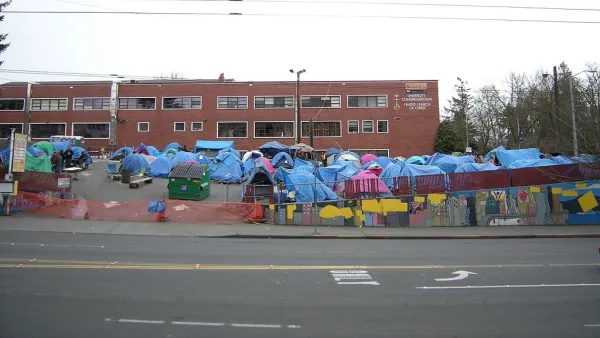
Analysis: Homeless Villages Don't Spur Crime
Homeless villages aren't hotbeds of crime, according to recent analysis. Rather, they can be part of a "crime prevention ecosystem."

New Phoenix and Oakland Homelessness Plans Prioritize Prevention, Permanent Housing
Phoenix’s unsheltered homeless population grew by 28 percent last year.

Planetizen Federal Action Tracker
A weekly monitor of how Trump’s orders and actions are impacting planners and planning in America.

‘Going backwards:’ Baltimore mayor, students rally against state's transit funding plan
Maryland's proposed six-year plan provides no funding for Baltimore’s BMORE bus program and reduces its road maintenance funding.

Detroit to transform waterfront with $2.2 billion investment
Developers will convert about 18 acres of unused parking lot space into civic spaces.

U.S.-Iran war may have ‘devastating’ impact on cost to warm homes
Vermont and Maine residents may see a 76% increase in the cost of warming their homes this winter.

Senate bill would ‘overhaul’ environmental permitting laws
Under the proposed act, government agencies would also not be able to suspend or rescind permits after granting them.

Exemption applications for NYC’s pied-à-terre tax see 55% success rate
The city sent nearly 40% of its initial pied-à-terre tax warnings erroneously.

FREE Course: Walkable City 1: Why Walkability?
After describing his path towards focusing on walkability as the essence of good planning, Jeff Speck marches through his five principal reasons for making more walkable places.
Reinventing Malls: Planning Alchemy—Turning Gray Fields Into Gold
The course focuses on the opportunities and imperatives that shape reinvention of mall sites.

One Hundred Miles
County of Mendocino
planning NEXT
The Architects Foundation
University of Cincinnati Online
Montrose County
Northern Illinois Transit Authority (NITA)
The Pocatello Development Authority