Scooters are a useful addition to the mobility landscape, but cities need to address the many safety issues that come along with them.


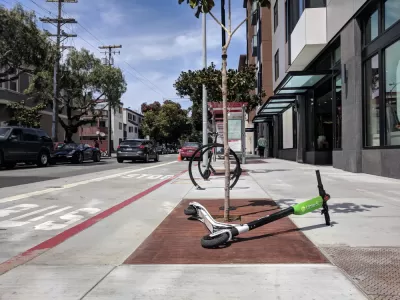
Margaret Renkl says chaos has ensued since scooters hit the streets of Nashville just over a year ago. She recognizes that scooters are a convenient, inexpensive, and environmentally friendly travel mode. But she says the scooters are a safety hazard to both users and pedestrians, and she notes a series of fatal accidents in cities in the United States and Europe.
"Electric scooters are fun, and joy should never be discounted, but a city needs to be the municipal equivalent of the sober parent, the safety-conscious parent, and either ban the devices altogether or commit the resources to make them safer," writes Renkl.
She argues that cities need to regulate scooters and back up the regulations with enforcement. They also need to make long-term plans for improved infrastructure, including dedicated lanes, to accommodate scooters.
In May, a Nashville man was hit by a car and killed while riding a scooter, and his parents are calling for a scooter ban in the city. "Nashville’s Mayor [David] Briley, who is running for re-election, has asked for draft legislation that would ban the scooters outright if companies don’t respond adequately to a list of safety concerns," notes Renkl.
FULL STORY: Scooter Madness

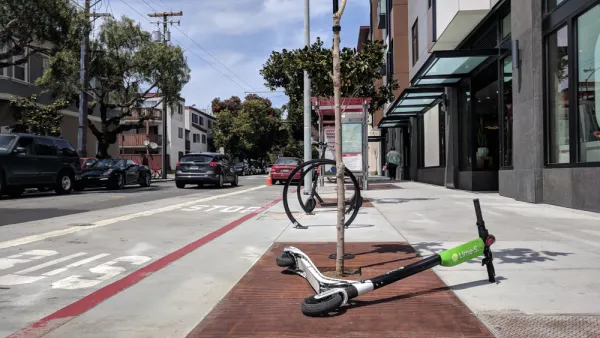
Scooter Companies Convene Advisory Groups to Promote Safety
Both Bird and Lime have organized boards of experts to conduct research and advise the companies as their micromobility ventures grow.
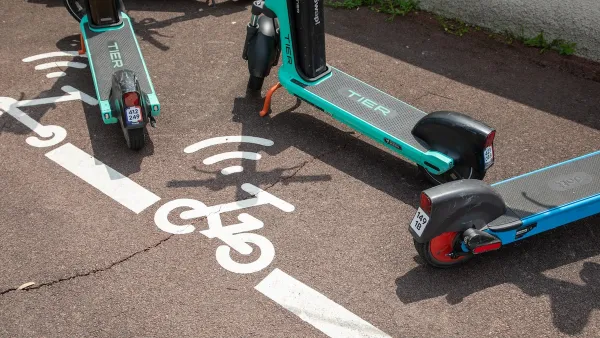
E-Scooter Parking: A Guide
How smart planning — and ample designated parking — can end conflicts over shared scooters.
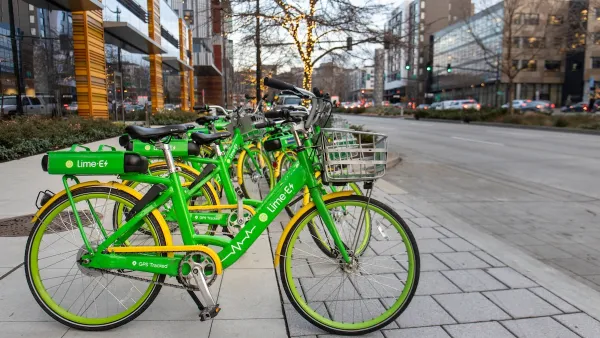
Seattle Sees Strong Bike Share, Scooter Ridership
The city’s shared bikes and e-scooters provided half as many trips as a $2 billion tunnel.

The state-sanctioned urbicide of Austin
People don’t kill cities. Freeways do.

US to reduce Colorado River water deliveries to Mexico
A new Colorado Treaty amendment reduces Mexico’s Colorado River water allocation by 250,000 acre feet.

New Jersey’s second-largest city bans standalone data centers
Jersey City will continue to allow co-location facilities, such as those meant for research institutions that store their own data.

Amtrak not solely to blame for New Jersey commuter rail's unreliability, report finds
A new study from the Garden State Initiative found that NJ Transit’s budget grew 20% across a 4 year period, but reliability declined significantly over the same period.

EPA erases limits on planet-warming pollution from power plants
Under Monday’s plan, power plants would still have some limits on how much mercury, arsenic and other contaminants they can emit.

Phoenix announces new on-demand transit service, more frequent RAPID buses
Both new services will launch in October, and are part of Phoenix's Project Effective Access Solutions for Easing Congestion.

FREE Course: Walkable City 1: Why Walkability?
After describing his path towards focusing on walkability as the essence of good planning, Jeff Speck marches through his five principal reasons for making more walkable places.
Reinventing Malls: Planning Alchemy—Turning Gray Fields Into Gold
The course focuses on the opportunities and imperatives that shape reinvention of mall sites.

Eagle County Government
Harvard University Graduate School of Design
Nashville Planning Department
The Architects Foundation
University of Cincinnati Online
The Pocatello Development Authority
The Urban Renewal Agency of the City of Pocatello
Journal of the American Planning Association