The great battle between local control and state preemption shifts focus again in California. This time micromobility, electric scooters and the like, are on the front line of the conflict.


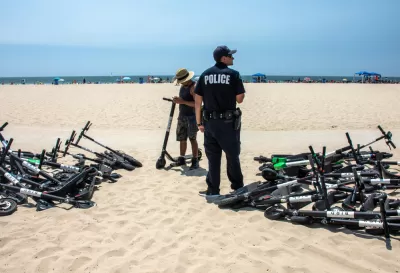
David Zipper, fellow at the German Marshall Fund, writes of an effort in the California State Legislature to preempt local laws regarding micromobility devices, like electric scooters, e-bikes, and dockless bike share.
"Should it become law in its current form, Assembly bill 1112 (AB 1112) could curtail cities’ ability to: ensure micromobility access in underprivileged communities, establish caps on the total number of vehicles, or collect trip information to improve transportation policy," explains Zipper.
Zipper's preference for local control is obvious, but so is the concern for equitable outcomes. "As approved by the Legislature’s Assembly committee on April 30, AB 1112 includes language that would prevent local micromobility regulations 'requiring operation below cost.' That could block cities from pursuing equity goals, such as Oakland’s requirement that half of all shared e-scooters be placed in 'communities of concern' as identified by the Bay Area Metropolitan Transportation Commission."
Any surprise about the state of California preempting local authority laws can be tempered by the recent failure of SB 50, a statewide housing law that would have implemented new land use regulations in cities all over the state.
FULL STORY: Will California Preempt City Control of Micromobility Companies?


Statewide Scooter Bill Falls Short in California
Legislation that would have preempted local laws, and had the support of major scooter companies, is now a two-year bill.

Texas town's data center ban challenged by state senator
In June, San Marcos became the first city in Texas to prohibit data centers.

California’s Half Moon Bay says coastal regulations hinder housing development
The town is entirely within the jurisdiction of the California Coastal Commission, which imposes a layer of strict development regulations.

Planetizen Federal Action Tracker
A weekly monitor of how Trump’s orders and actions are impacting planners and planning in America.

The state-sanctioned urbicide of Austin
People don’t kill cities. Freeways do.

US to reduce Colorado River water deliveries to Mexico
A new Colorado Treaty amendment reduces Mexico’s Colorado River water allocation by 250,000 acre feet.

5 New England states march closer to 800 megawatt wind energy project
Securing federal approval for the project may be complicated under the Trump administration, which has historically been hostile towards domestic wind power.

Baltimore to break ground on $50 million Transit Priority Project
The project will bring faster bus trips, safer streets and better bike connections to Baltimore.

Airbnb launches $250 million 'last-dollar financing' housing accelerator, makes first investment in Austin
The company will put $6.4 million towards affordable housing development in Texas’ capital.

FREE Course: Walkable City 1: Why Walkability?
After describing his path towards focusing on walkability as the essence of good planning, Jeff Speck marches through his five principal reasons for making more walkable places.
Reinventing Malls: Planning Alchemy—Turning Gray Fields Into Gold
The course focuses on the opportunities and imperatives that shape reinvention of mall sites.

Eagle County Government
Harvard University Graduate School of Design
Nashville Planning Department
The Architects Foundation
University of Cincinnati Online
The Pocatello Development Authority
The Urban Renewal Agency of the City of Pocatello
Journal of the American Planning Association