The 2019 American Community Survey includes a notable changes, including a few relevant to planners.


Amanda Lee explains changes to the 2019 version of the American Community Survey (ACS), a critical tool used by the Census Bureau to gather demographic data critical to the understanding of American society from year to year. "Data from the ACS influences how more than $675 billion in federal and state funds are spent each year," writes Lee.
In an effort to keep the ACS contemporary, the Census Bureau has completed the long process of changing content on the survey. For instance, changes include new response categories under the Relationships question to improve estimates of coupled households, "specifically same-sex couples," according to Lee.
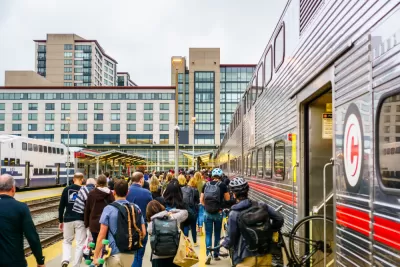
Most relevant to planners, however, are changes to the Journey0to-Work question. "To reflect changes in public transportation infrastructure, transit mode categories in the journey-to-work question were reworded and reordered," explains Lee. "These improvements will provide more accurate data on how people travel throughout the course of a day." The Time-of-Departure question has also been changed to protect the privacy of respondents.
Meanwhile, the Census Bureau's other big effort, the Biennial Census, remains a big source of controversy and uncertainty as Department of Commerce v. New York moves through the Supreme Court.
Read the full story: The 2019 American Community Survey Includes Changes to Several Questions
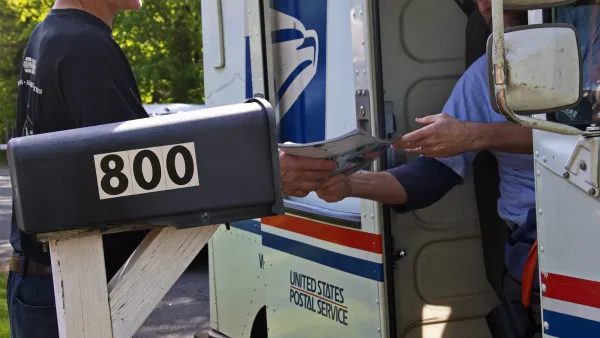
US Census Starts Using Postal Workers as Census Takers
A test program is using postal carriers to administer Census questionnaires.

A Milestone for the American Community Survey
After releasing new five-year estimates this week, the American Community Survey now offers three sets of five-year data that don't overlap, providing even more data for the analysis of local trends.

Did You Know? The Census Bureau Offers a 'Statistical Testing Tool'
A tool released last year helps users test the significance of comparisons between American Community Survey estimates.

Planetizen Federal Action Tracker
A weekly monitor of how Trump’s orders and actions are impacting planners and planning in America.

Washington state to charge fee to drivers with fuel-efficient cars
Revenue from the fee will go towards supporting the state’s highways.

Illinois considers spending $1 billion in taxpayer money on data center
A quantum computing campus and data center are currently under construction in Chicago.

Mamdani to replace Rikers Island with four borough-based jails
The four new jails are set to open between 2029 and 2032.

NYC may allow residents to ‘adopt’ storm drains
A new proposal would establish a volunteer program where residents could help clean debris from storm drains.

‘A price cannot be put on democracy:’ Local leaders protest UMich data center
The 1.25 billion-dollar project would take up 144 acres of land in Ypsilanti Township.

FREE Course: Walkable City 1: Why Walkability?
After describing his path towards focusing on walkability as the essence of good planning, Jeff Speck marches through his five principal reasons for making more walkable places.
Reinventing Malls: Planning Alchemy—Turning Gray Fields Into Gold
The course focuses on the opportunities and imperatives that shape reinvention of mall sites.

City of Charlotte
City of Rosemead
Rutgers University, Edward J. Bloustein School of Planning and Public Policy
University of Michigan School for Environment and Sustainability (SEAS)
Hunter College, City University of New York (CUNY)
The Architects Foundation
University District Partnership