Black neighborhoods near city centers are diversifying as whites move in and buy up properties. But the influx of these higher-income residents is leading to more divisions than inclusivity.


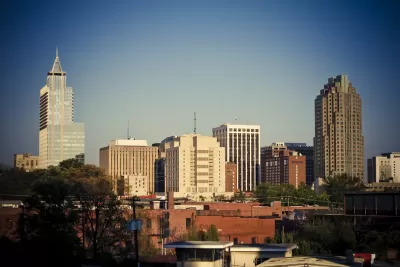
An analysis from The New York Times looks at the trend of whites moving into largely minority neighborhoods close to downtowns. Whites are changing the racial makeup of these neighborhoods, but they also bring higher incomes and economic clout that long-term residents do not have.
The changes in the South Park neighborhood of Raleigh, North Carolina, highlight this new shift:
In South Park, a neighborhood with picturesque views of the Raleigh skyline, the white home buyers who have recently moved in have average incomes more than three times that of the typical household already here. Whites, who were largely absent in the neighborhood in 2000, made up 17 percent of the population by 2012. Since then, they’ve gotten nearly nine in 10 of the new mortgages.
What is happening in South Park and other neighborhoods in cities across the country is in contrast to the suburbs. "In the suburbs, a far different set of processes is driving the demographic change, as middle-class minority families seek more space or better schools, as immigrant communities take root, or as families are increasingly priced out of the city."
These suburban neighborhoods are diversifying, but the incomes of current and new residents are much more similar. The lack of extreme income disparities provides a type of stability and social cohesion that is not taking root in places such as South Park.
And in South Park, the economic differences related to race are readily apparent. The developer of a new food hall, for example, says he wants the adjacent grocery store to be accessible to lower-income residents, but some locals are wary. "The food hall is trying to signal that longtime neighbors are welcome, too — one painting inside shows a pair of African-American teenagers from the neighborhood — but they must walk past the new $700,000 rowhomes outside to get here."
FULL STORY: The Neighborhood Is Mostly Black. The Home Buyers Are Mostly White.

In More Metros Than You’d Think, Suburbs are Now More Expensive Than the City
If you're moving to the burbs to save on square footage, data shows you should think again.
Remote Work and the Shift to Suburbia
Is the growth of working from home turning America into a ‘suburban nation?’
Is Exclusionary Zoning a Good Thing?
Some commentators defend exclusionary suburban zoning on the ground that it makes affluent suburbanites more willing to pay for public services. But does exclusion create losers?

Planetizen Federal Action Tracker
A weekly monitor of how Trump’s orders and actions are impacting planners and planning in America.

The state-sanctioned urbicide of Austin
People don’t kill cities. Freeways do.

US to reduce Colorado River water deliveries to Mexico
A new Colorado Treaty amendment reduces Mexico’s Colorado River water allocation by 250,000 acre feet.

5 New England states march closer to 800 megawatt wind energy project
Securing federal approval for the project may be complicated under the Trump administration, which has historically been hostile towards domestic wind power.

Baltimore to break ground on $50 million Transit Priority Project
The project will bring faster bus trips, safer streets and better bike connections to Baltimore.

Airbnb launches $250 million 'last-dollar financing' housing accelerator, makes first investment in Austin
The company will put $6.4 million towards affordable housing development in Texas’ capital.

FREE Course: Walkable City 1: Why Walkability?
After describing his path towards focusing on walkability as the essence of good planning, Jeff Speck marches through his five principal reasons for making more walkable places.
Reinventing Malls: Planning Alchemy—Turning Gray Fields Into Gold
The course focuses on the opportunities and imperatives that shape reinvention of mall sites.

Eagle County Government
Harvard University Graduate School of Design
Nashville Planning Department
The Architects Foundation
University of Cincinnati Online
The Pocatello Development Authority
The Urban Renewal Agency of the City of Pocatello
Journal of the American Planning Association