Is the growth of working from home turning America into a ‘suburban nation?’


As the rapid shift to remote work freed many Americans from their commutes, leading them to seek more affordable housing options farther from urban centers, the American suburb is experiencing a renaissance, writes Chloe Berger in Fortune, as “the pandemic has given new legs to the idyllic, then dreaded, then beloved suburban lifestyle.”
According to new data from a Bank of America study, “Older millennials (age 31-41) are almost three times as likely to move into a house than an apartment.” According to BofA, “43% to 45% of millennials—of every age—expect to buy a house in the suburbs.”
But Berger notes that today’s suburbia differs from the past. “One of suburbia’s worst qualities or stereotypes was its pervasive whiteness, now with the surge in interest the suburbs are starting to grow to reflect the diversity of the country at large. Big suburbs are actually now more racially diverse than the nation, according to a Brookings analysis.”
This all begs the question, what do we want the suburbs of the future to look like? Are homeownership and access to open space incompatible with walkable, dense, transit-oriented places, or can the suburbs be reimagined to be more sustainable, complete communities?
Read the full story: Remote work is turning America into a ‘suburban nation,’ a massive millennial survey by BofA finds


How Remote Work Could Reshape American Cities
If projections about remote work hold true, the resulting migration could shift economic centers, disperse housing market pressures, and transform the politics of small communities.
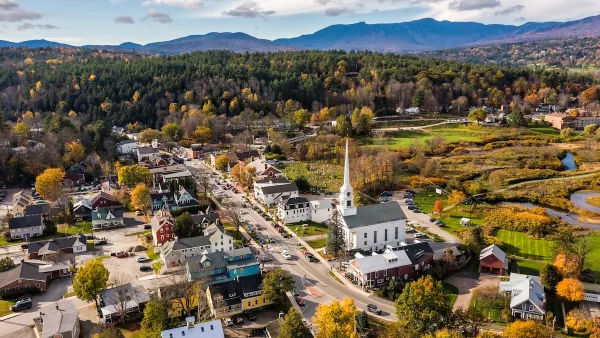
New Data: Rural Remote Workers Concentrate in Recreation Hubs
Remote workers flock to ski towns, hiking spots and other popular recreation hubs.
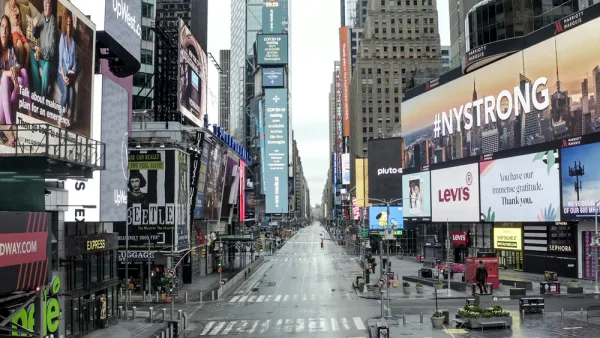
Pandemic-Era Big City Population Loss More Dramatic Than We Thought
A new analysis indicates that many big cities saw their biggest population declines in at least a decade, with suburbs also showing a slowdown in growth.

Planetizen Federal Action Tracker
A weekly monitor of how Trump’s orders and actions are impacting planners and planning in America.

Amtrak, CN end decades-long dispute with eight-year agreement
The new operating agreement establishes an updated framework for the companies to work together, including processes to resolve disputes.

Northwest rail fans eager for Sept. 30 debut of Amtrak’s Airo fleet
Get ready for that new train smell and more seats. But they won’t go faster or run more frequently on the Cascades route in Washington and Oregon.

Brightline Florida files for bankruptcy
The transit company is over $5 billion in debt.

St. Louis Metro to test if single-car trains can reduce operating costs, maintain rider satisfaction
The pilot program will run from October to spring 2027, and begin with one single-car train operating on Metrolink’s Red and Blue lines.

Pennsylvania is building data centers in abandoned mines
Housing data centers in mines provides an alternative to destroying local forests and may spare residents from data centers’ noise and air pollution.

FREE Course: Walkable City 1: Why Walkability?
After describing his path towards focusing on walkability as the essence of good planning, Jeff Speck marches through his five principal reasons for making more walkable places.
Reinventing Malls: Planning Alchemy—Turning Gray Fields Into Gold
The course focuses on the opportunities and imperatives that shape reinvention of mall sites.

City of Thousand Oaks
City of Wisconsin Rapids
Harvard University Graduate School of Design
The Architects Foundation
University of Cincinnati Online
The Pocatello Development Authority
The Urban Renewal Agency of the City of Pocatello