The city’s resilience plan seeks to identify shocks and stresses while fostering equity and community.



Mark Wessel reports on Resilient Chicago, a plan that focuses on the city’s neighborhoods, infrastructure, and community preparedness. It keeps resilience efforts moving forward after the Rockefeller Foundation announced it would not continue the 100 Resilient Cities initiative.
The Resilient Chicago planning process started in 2016 by seeking public input to identify the city’s most pressing challenges: neighborhood disparities, crime and violence, critical infrastructure, and community preparedness. The plan highlights the Neighborhood Opportunity Fund and equitable transit-oriented development as effective strategies to address disparities, notes Wessel.
Wessel writes that the initiative’s future is unclear as the city prepares to bring on a new mayor. "But at least for the moment, [Stefan] Schaffer remains focused on what he feels is the most pressing task at hand: addressing the key, underlying disparities that cause challenges to Chicago’s most vulnerable residents, such as poverty rate, housing cost burden, and neighborhood flooding, among others."
Read the full story: Chicago’s Resiliency Plan Aims for Equity

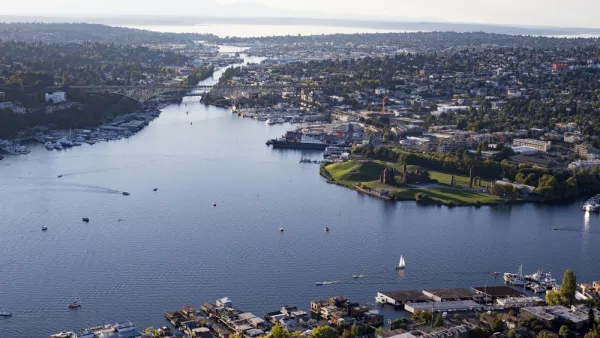
Op-Ed: Seattle Resilience Roadmap Feels 'Retrospective'
Natalie Bicknell notes several deficiencies in the roadmap that resulted from Seattle's participation in the Rockefeller Foundation's now-defunct 100 Resilient Cities program.
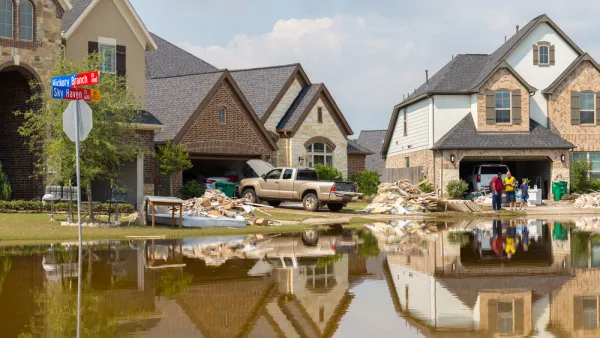
More Detail on What Happened to 100 Resilient Cities
The Rockefeller Foundation has cited costs and a new strategic direction to explain why it abruptly cut off the program this year. While the work may live on in some form, the move underscores the risks of relying on private funding.
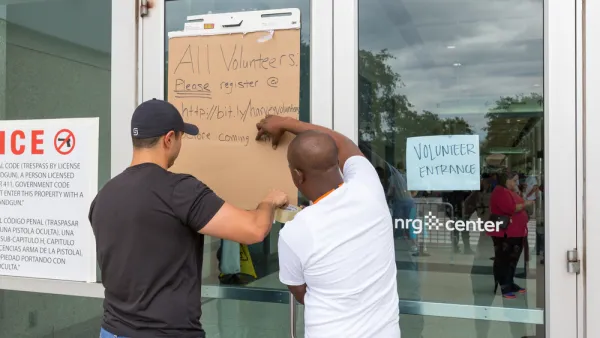
New Resilience Center to Replace 100 Resilient Cities
The new Adrienne Arsht-Rockefeller Foundation Resilience Center will build on the earlier work of the 100 Resilient Cities program.

Planetizen Federal Action Tracker
A weekly monitor of how Trump’s orders and actions are impacting planners and planning in America.

Colorado’s Largest Data Center Could Rise Next to Homes — Without a Public Hearing
The proposed campus would consume 11 times the power of Denver International Airport; as it has across the country, opposition mounts.

US to reduce Colorado River water deliveries to Mexico
A new Colorado Treaty amendment reduces Mexico’s Colorado River water allocation by 250,000 acre feet.

'This is going to be painful:’ Virginia stares down $1.7 billion funding gap for highway maintenance
The state may address the deficit by shifting $290 million from its construction budget to maintenance projects.

Judges permit Denver to divert 77,000 acre feet from the Colorado River for reservoir expansion
Overuse and climate change have caused the Colorado River’s water levels to plummet.

Amtrak, CN end decades-long dispute with eight-year agreement
The new operating agreement establishes an updated framework for the companies to work together, including processes to resolve disputes.

FREE Course: Walkable City 1: Why Walkability?
After describing his path towards focusing on walkability as the essence of good planning, Jeff Speck marches through his five principal reasons for making more walkable places.
Reinventing Malls: Planning Alchemy—Turning Gray Fields Into Gold
The course focuses on the opportunities and imperatives that shape reinvention of mall sites.

KFH Group Inc.
Greater Baltimore Committee
Eagle County Government
The Architects Foundation
University of Cincinnati Online
The Pocatello Development Authority
The Urban Renewal Agency of the City of Pocatello