The San Francisco Bay has 400 miles of shoreline, and a dire need for a new approach to dealing with the effects of rising water levels. An estimated $100 billion in potential property damage is at risk.


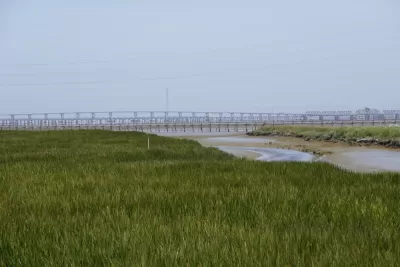
"A blueprint outlining how San Francisco Bay communities should combat sea-level rise was released early Thursday by ecosystem scientists and urban planners who envision a ring of man-made reefs, rocky beaches and graded marshlands around the largest estuary on the Pacific coast," reports Peter Fimrite.
The San Francisco Estuary Institute and SPUR created the San Francisco Bay Shoreline Adaptation Atlas [pdf], proposing major changes to existing seawalls, rip rap, culverts and other fortifications that are unlikely to weather the impacts of rising seas.
"The idea […] is to build eco-friendly features that support wildlife and absorb, rather than repel, the rising tides," explains Fimrite.
"The plan, funded by the San Francisco Bay Regional Water Quality Control Board, is the first attempt in the Bay Area to develop a collaborative regional plan to both enhance the ecosystem and protect cities around the bay from the potential ravages of climate change."


S.F. Plan Amendment to Allow Bay Filling
A revision to the region’s plan for the bay will allow areas to be filled in to create habitats that mitigate the effects of climate change.

Living Shorelines for Storm and Flood Protection
More coastal cities and communities are turning to the "soft" solutions of living shorelines—relying on "a combination of oyster reefs, oyster shells, rocks, marsh plants, and other natural materials can be an effective alternative to seawalls."

Bay Area Election Roundup: Wetlands, Housing, Ballot-Box Planning, Sales Tax
A regional measure to tax all property owners in the 9-county Bay Area to adapt to sea level rise passes; S.F. voters support raising the affordable housing bar; Richmond voters reject ballot-box planning; San José approves sales tax increase.

Planetizen Federal Action Tracker
A weekly monitor of how Trump’s orders and actions are impacting planners and planning in America.

California plans to bury El Niño’s downpour
If the state plays its cards right, it may be able to store a billion acre-feet of El Niño’s water in aquifers.

Chicago breaks ground on $3 billion megadevelopment
The new neighborhood, titled Foundry Park, will one day host 3,700 residences.

California High-Speed Rail Authority CEO resigns after $600,000 scandal
Under Ian Choudri, the authority used taxpayer dollars to fund first class flights and trips to nightclubs.

Want to study the Missouri River? Soon, you may need unanimous approval from 10 states
Legislation would require 10 governors’ permission to study or build projects moving water outside the basin.

Desperate measures: Advocates weigh draining Lake Powell to fill Colorado River
Draining the reservoir could reduce evaporation losses by a couple hundred thousand acre-feet.

FREE Course: Walkable City 1: Why Walkability?
After describing his path towards focusing on walkability as the essence of good planning, Jeff Speck marches through his five principal reasons for making more walkable places.
Reinventing Malls: Planning Alchemy—Turning Gray Fields Into Gold
The course focuses on the opportunities and imperatives that shape reinvention of mall sites.

City of Rosemead
Rutgers University, Edward J. Bloustein School of Planning and Public Policy
One Hundred Miles
Hunter College, City University of New York (CUNY)
The Architects Foundation
University of Cincinnati Online
City of Cambridge
Montrose County
The Pocatello Development Authority