The state of Indiana didn't have $3 million to spare to keep the Hoosier State Amtrak passenger rail line operational.


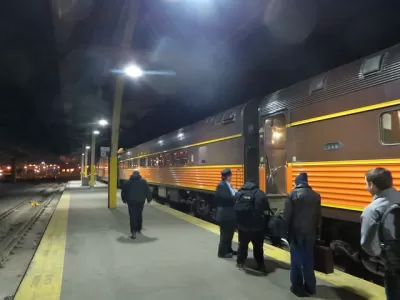
"The Hoosier State Amtrak passenger train that runs between Chicago and Indianapolis will end after June 30 due to a lack of state funding," reports Mary Wisniewski.
More specifically, "Indiana Gov. Eric Holcomb, a Republican, did not include funding for the train in his two-year budget, which was approved last week."
The train runs four days a week, and is the one of two trains running between Chicago and Indianapolis. The Hoosier State train runs Sundays, Tuesdays, Wednesdays and Fridays. The Cardinal runs on Mondays, Thursdays, and Saturdays, stopping between Indianapolis and Chicago on its way to and from New York City.
The Indiana state budget "cut $3 million in annual funding for the train," adds WIsnieski. "In the same budget, Indiana decided to contribute an additional $205 million to upgrading and expanding service on the South Shore Railroad, which runs between northwest Indiana and downtown Chicago."
Read the full story: Hoosier State Amtrak train from Chicago to Indianapolis to end July 1 because Indiana won’t fund it

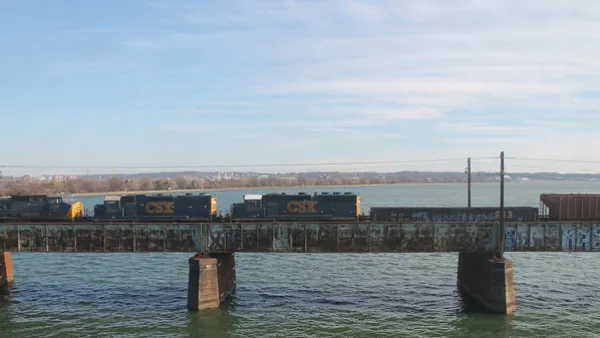
Virginia Passenger Rail Sets Ridership Records, Seeks More Wins
Virginia’s commitment to intercity rail is paying off in record ridership numbers, but more work will be necessary to achieve the state’s ambitions for passenger rail.
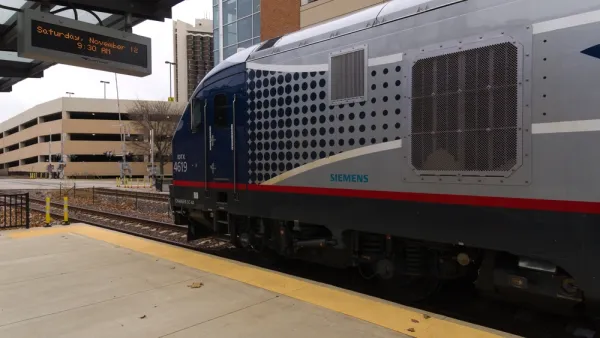
Chicago-St. Louis Corridor Trains Cleared for 110-mph Speeds
Amtrak has final federal approval for train speeds of 110 miles per hour between Joliet and Alton, culminating almost ten years of planning and investing.
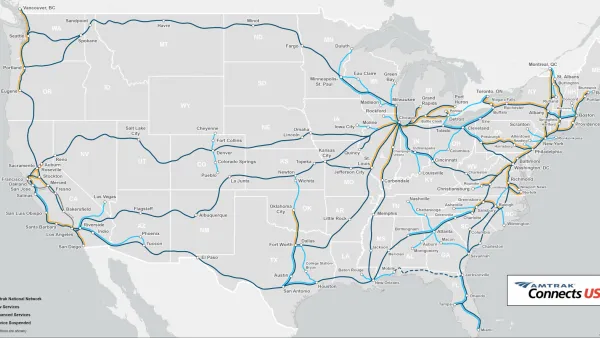
Political Support for Amtrak’s All Aboard Ohio Plans Follows Federal Infrastructure Funding
Gov. Mike DeWine’s sudden interest in working with Amtrak might have something to do with $66 billion in Infrastructure Investment and Jobs Act funding recently announced by the Federal Railroad Administration.

Planetizen Federal Action Tracker
A weekly monitor of how Trump’s orders and actions are impacting planners and planning in America.

California plans to bury El Niño’s downpour
If the state plays its cards right, it may be able to store a billion acre-feet of El Niño’s water in aquifers.

Desperate measures: Advocates weigh draining Lake Powell to fill Colorado River
Draining the reservoir could reduce evaporation losses by a couple hundred thousand acre-feet.

In Texas, data centers are swallowing promised parkland
Residents who moved to Taylor, Texas for a rural community now have to contend with three data centers in their backyard.

How a Chicago-sized wind farm beat the odds and powered on
The project spanned five presidential administrations and a standoff with a U.S. military base.

MTA gives itself 30 days to transform pit into basketball court
The site has been under construction since 2022; the city originally estimated it would finish the court in 2024.

FREE Course: Walkable City 1: Why Walkability?
After describing his path towards focusing on walkability as the essence of good planning, Jeff Speck marches through his five principal reasons for making more walkable places.
Reinventing Malls: Planning Alchemy—Turning Gray Fields Into Gold
The course focuses on the opportunities and imperatives that shape reinvention of mall sites.

City of Rosemead
Rutgers University, Edward J. Bloustein School of Planning and Public Policy
One Hundred Miles
Hunter College, City University of New York (CUNY)
The Architects Foundation
University of Cincinnati Online
City of Cambridge
Montrose County
The Pocatello Development Authority