The Seattle Department of Transportation recently released its first-ever public life study.


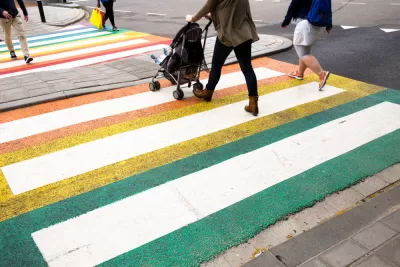
"A new study from the Seattle Department of Transportation shows that the vast majority of sidewalk users do not take advantage of city-provided seating, preferring standing (61 percent) or simply leaning on walls or using makeshift chairs (11 percent)," reports Angie Schmitt.
What's not clear from the findings is whether "pedestrians prefer to stand or simply whether there’s just not enough seating available."
Schmitt characterizes the reports as "curious," and noteworthy for its portrayal of pedestrians as motivated by a diversity of interests, like social, commercial, and resting.
The report required observations by a team of volunteers deploys to 108 blocks around 38 neighborhoods in the city. A blog post, written by Jeanne Clark to announce the study for SDOT, also claims that the study is the first of its kind for any municipal transportation agency in the country.
Read the full story: Seattle Study: Pedestrians Linger on Sidewalks, But Rarely Sit Down

Without Sidewalks, Making Seattle Streets More Pedestrian Friendly
Over a quarter of city blocks lack sidewalk infrastructure. An advocacy project to reduce traffic speeds and increase pedestrian safety on these streets has evolved into a city-funded program.

Seattle Experiments With Fence-Free Sidewalk Cafés
Sidewalk-adjacent eating spaces generally separate diners from pedestrians. By using markers instead of fences, some Seattle eateries are opening their dining areas to the street.
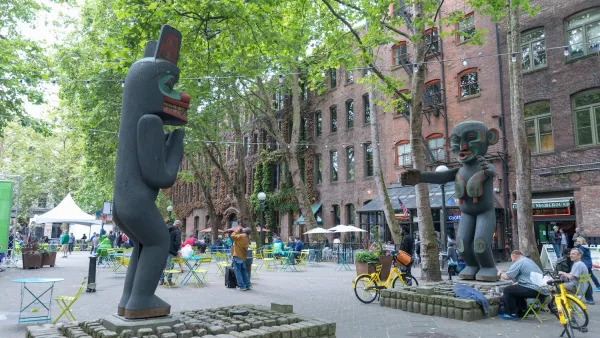
Seattle's Pioneer Square to become pedestrian zone during World Cup
The city will restrict car traffic and street parking in areas around Lumen Field on match days.

Planetizen Federal Action Tracker
A weekly monitor of how Trump’s orders and actions are impacting planners and planning in America.

The state-sanctioned urbicide of Austin
People don’t kill cities. Freeways do.

US to reduce Colorado River water deliveries to Mexico
A new Colorado Treaty amendment reduces Mexico’s Colorado River water allocation by 250,000 acre feet.

Nation's most wind-powered state turns to coal as data centers increase energy demand
For the first time in decades, Iowa has increased its generation of coal power.

NYC cools commuters with city's first rain garden above a bus stop
New York City officials say the plants in the rain garden can absorb 16 gallons of rainwater during heavy storms.

Brightline West’s future may rely on $6 billion federal loan
The company has until Nov. 2 to make a $400 million equity investment into its proposed high-speed rail line.

FREE Course: Walkable City 1: Why Walkability?
After describing his path towards focusing on walkability as the essence of good planning, Jeff Speck marches through his five principal reasons for making more walkable places.
Reinventing Malls: Planning Alchemy—Turning Gray Fields Into Gold
The course focuses on the opportunities and imperatives that shape reinvention of mall sites.

Eagle County Government
Harvard University Graduate School of Design
Nashville Planning Department
The Architects Foundation
University of Cincinnati Online
The Pocatello Development Authority
The Urban Renewal Agency of the City of Pocatello
Journal of the American Planning Association