The Army Corps of Engineers is already assessing the needs of repair work on a project it completed in May 2018 at the cost of $14 billion.


Thomas Frank sums up a distressing state of affairs in Louisiana:
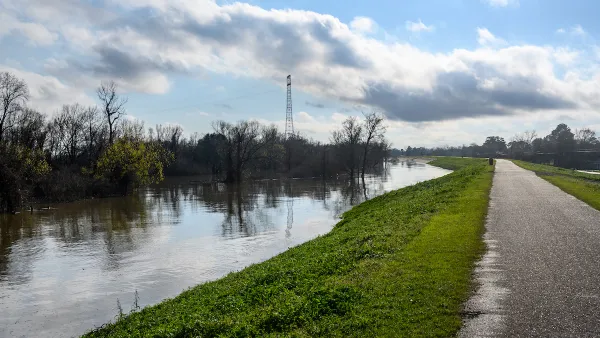
The $14 billion network of levees and floodwalls that was built to protect greater New Orleans after Hurricane Katrina was a seemingly invincible bulwark against flooding.
But now, 11 months after the Army Corps of Engineers completed one of the largest public works projects in world history, the agency says the system will stop providing adequate protection in as little as four years because of rising sea levels and shrinking levees.
Frank also explains about why the new flood control system has so quickly become obsolete:
The agency’s projection that the system will “no longer provide [required] risk reduction as early as 2023” illustrates the rapidly changing conditions being experienced both globally as sea levels rise faster than expected and locally as erosion wipes out protective barrier islands and marshlands in southeastern Louisiana.
At particular risk are the "earthen levees that form the backbone of the 350-mile maze of protection that includes concrete floodwalls, pump stations and gated structures," according to Frank. The levees are settling as the sea level rises.
FULL STORY: After a $14-Billion Upgrade, New Orleans' Levees Are Sinking

Louisiana Coastal Protection Agency Under Threat
The state’s new governor wants to shrink the power of the agency, which has spearheaded essential flood protection and mitigation efforts since the aftermath of Hurricane Katrina.
Louisiana Lawmakers Facing Legal Drama Over Shrinking Coasts
Can Louisiana lawmakers succeed in retroactively overthrowing a lawsuit by the Southeast Louisiana Flood Protection Authority against 97 oil and gas companies, all while the state's coastline continues to disappear at alarming rates?
New Orleans Prepares for Biggest Test Since Katrina
Seven years after Katrina made mincemeat of the city's flood protections, Hurricane Isaac is bearing down on the Crescent City. Ingrid Norton looks at what's different this time around.

The state-sanctioned urbicide of Austin
People don’t kill cities. Freeways do.

US to reduce Colorado River water deliveries to Mexico
A new Colorado Treaty amendment reduces Mexico’s Colorado River water allocation by 250,000 acre feet.

New Jersey’s second-largest city bans standalone data centers
Jersey City will continue to allow co-location facilities, such as those meant for research institutions that store their own data.

Amtrak not solely to blame for New Jersey commuter rail's unreliability, report finds
A new study from the Garden State Initiative found that NJ Transit’s budget grew 20% across a 4 year period, but reliability declined significantly over the same period.

EPA erases limits on planet-warming pollution from power plants
Under Monday’s plan, power plants would still have some limits on how much mercury, arsenic and other contaminants they can emit.

Phoenix announces new on-demand transit service, more frequent RAPID buses
Both new services will launch in October, and are part of Phoenix's Project Effective Access Solutions for Easing Congestion.

FREE Course: Walkable City 1: Why Walkability?
After describing his path towards focusing on walkability as the essence of good planning, Jeff Speck marches through his five principal reasons for making more walkable places.
Reinventing Malls: Planning Alchemy—Turning Gray Fields Into Gold
The course focuses on the opportunities and imperatives that shape reinvention of mall sites.

Eagle County Government
Harvard University Graduate School of Design
Nashville Planning Department
The Architects Foundation
University of Cincinnati Online
The Pocatello Development Authority
The Urban Renewal Agency of the City of Pocatello
Journal of the American Planning Association