The draft pedestrian plan seeks to get the community involved in making streets safer and more walkable.


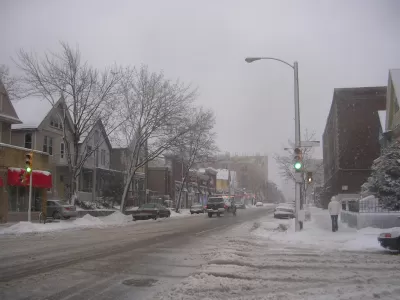
Cinnamon Janzer reports on the recently released draft of the Milwaukee Pedestrian Plan. While the city has seen a slight decrease in pedestrian crashes in recent years, the number of severe and fatal crashes has risen. As a result, pedestrian safety and walkability are key focuses of the new plan.
City officials say the pedestrian plan is being modeled after Milwaukee’s successful 2010 bike master plan. Community engagement is also an important feature of the pedestrian plan, says Janzer:
For example, one recommendation is to provide ways for people to report access problems. An accompanying action item would have the city urge residents to report snow and ice issues in addition to damaged sidewalks and inaccessible transit stops by phone and online. Another snow-focused action item tied to maintaining sidewalks year-round is about educating property owners on their snow removal responsibilities so that they can be relied upon to stay on top of day-to-day management.
The city also wants to see pedestrian planning better incorporated into street design and complete streets planning. "While cost will be a hurdle to clear, Mike Amsden, the city’s multimodal transportation manager, notes that many of the action items won’t require new funding — just a different way of thinking about and using the money that’s already been allocated," notes Janzer.
Read the full story: Milwaukee’s Pedestrian Plan Calls Out Snowy Sidewalks

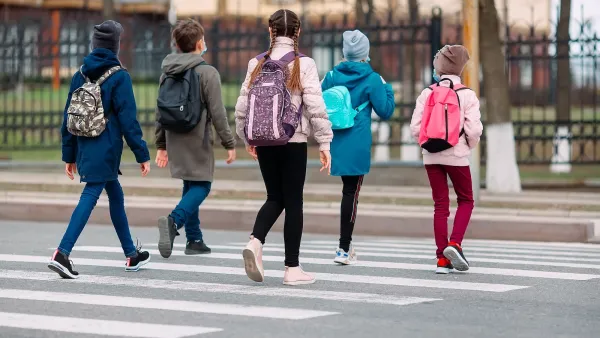
The number of kids walking to school dropped from over 50% to 11% since the 1960s
Unsafe pedestrian infrastructure makes walking to school dangerous or impossible for a growing number of American students.
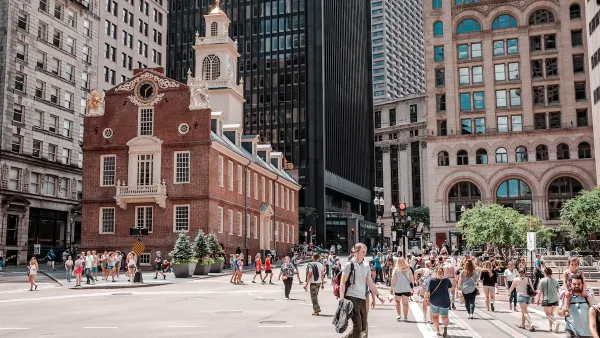
Report: Top US Cities for Pedestrian Safety
The East Coast takes the top three spots, while the South and Southwest dominate the bottom of the list.
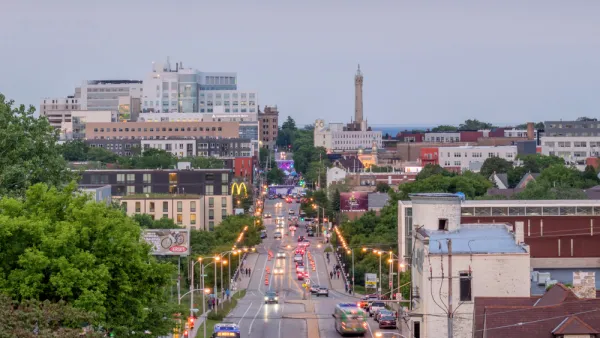
Milwaukee Launches Vision Zero Plan
Seven years after the city signed its Complete Streets Policy, the city is doubling down on its efforts to eliminate traffic deaths.

Planetizen Federal Action Tracker
A weekly monitor of how Trump’s orders and actions are impacting planners and planning in America.

The state-sanctioned urbicide of Austin
People don’t kill cities. Freeways do.

US to reduce Colorado River water deliveries to Mexico
A new Colorado Treaty amendment reduces Mexico’s Colorado River water allocation by 250,000 acre feet.

Nation's most wind-powered state turns to coal as data centers increase energy demand
For the first time in decades, Iowa has increased its generation of coal power.

NYC cools commuters with city's first rain garden above a bus stop
New York City officials say the plants in the rain garden can absorb 16 gallons of rainwater during heavy storms.

Brightline West’s future may rely on $6 billion federal loan
The company has until Nov. 2 to make a $400 million equity investment into its proposed high-speed rail line.

FREE Course: Walkable City 1: Why Walkability?
After describing his path towards focusing on walkability as the essence of good planning, Jeff Speck marches through his five principal reasons for making more walkable places.
Reinventing Malls: Planning Alchemy—Turning Gray Fields Into Gold
The course focuses on the opportunities and imperatives that shape reinvention of mall sites.

Eagle County Government
Harvard University Graduate School of Design
Nashville Planning Department
The Architects Foundation
University of Cincinnati Online
The Pocatello Development Authority
The Urban Renewal Agency of the City of Pocatello
Journal of the American Planning Association