An analysis of retail data suggests that vehicle restrictions in the city center led to more sales and less emissions.


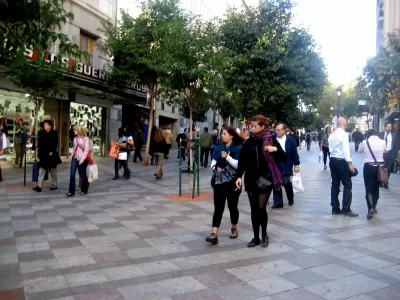
A new study by the Spanish bank BBVA and the Madrid city council suggests that prohibiting vehicles in the city’s central business district during the 2018 winter holiday season helped local retailers.
An analysis of transactional data shows that retail sales were 9.5 percent higher compared to the two previous years along Gran Vía, a main shopping area, and 3.3 percent higher across the city.
The vehicle restrictions during this period also resulted in improvements in air quality. "The City of Madrid’s imposition of a ‘low-emission zone’ for the Christmas period led to benefits to citizens as well as shops and restaurants – there was a significant fall in air pollution during the period of the experimental motor-traffic restrictions," reports Carlton Reid.
FULL STORY: Closing Central Madrid To Cars Resulted In 9.5% Boost To Retail Spending, Finds Bank Analysis

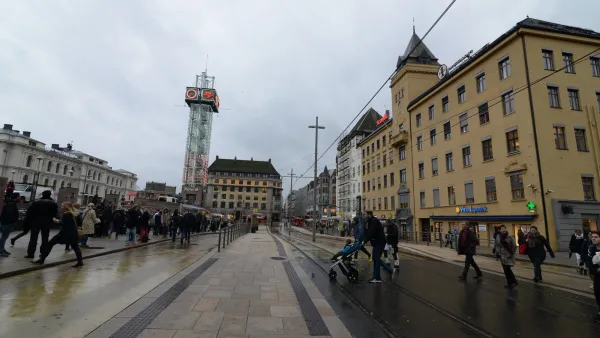
In Oslo, Streets for People, Not Cars
New measures will greatly reduce vehicle traffic in the city center as Oslo moves to put pedestrians, cyclists, and air quality before cars.
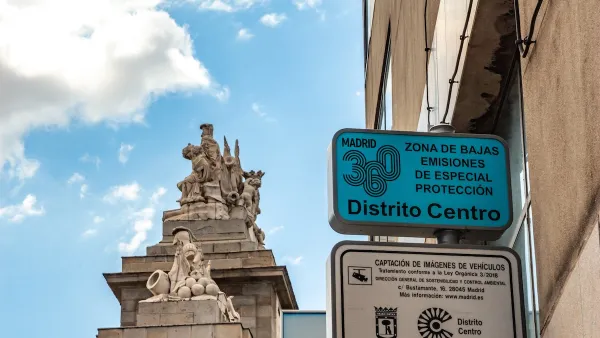
Madrid Uses Transit System for Parcel Delivery to Cut Emissions
A new pilot program uses trains to deliver packages at off-peak hours, lowering emissions from trucks.

Barcelona's Long-Term, Pedestrian-First Plan Continues with the 'Barcelona Superblock'
Mayor Ada Colau announced the next step in Barcelona's plan to convert the city center into a "new city for the present and the future."

Planetizen Federal Action Tracker
A weekly monitor of how Trump’s orders and actions are impacting planners and planning in America.

The state-sanctioned urbicide of Austin
People don’t kill cities. Freeways do.

US to reduce Colorado River water deliveries to Mexico
A new Colorado Treaty amendment reduces Mexico’s Colorado River water allocation by 250,000 acre feet.

Mamdani overhauls NYC's Vision Zero plan with 100 new policy goals
The overhaul aims to reduce traffic deaths and make streets safer for pedestrians, cyclists and drivers through lower speed limits, new safety infrastructure and more.

Amtrak not solely to blame for New Jersey commuter rail's unreliability, report finds
A new study from the Garden State Initiative found that NJ Transit’s budget grew 20% across a 4 year period, but reliability declined significantly over the same period.

EPA erases limits on planet-warming pollution from power plants
Under Monday’s plan, power plants would still have some limits on how much mercury, arsenic and other contaminants they can emit.

FREE Course: Walkable City 1: Why Walkability?
After describing his path towards focusing on walkability as the essence of good planning, Jeff Speck marches through his five principal reasons for making more walkable places.
Reinventing Malls: Planning Alchemy—Turning Gray Fields Into Gold
The course focuses on the opportunities and imperatives that shape reinvention of mall sites.

Eagle County Government
Harvard University Graduate School of Design
Nashville Planning Department
The Architects Foundation
University of Cincinnati Online
The Pocatello Development Authority
The Urban Renewal Agency of the City of Pocatello
Journal of the American Planning Association