The urban landscape could change significantly as cities and transportation systems evolve. Planners are envisioning what that would mean for parking and what decisions need to be made now.


In the fast-changing world of mobility, planners are thinking differently about parking, either doing away with it altogether or reconceptualizing the long-term uses of parking structures, writes John R. Quain.
Cities like Davis, California, are sparing taxpayers the burdensome cost of parking garages by deciding not to build them. Instead of providing more parking, the focus is on pricing street parking to more effectively manage supply and demand.
Another approach picking up steam is adaptive reuse, where structures are designed with the long-term goal of repurposing them down the road. Planning involves thinking ahead about ceiling heights, floor plans, and ways to incorporate plumbing and electrical systems into buildings to make future conversions easier and less costly.
"A Hudson Pacific Properties office complex going up on Sunset Boulevard in Los Angeles, for example, will have a dedicated ride-share drop-off lobby and two floors of parking that can be converted into office space in the future," says Quain.
FULL STORY: Smart city planners are rethinking parking by getting rid of it


L.A. Reimagines Parking for New Uses
In famously car-centric Los Angeles, developers and city officials are changing the way they view parking space, opting instead to allocate the space to more effective uses.

What Happens If Parking Structures Become Obsolete?
An architect makes the case for future-proofing new parking garages so they can easily shift to other uses in a future with fewer cars.
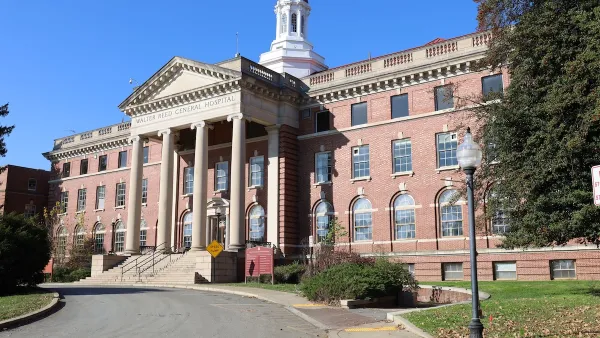
Former DC Army Garage Gets New Life
The fortress-like underground structure posed unique challenges to engineers redeveloping a former U.S. Army complex.

Planetizen Federal Action Tracker
A weekly monitor of how Trump’s orders and actions are impacting planners and planning in America.

The state-sanctioned urbicide of Austin
People don’t kill cities. Freeways do.

US to reduce Colorado River water deliveries to Mexico
A new Colorado Treaty amendment reduces Mexico’s Colorado River water allocation by 250,000 acre feet.

5 New England states march closer to 800 megawatt wind energy project
Securing federal approval for the project may be complicated under the Trump administration, which has historically been hostile towards domestic wind power.

Baltimore to break ground on $50 million Transit Priority Project
The project will bring faster bus trips, safer streets and better bike connections to Baltimore.

Airbnb launches $250 million 'last-dollar financing' housing accelerator, makes first investment in Austin
The company will put $6.4 million towards affordable housing development in Texas’ capital.

FREE Course: Walkable City 1: Why Walkability?
After describing his path towards focusing on walkability as the essence of good planning, Jeff Speck marches through his five principal reasons for making more walkable places.
Reinventing Malls: Planning Alchemy—Turning Gray Fields Into Gold
The course focuses on the opportunities and imperatives that shape reinvention of mall sites.

Eagle County Government
Harvard University Graduate School of Design
Nashville Planning Department
The Architects Foundation
University of Cincinnati Online
The Pocatello Development Authority
The Urban Renewal Agency of the City of Pocatello
Journal of the American Planning Association