Even as prospects for high-speed trains dim in California, San Francisco's Transbay Transit Center has already spurred a development spree in the surrounding area.


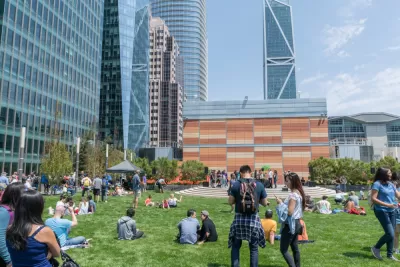
High-speed rail may not have much of a future in the Golden State, and San Francisco's Transbay Transit Center may be down for the count due to structural flaws. But as John King writes, those projects have already set in motion a skyline-altering uptick in development that's set to continue as long as the economy allows.
"In terms of the blocks around [the transit center], the genie is out of the bottle," King writes. "The obvious symbol of all this is the tapered girth of Salesforce Tower, which at 1,070 feet easily tops the 853-foot Transamerica Pyramid as the city's tallest high-rise. On the next block is 181 Fremont St., an 803-foot tower where all 432,000 square feet of office space was leased to Facebook."
King discusses some of the planning decisions that paved the way for the area's transformation, including a land transfer from the state to the city and a "dramatic" upzoning that united progressives and moderates. "By raising heights at the beginning of an economic boom that has blurred the boundaries between Silicon Valley and San Francisco, the city set the stage for Transbay to respond to a pent-up demand that hadn't been obvious."
FULL STORY: High-speed rail or not, San Francisco’s Transbay District has arrived

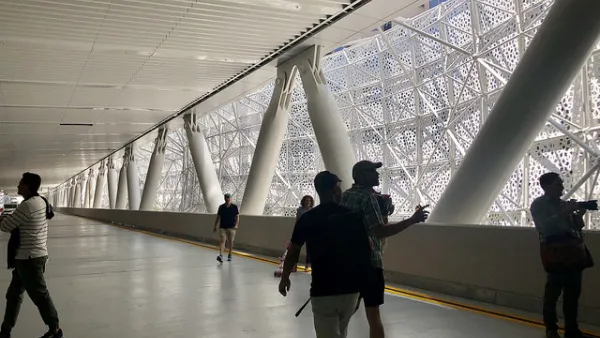
San Francisco's Transbay Transit Center Open, When Will Trains Arrive?
To great fanfare, the Salesforce Transit Center opened on Saturday to thousands of visitors anxious to see the huge facility. Sunday was quieter, with the first AC Transit buses arriving on the third-floor bus deck. Train arrivals: TBD.
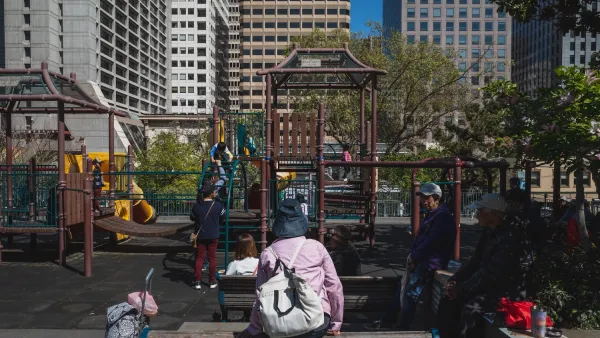
Report Shows San Francisco’s ‘Family Zoning’ Plan Would Produce Less Than Half of Needed Housing Units
The city’s economic analysis reveals that a rezoning proposal would yield from 8,504 to 14,646 units, well below the number required by the state.

San Francisco Mayor’s ‘Family Zoning’ Plan Faces Pushback, Displacement Concerns
Newly proposed legislation aims to protect long-term tenants from displacement caused by Mayor Lurie’s proposed zoning reform plan, which would allow for more housing construction in parts of the city.

Planetizen Federal Action Tracker
A weekly monitor of how Trump’s orders and actions are impacting planners and planning in America.

The state-sanctioned urbicide of Austin
People don’t kill cities. Freeways do.

US to reduce Colorado River water deliveries to Mexico
A new Colorado Treaty amendment reduces Mexico’s Colorado River water allocation by 250,000 acre feet.

5 New England states march closer to 800 megawatt wind energy project
Securing federal approval for the project may be complicated under the Trump administration, which has historically been hostile towards domestic wind power.

Baltimore to break ground on $50 million Transit Priority Project
The project will bring faster bus trips, safer streets and better bike connections to Baltimore.

Airbnb launches $250 million 'last-dollar financing' housing accelerator, makes first investment in Austin
The company will put $6.4 million towards affordable housing development in Texas’ capital.

FREE Course: Walkable City 1: Why Walkability?
After describing his path towards focusing on walkability as the essence of good planning, Jeff Speck marches through his five principal reasons for making more walkable places.
Reinventing Malls: Planning Alchemy—Turning Gray Fields Into Gold
The course focuses on the opportunities and imperatives that shape reinvention of mall sites.

Eagle County Government
Harvard University Graduate School of Design
Nashville Planning Department
The Architects Foundation
University of Cincinnati Online
The Pocatello Development Authority
The Urban Renewal Agency of the City of Pocatello
Journal of the American Planning Association