Regional officials don't think the federal government is doing enough to warrant continued ownership of the Los Angeles River flood control channels that cut a 40-mile path through the city and county.


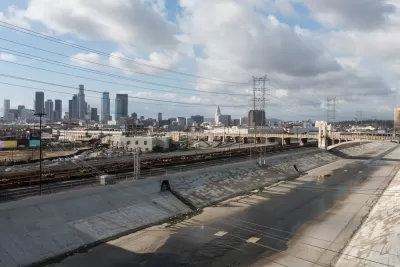
"Los Angeles County officials are proposing to take ownership of 40 miles of flood-control channels along the Los Angeles River from the federal government in order to expedite maintenance and water conservation improvements as climate change increases the frequency of extreme weather," reports Louis Sahagun.
The announcement brings into focus the conflicting missions of regional flood control regulators and the federal government. The mission of the Army Corps of Engineers, according to a source from the County Department of Public Works cited in the article, "does not include myriad issues his agency’s County Flood Control District regards as essential: water conservation, movement of sediment, graffiti removal, ecosystem friendly vegetation, homeless encampments and recreational opportunities."
The county hopes to take control of the river channel to speed up the delivery of groundwater storage projects, habitat restoration, new open and space and recreation projects, and new residential, commercial, and office development, according to the article.
The article also includes a lot more detail about the many pressing improvements required of dam and stormwater control infrastructure along the river—more reasons the county wants to take ownership of the river channel.
FULL STORY: County wants authority over L.A. River flood-control channels owned by U.S. government

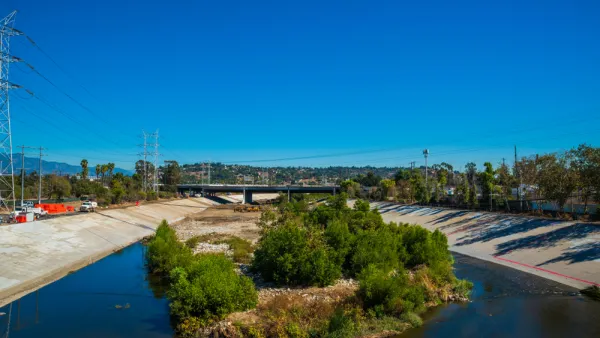
A Comment for the L.A. River Master Plan
Five themes proposed to achieve justice and sustainability for the Los Angeles River and its surrounding communities.
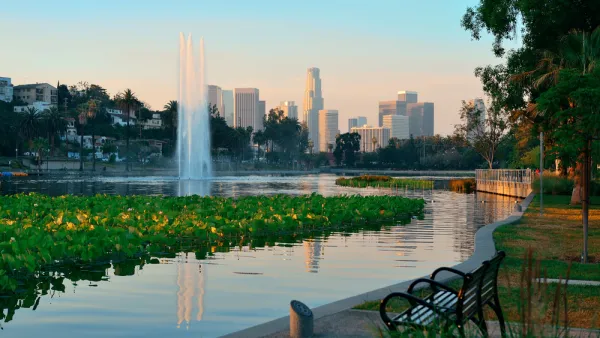
$300 Million Property Tax to Fund Stormwater Infrastructure on the Ballot in Los Angeles County
The proposed property tax would double the county's stormwater capture capacity.
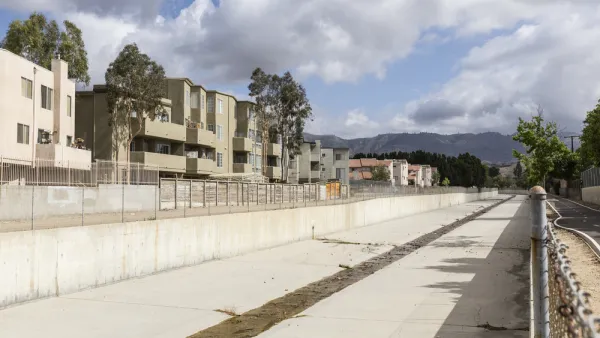
The Changing Paradigm of Stormwater Management
In the past, stormwater management has been about flood control. The future of stormwater, however, is in capturing, treating, and recharging water supply, according to this article.

The state-sanctioned urbicide of Austin
People don’t kill cities. Freeways do.

US to reduce Colorado River water deliveries to Mexico
A new Colorado Treaty amendment reduces Mexico’s Colorado River water allocation by 250,000 acre feet.

New Jersey’s second-largest city bans standalone data centers
Jersey City will continue to allow co-location facilities, such as those meant for research institutions that store their own data.

Amtrak not solely to blame for New Jersey commuter rail's unreliability, report finds
A new study from the Garden State Initiative found that NJ Transit’s budget grew 20% across a 4 year period, but reliability declined significantly over the same period.

EPA erases limits on planet-warming pollution from power plants
Under Monday’s plan, power plants would still have some limits on how much mercury, arsenic and other contaminants they can emit.

Phoenix announces new on-demand transit service, more frequent RAPID buses
Both new services will launch in October, and are part of Phoenix's Project Effective Access Solutions for Easing Congestion.

FREE Course: Walkable City 1: Why Walkability?
After describing his path towards focusing on walkability as the essence of good planning, Jeff Speck marches through his five principal reasons for making more walkable places.
Reinventing Malls: Planning Alchemy—Turning Gray Fields Into Gold
The course focuses on the opportunities and imperatives that shape reinvention of mall sites.

Eagle County Government
Harvard University Graduate School of Design
Nashville Planning Department
The Architects Foundation
University of Cincinnati Online
The Pocatello Development Authority
The Urban Renewal Agency of the City of Pocatello
Journal of the American Planning Association