Experts say more builders are building smaller homes to meet demand for cheaper ownership options.



"For the third year in a row, new homes are shrinking," reports Steve Brown.
Brown is sharing data from the National Association of Homebuilders (NAHB), along with insight from Rose Quint, a researcher at NAHB who recently presented on the data at the building industry's annual conference in Las Vegas.
According to Quint, homes are getting smaller to help more people afford the cost of buying and owning a home.
"Homes have been downsizing in the past three years," Quint said at the event. "This paints a picture of homebuilders trying to respond to the housing affordability crisis we have in the country."
Still, American homes had room to spare. Preliminary data measures out the average size of a new home 2,576 square feet, down from a peak of 2,700 square feet in 2015.
FULL STORY: Builders are shrinking U.S. homes to keep a lid on costs


San Francisco Required to Change Restrictive Housing Approval Policies
State agencies want the city to speed up its alarmingly slow permitting process.
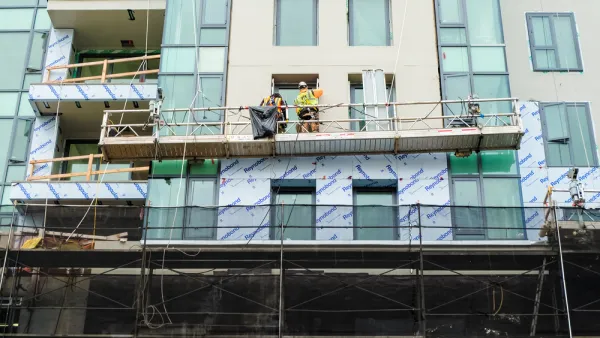
In the Midst of a Housing Crisis, Soaring Costs Leave San Francisco Projects at a Standstill
San Francisco desperately needs more housing, but many projects sit unfinished as developers face cost challenges.
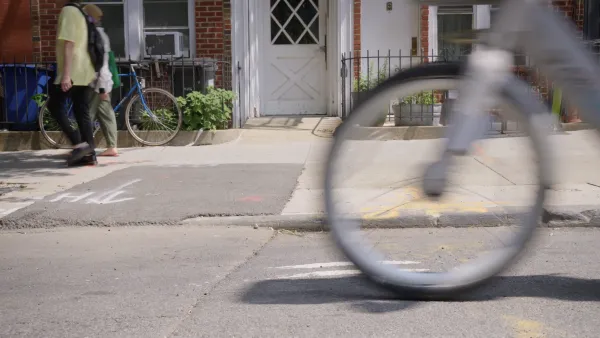
Art project makes NYC Citi Bikes physically harder to pedal in rent-burdened neighborhoods
Ground Truth, created by Brooklyn artist Justin Blinder, slows bikes down to make cyclists feel the burden of high rent.

The state-sanctioned urbicide of Austin
People don’t kill cities. Freeways do.

US to reduce Colorado River water deliveries to Mexico
A new Colorado Treaty amendment reduces Mexico’s Colorado River water allocation by 250,000 acre feet.

New Jersey’s second-largest city bans standalone data centers
Jersey City will continue to allow co-location facilities, such as those meant for research institutions that store their own data.

Amtrak not solely to blame for New Jersey commuter rail's unreliability, report finds
A new study from the Garden State Initiative found that NJ Transit’s budget grew 20% across a 4 year period, but reliability declined significantly over the same period.

EPA erases limits on planet-warming pollution from power plants
Under Monday’s plan, power plants would still have some limits on how much mercury, arsenic and other contaminants they can emit.

Phoenix announces new on-demand transit service, more frequent RAPID buses
Both new services will launch in October, and are part of Phoenix's Project Effective Access Solutions for Easing Congestion.

FREE Course: Walkable City 1: Why Walkability?
After describing his path towards focusing on walkability as the essence of good planning, Jeff Speck marches through his five principal reasons for making more walkable places.
Reinventing Malls: Planning Alchemy—Turning Gray Fields Into Gold
The course focuses on the opportunities and imperatives that shape reinvention of mall sites.

Eagle County Government
Harvard University Graduate School of Design
Nashville Planning Department
The Architects Foundation
University of Cincinnati Online
The Pocatello Development Authority
The Urban Renewal Agency of the City of Pocatello
Journal of the American Planning Association