House Sizes
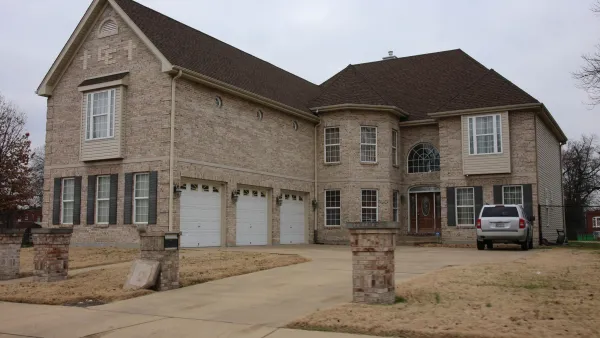
Behind America's Fixation on Big Houses
McMansion or not, the American home is a good 600 to 800 square feet larger than the average in most other countries. Possible reasons run the gamut from policy to culture to personal economics.

Size of New Homes Shrinking in the U.S.
Experts say more builders are building smaller homes to meet demand for cheaper ownership options.

Study: House Sizes Increase at the Expense of Tree Canopies
A research study has found that increasing house sizes in the Los Angeles area have drastically reduced the number of trees shading the region's landscapes—regardless of geographic location of socioeconomic status.
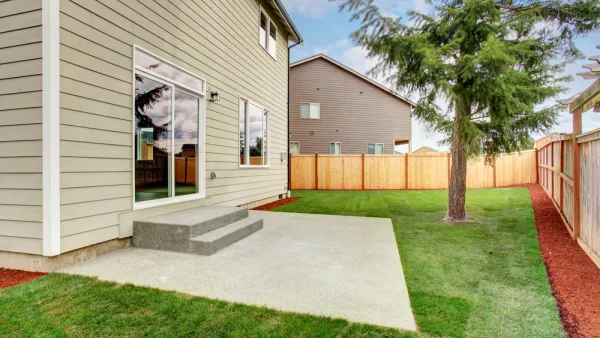
Yards Getting Smaller as Homes Get Bigger
Americans have shown a clear preference for larger homes—even at the expense of the coveted backyard.

Economic Growth without the McMansions—Is America Ready?
Henry Grabar beckons the death of the McMansion, calling it an "American embarrassment" with no easy solution for planners.
Touring Smallness in Hong Kong Housing
A recent tour through housing developments in Hong Kong shows that the large spaces Americans treasure in homes are not necessarily the best method for urbanizing areas, according to this post.

FREE Course: Walkable City 1: Why Walkability?
After describing his path towards focusing on walkability as the essence of good planning, Jeff Speck marches through his five principal reasons for making more walkable places.
Reinventing Malls: Planning Alchemy—Turning Gray Fields Into Gold
The course focuses on the opportunities and imperatives that shape reinvention of mall sites.

City of Rosemead
Rutgers University, Edward J. Bloustein School of Planning and Public Policy
One Hundred Miles
University of Michigan School for Environment and Sustainability (SEAS)
Hunter College, City University of New York (CUNY)
The Architects Foundation
City of Cambridge
Montrose County
The Pocatello Development Authority









