A large group of technology and philanthropic foundations has announced multiple funds to help mitigate the crisis of housing affordability in the Bay Area. It's the second such effort announced already this year.



"A group of San Francisco Bay Area philanthropists has pledged to spend half a billion dollars to protect and expand affordable housing in the region," reports Emily Flitter.
Included in that group, and described as a "central player," is the Chan Zuckerberg Initiative. Also contributing to the partnership are Morgan Stanley, Kaiser Permanente, Facebook, Genentech, the Ford Foundation, and more.
The so-called Partnership for the Bay’s Future will combat the region's housing affordability crisis by seeding an investment fund "to preserve housing for 175,000 families and add capacity for 8,000 new homes over the next decade through loans and other assistance to community groups."
According to the announcement of the new partnership, posted on the Chan Zuckerberg Initiative website, the partnership is beginning with two funds: the Investment Fund and the Policy Fund.
Similar to a plan announced by Microsoft to provide $500 million in funding for housing in the Seattle region, Partnership for the Bay's Future will devote most of its funding to loans—in this case funded through the Investment Fund, explained in more detail in the announcement:
The Investment Fund, poised to become one of the largest in the nation, will help to address the funding gap that limits the ability to preserve and produce affordable housing. This fund is managed by LISC—the largest nonprofit community development financial institution in the country—which has been investing in affordable housing, economic development, recreation and community space, and workforce programs in the Bay Area for nearly four decades. LISC is also partnering with national affordable housing experts Capital Impact Partners and the Corporation for Supportive Housing to originate investments out of the Fund. Morgan Stanley is also providing capital for the Fund.
The announcement also reports that the Investment Fund has confirmed its first transaction: a revolving line of credit to the East Bay Asian Local Development Corporation.
The Policy Fund will provide grant funding on a smaller scale:
The Policy Fund will support initiatives to preserve and expand housing, with a strong focus on strengthening low-income tenant protections. The Policy Fund is led by the San Francisco Foundation and will be administered through two grant programs: Challenge Grants, which are larger awards to pursue ambitious, comprehensive protection and preservation solutions; and Breakthrough Grants, to provide technical assistance to jurisdictions that have the potential to develop affordable housing at scale. At the time of launch, the Policy Fund has secured almost $20 million for an intended $40 million for the Fund.
The Policy Fund already has $20 million toward a planned $40 million.
FULL STORY: $500 Million Pledge in Bay Area Supports Affordable Housing


Zuckerberg and Company Set Goals on Housing Policy and Affordable Housing
With over $500 million in resources, the Partnership for the Bay’s Future is funding policy and affordable housing projects throughout the region.
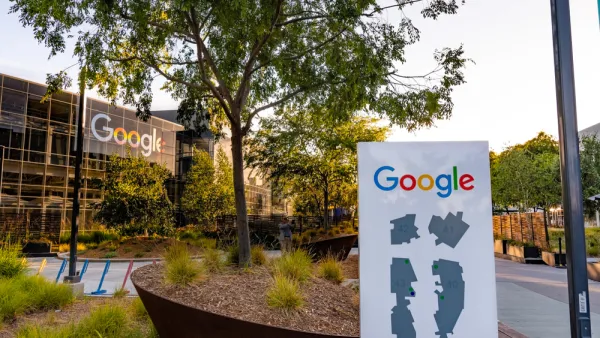
Breaking News: Google to Spend $1 Billion on Housing in the Bay Area
The tech industry giant answers a call to do more to help alleviate housing prices in the region it calls home by promising to build tens of thousands of units on its own land.

Rent Control Buckling Under Market Pressure, Sweden Increases Development
A housing affordability case study, provided by the unique housing policies in the country of Sweden.

Planetizen Federal Action Tracker
A weekly monitor of how Trump’s orders and actions are impacting planners and planning in America.

The state-sanctioned urbicide of Austin
People don’t kill cities. Freeways do.

US to reduce Colorado River water deliveries to Mexico
A new Colorado Treaty amendment reduces Mexico’s Colorado River water allocation by 250,000 acre feet.

5 New England states march closer to 800 megawatt wind energy project
Securing federal approval for the project may be complicated under the Trump administration, which has historically been hostile towards domestic wind power.

Baltimore to break ground on $50 million Transit Priority Project
The project will bring faster bus trips, safer streets and better bike connections to Baltimore.

Airbnb launches $250 million 'last-dollar financing' housing accelerator, makes first investment in Austin
The company will put $6.4 million towards affordable housing development in Texas’ capital.

FREE Course: Walkable City 1: Why Walkability?
After describing his path towards focusing on walkability as the essence of good planning, Jeff Speck marches through his five principal reasons for making more walkable places.
Reinventing Malls: Planning Alchemy—Turning Gray Fields Into Gold
The course focuses on the opportunities and imperatives that shape reinvention of mall sites.

Eagle County Government
Harvard University Graduate School of Design
Nashville Planning Department
The Architects Foundation
University of Cincinnati Online
The Pocatello Development Authority
The Urban Renewal Agency of the City of Pocatello
Journal of the American Planning Association