Angry public outcry wasn't enough to stop the Roanoke City Council from unanimously approving an ambitious transit station reconfiguration in downtown Roanoke.


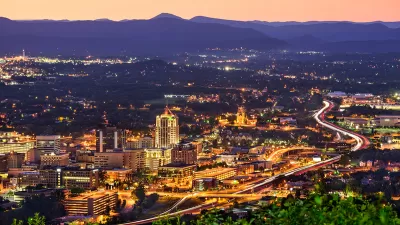
"The Roanoke City Council approved two land transactions Tuesday night to allow construction of a new open air bus station on Salem Avenue and Third Street despite the objections of neighbors who called the station a “crime magnet” that would undercut the area’s safety," reports Matt Chittum.
Planetizen picked up the news about the city's plan to add a new bus station, train depot, and mixed-use development to its downtown earlier this month.
"The vote moves forward a process that will likely take years but, according to city officials, solve multiple issues: providing a new and improved bus station to replace a dated and unpleasant one, a needed passenger train station, and redevelop a large, underused parcel in the center of downtown," according to Chittum.
Officials from the Virginia Museum of Transportation were among the rowdy opponents on hand to protest the project.
FULL STORY: Roanoke council pushes forward on bus station move despite heated opposition

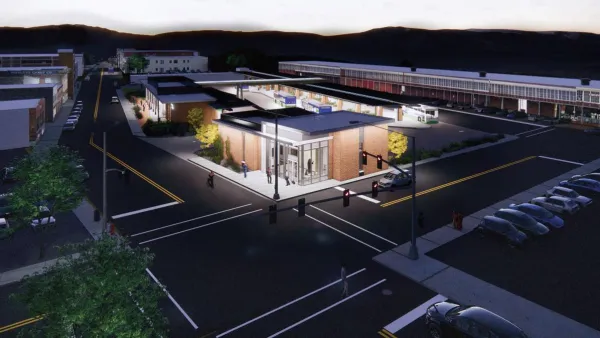
Roanoke Finds a Planning Work Around to Approve New Transit Station
With Planning Commission approval in hand, the Roanoke City Council will soon consider a controversial proposal for a new transit station in the city's downtown.
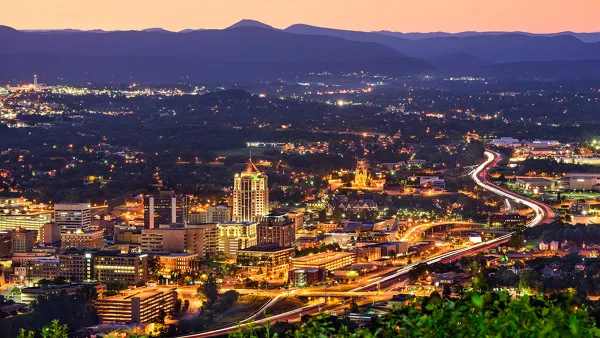
Roanoke, Virginia Transit Station Plan Would Add Housing and Commercial Space
A plan to move a Roanoke, Virginia bus stop would use the current location of the stop to build transit-oriented apartments and shops.
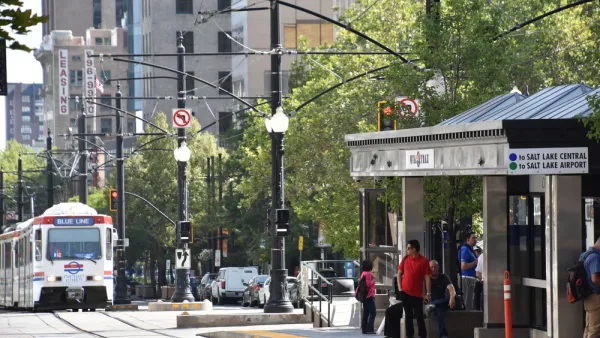
Buslash in Salt Lake City
New bus routes planned for Salt Lake City have provoked a vocal political opposition.

Planetizen Federal Action Tracker
A weekly monitor of how Trump’s orders and actions are impacting planners and planning in America.

The state-sanctioned urbicide of Austin
People don’t kill cities. Freeways do.

US to reduce Colorado River water deliveries to Mexico
A new Colorado Treaty amendment reduces Mexico’s Colorado River water allocation by 250,000 acre feet.

Mamdani overhauls NYC's Vision Zero plan with 100 new policy goals
The overhaul aims to reduce traffic deaths and make streets safer for pedestrians, cyclists and drivers through lower speed limits, new safety infrastructure and more.

Amtrak not solely to blame for New Jersey commuter rail's unreliability, report finds
A new study from the Garden State Initiative found that NJ Transit’s budget grew 20% across a 4 year period, but reliability declined significantly over the same period.

EPA erases limits on planet-warming pollution from power plants
Under Monday’s plan, power plants would still have some limits on how much mercury, arsenic and other contaminants they can emit.

FREE Course: Walkable City 1: Why Walkability?
After describing his path towards focusing on walkability as the essence of good planning, Jeff Speck marches through his five principal reasons for making more walkable places.
Reinventing Malls: Planning Alchemy—Turning Gray Fields Into Gold
The course focuses on the opportunities and imperatives that shape reinvention of mall sites.

Eagle County Government
Harvard University Graduate School of Design
Nashville Planning Department
The Architects Foundation
University of Cincinnati Online
The Pocatello Development Authority
The Urban Renewal Agency of the City of Pocatello
Journal of the American Planning Association