The ongoing shutdown of the federal government could begin to have terrible consequences for some of the nation's most vulnerable populations.


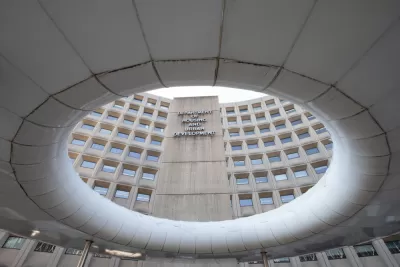
Suzy Khimm and Laura Strickler report:
Federal contracts for more than 1,000 government-funded properties that house low-income renters have already expired as a result of the government shutdown, which could delay critical repairs and place poor families at risk of eviction, advocates and landlords say.
"About 1,150 contracts with private landlords have expired since the shutdown began on Dec. 22," which "represents about 5 percent of all contracts for a federal Section 8 program known as Project-Based Rental Assistance, which subsidizes rent and utilities for 1.2 million low-income families, including many who are elderly or disabled."
More than 1,000 additional contracts could expire by February if the shutdown persists.
The article includes more details on the potential measures that can be taken to prevent evictions, as well additional consequences of the shutdown for federal housing assistance programs.
Read the full story: Because of the shutdown, more than 1,000 affordable housing contracts have expired

Local Public Housing Agencies Resist HUD's Proposed Section 8 Rule
A proposed rule to disqualify all families living with an undocumented person from receiving federal housing aid is available for comment. We know a few people who oppose the rule.

New HUD Rule Could Redefine the Geography of Section 8 Voucher Payments
A new rule will make it easier to send vouchers for rent assistance to wealthier neighborhoods. The Trump Administration is not a willing partner in this effort.

Missouri Governor Reverses Anti-Discrimination Housing Policies
A new state law bars cities from prohibiting source-of-income discrimination against tenants using Section 8 housing vouchers.

Planetizen Federal Action Tracker
A weekly monitor of how Trump’s orders and actions are impacting planners and planning in America.

California plans to bury El Niño’s downpour
If the state plays its cards right, it may be able to store a billion acre-feet of El Niño’s water in aquifers.

Desperate measures: Advocates weigh draining Lake Powell to fill Colorado River
Draining the reservoir could reduce evaporation losses by a couple hundred thousand acre-feet.

In Texas, data centers are swallowing promised parkland
Residents who moved to Taylor, Texas for a rural community now have to contend with three data centers in their backyard.

How a Chicago-sized wind farm beat the odds and powered on
The project spanned five presidential administrations and a standoff with a U.S. military base.

MTA gives itself 30 days to transform pit into basketball court
The site has been under construction since 2022; the city originally estimated it would finish the court in 2024.

FREE Course: Walkable City 1: Why Walkability?
After describing his path towards focusing on walkability as the essence of good planning, Jeff Speck marches through his five principal reasons for making more walkable places.
Reinventing Malls: Planning Alchemy—Turning Gray Fields Into Gold
The course focuses on the opportunities and imperatives that shape reinvention of mall sites.

City of Rosemead
Rutgers University, Edward J. Bloustein School of Planning and Public Policy
One Hundred Miles
Hunter College, City University of New York (CUNY)
The Architects Foundation
University of Cincinnati Online
City of Cambridge
Montrose County
The Pocatello Development Authority