The city of Seattle is making more room for alternative transportation modes in its level of service calculations.


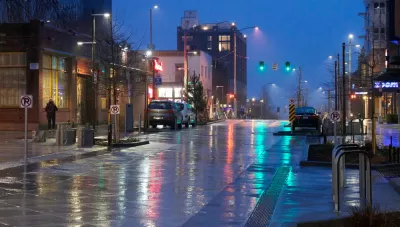
The last meeting of the year for the Seattle City Council's Planning, Land Use, and Zoning Committee was a significant one, reports Stephen Fesler, with new regulatory requirements for transportation level-of-service standards (LOS) moving out of committee.
Fesler provides details on the LOS reform approved by the committee:
The proposed changes are designed to better implement recent LOS policy changes that were made through the city’s comprehensive plan update in 2016. One of the key paradigm shifts that took place in the update was to set specific target rates of transportation modes (e.g., walking, biking, transit, and driving) across eight geographic areas (sectors) of the city, which would be achieved by 2035. Within each geographic sector, the comprehensive plan identifies the single-occupant vehicle (SOV) rate as a percentage of total trips in 2016 and a target rate for 2035, which is generally lower than than [sic] the 2016 number. Previously, the comprehensive plan had measured LOS based upon the ratio of traffic volume to arterial capacity on key corridors.
Fesler provides a lot more detail on the potential and desired consequences of the LOS changes.
Also on the agenda at the final committee hearing of the year was new design guidelines for the neighborhoods of Uptown and the University District.
FULL STORY: City Council Poised to Reform Implementation of LOS Standards and New U District, Uptown Design Guidelines


Level of Service Reform Bill Approved by Seattle City Council
A major change to planning paradigms in the city of Seattle.
Opinion: Lower Rents Will Give Downtown Spaces Back to the ‘Weirdos’
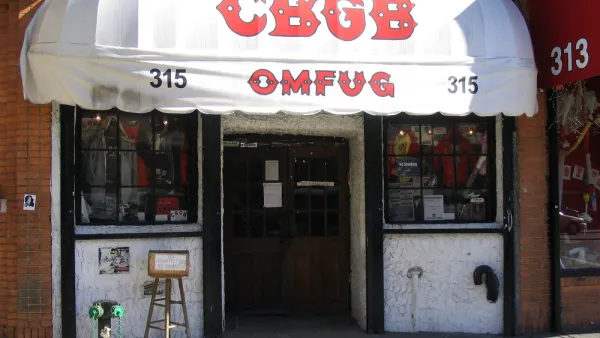
Introducing the “CBGB theory of city planning.”

Seattle Ponders a New Approach to Zoning for its Comprehensive Plan Update
The city of Seattle will have an updated comprehensive plan by the end of 2024, with zoning changes to follow by 2025.

Planetizen Federal Action Tracker
A weekly monitor of how Trump’s orders and actions are impacting planners and planning in America.

The state-sanctioned urbicide of Austin
People don’t kill cities. Freeways do.

US to reduce Colorado River water deliveries to Mexico
A new Colorado Treaty amendment reduces Mexico’s Colorado River water allocation by 250,000 acre feet.

5 New England states march closer to 800 megawatt wind energy project
Securing federal approval for the project may be complicated under the Trump administration, which has historically been hostile towards domestic wind power.

Baltimore to break ground on $50 million Transit Priority Project
The project will bring faster bus trips, safer streets and better bike connections to Baltimore.

Airbnb launches $250 million 'last-dollar financing' housing accelerator, makes first investment in Austin
The company will put $6.4 million towards affordable housing development in Texas’ capital.

FREE Course: Walkable City 1: Why Walkability?
After describing his path towards focusing on walkability as the essence of good planning, Jeff Speck marches through his five principal reasons for making more walkable places.
Reinventing Malls: Planning Alchemy—Turning Gray Fields Into Gold
The course focuses on the opportunities and imperatives that shape reinvention of mall sites.

Eagle County Government
Harvard University Graduate School of Design
Nashville Planning Department
The Architects Foundation
University of Cincinnati Online
The Pocatello Development Authority
The Urban Renewal Agency of the City of Pocatello
Journal of the American Planning Association