The new ordinance brings long-awaited legal legitimacy to sidewalk vending in Los Angeles.



Sahra Sulaiman writes of the details of a Los Angeles City Council committee hearing this week that preceded the approval by the full council of a new ordinance that brings the city into conformity with state law and begins the process for the city to create a permitting process for sidewalk vendors.
State law SB 946, signed by Governor Jerry Brown earlier this year, decriminalized sidewalk vending, and was touted as a victory social justice, but a defeat for local control. Sulaiman explains that the law hadn't done much to improve the situation for sidewalk vendors in Los Angeles, yet:
Even with the decriminalization of sidewalk vending last year, the lack of a formal ordinance meant street vendors were still experiencing harassment from law enforcement, racking up hefty fines they struggled to pay off, and worrying about deportation. It was eating into their livelihoods and making them afraid of losing everything every time they set up their goods.
To address the state law, the city proposed two alternatives for its sidewalk vending ordinance. One would have set up a regulatory model that "would have only required compliance with regulations," but also "it would not have generated funding for a monitoring and compliance program, making it much less attractive to the city."
Instead the city chose a permitting model, and final controversies over the ordinance centered around revisions to the draft ordinance and questions about vending in parks.
Sulaiman wrote the article after a joint meeting of the Public Works and Gang Reduction, Economic Development, and Arts, Entertainment, Parks, and River Committees on Tuesday, November 28, but also confirmed via Twitter that the ordinance had passed the full council on Wednesday, November 28.
Additional, up-to-date coverage by Emily Alpert Reyes has also been published by the Los Angeles Times.
FULL STORY: City Council Set to Approve Historic Sidewalk Vending Ordinance


LA Opposes California Bill to add Housing Next to Transit Hubs
In a narrow vote, the city council voted to oppose SB79, a bill that would bypass local zoning laws to allow denser development near transit stops.

New on Netflix: How Street Vendors Create Vibrant Cities
Street vending has been a contentious issue in many places, but this part of the informal economy is important to the social and economic well-being of cities.
Texas town's data center ban challenged by state senator
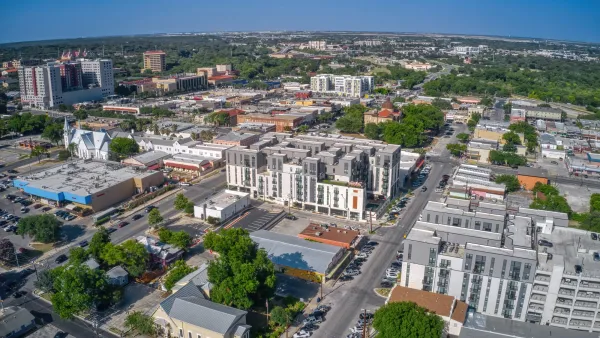
In June, San Marcos became the first city in Texas to prohibit data centers.

The state-sanctioned urbicide of Austin
People don’t kill cities. Freeways do.

US to reduce Colorado River water deliveries to Mexico
A new Colorado Treaty amendment reduces Mexico’s Colorado River water allocation by 250,000 acre feet.

New Jersey’s second-largest city bans standalone data centers
Jersey City will continue to allow co-location facilities, such as those meant for research institutions that store their own data.

Amtrak not solely to blame for New Jersey commuter rail's unreliability, report finds
A new study from the Garden State Initiative found that NJ Transit’s budget grew 20% across a 4 year period, but reliability declined significantly over the same period.

EPA erases limits on planet-warming pollution from power plants
Under Monday’s plan, power plants would still have some limits on how much mercury, arsenic and other contaminants they can emit.

Phoenix announces new on-demand transit service, more frequent RAPID buses
Both new services will launch in October, and are part of Phoenix's Project Effective Access Solutions for Easing Congestion.

FREE Course: Walkable City 1: Why Walkability?
After describing his path towards focusing on walkability as the essence of good planning, Jeff Speck marches through his five principal reasons for making more walkable places.
Reinventing Malls: Planning Alchemy—Turning Gray Fields Into Gold
The course focuses on the opportunities and imperatives that shape reinvention of mall sites.

Eagle County Government
Harvard University Graduate School of Design
Nashville Planning Department
The Architects Foundation
University of Cincinnati Online
The Pocatello Development Authority
The Urban Renewal Agency of the City of Pocatello
Journal of the American Planning Association